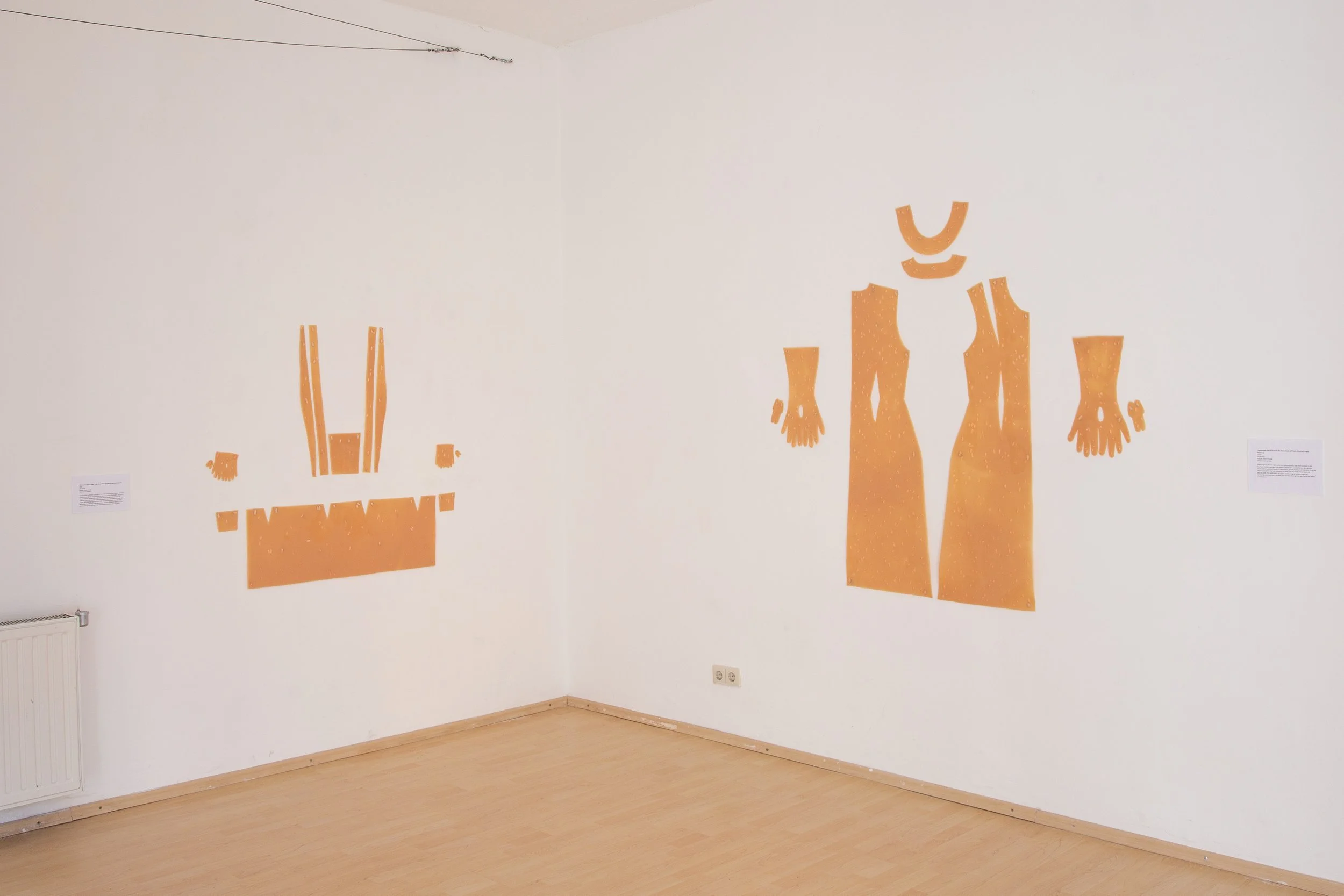
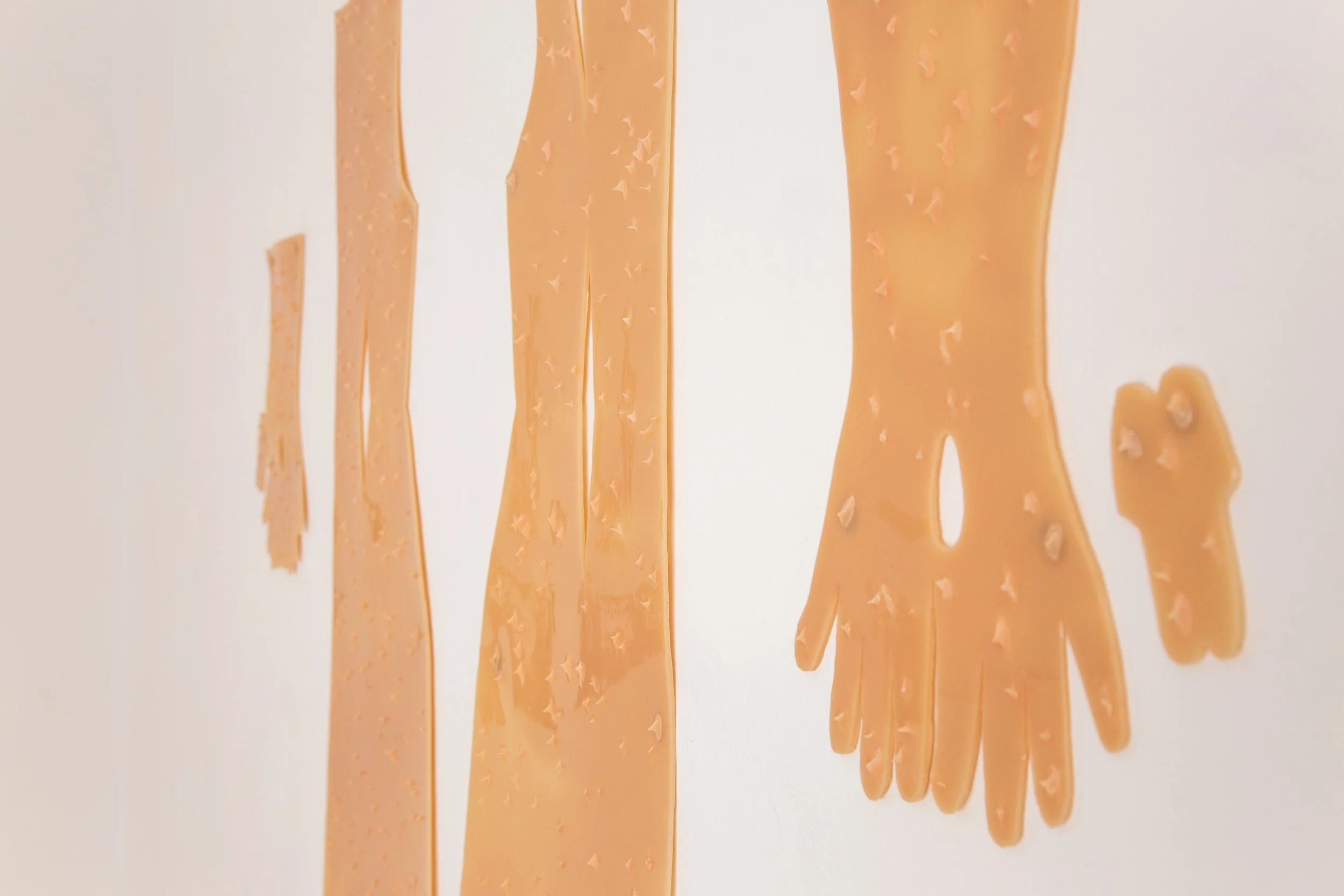
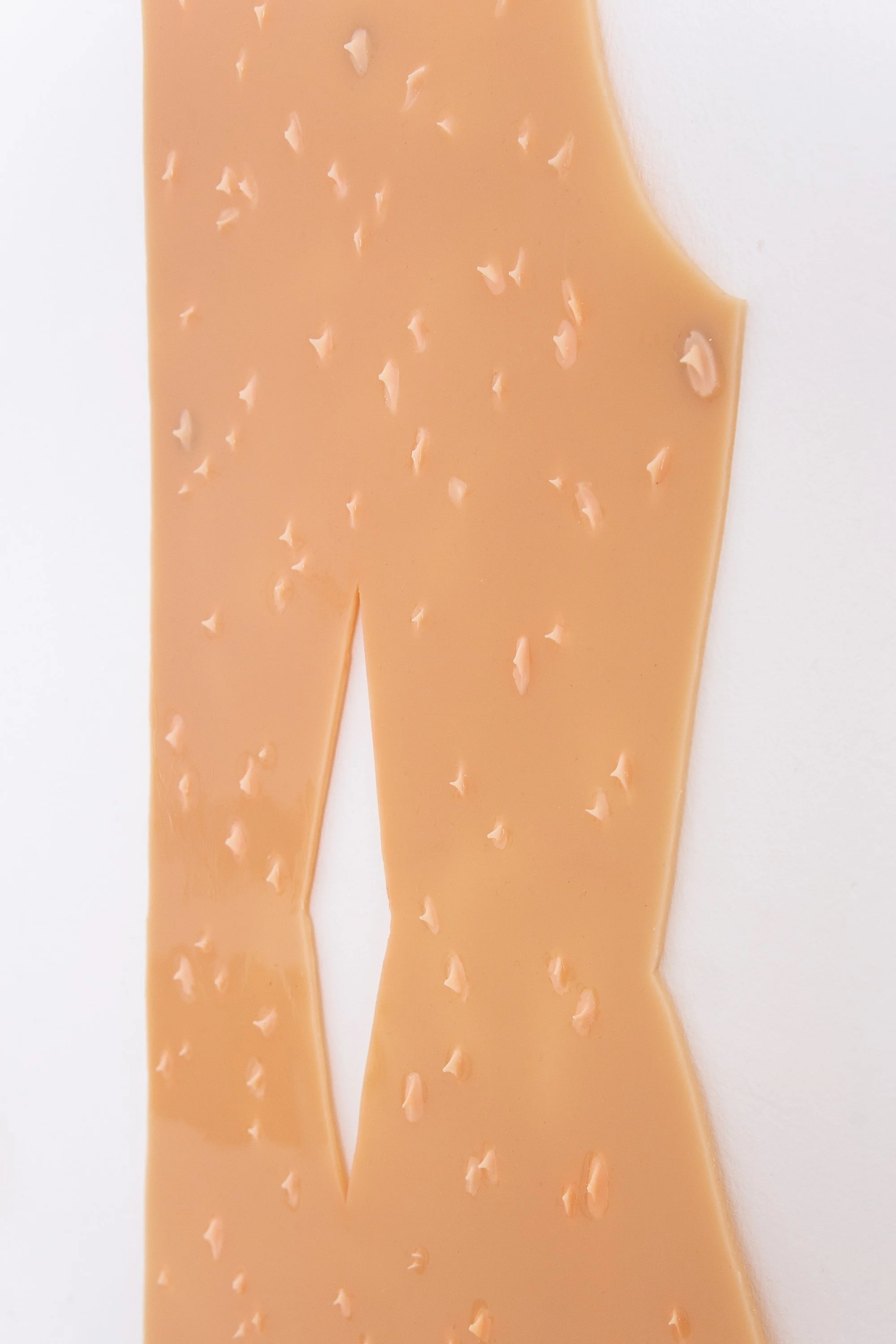
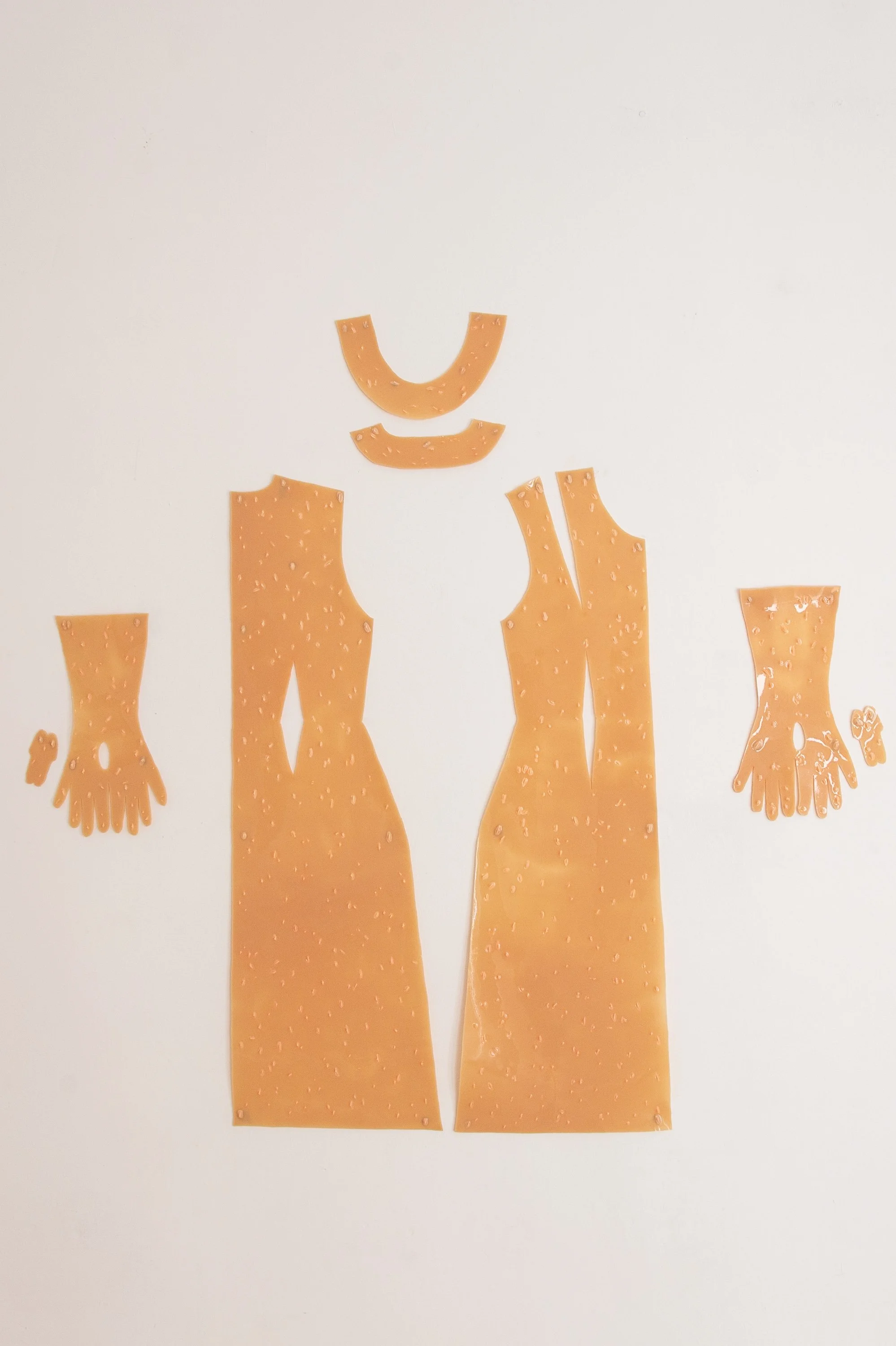
I Remember How It Feels to Be Made of Flesh (2025)

What happens when the thorn turns against the rose?

In I Remember How it Feels to be Made of Flesh, Ida Sophia opens a poetic yet unsettling inquiry into how pain and endurance are passed down through matrilineal lines. From the memory of her grandmother’s and mother’s rose gardens, the thorn becomes a recurring figure: at once protective and wounding, a defence that cannot be separated from harm. Handed down from grandmother to mother to daughter, it appears as an inheritance of resilience but also of restriction. Over generations, women learn not only to care and to nurture, but also to live with discomfort, to hide it, and to carry it quietly.

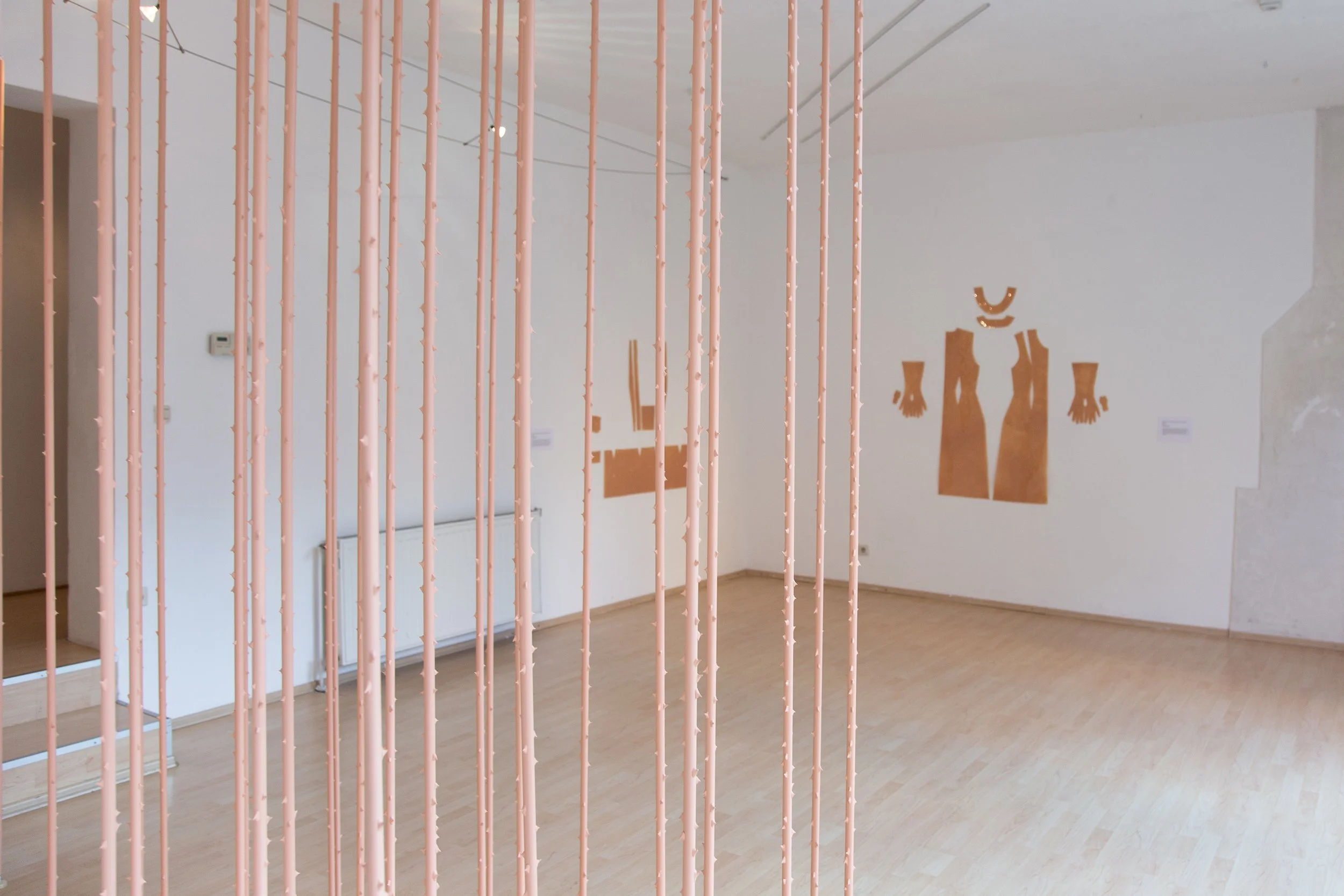
The exhibition brings together installation, performance, and sculptural works that make this inheritance visible. A Tyranny of Small Decisions (2025) stages the build-up of small concessions. In the new performance To Work At Wreckage (2025) Ida Sophia moves through the dense field of thorns, each choice, whether to push forward or to resist, creates new entanglements. The work shows how tolerance, once learned, can become an automatic response, how patterns of compliance accumulate until they form an almost inescapable structure.

During the performance, the social ritual of the party is examined. Clad in a glamorous gown, a marker of elegance, Sophia steps into the role of hostess, pouring drinks, smiling, and moving through the room. Hospitality masks the quiet violence of endurance. The performance makes visible how cultural scripts of femininity, politeness, devotion and self-sacrifice appear to uphold social order and effectively conceal the discomfort on which that order rests. When the façade finally breaks, what was hidden becomes impossible to ignore: pain is revealed as the fabric of the performance itself.

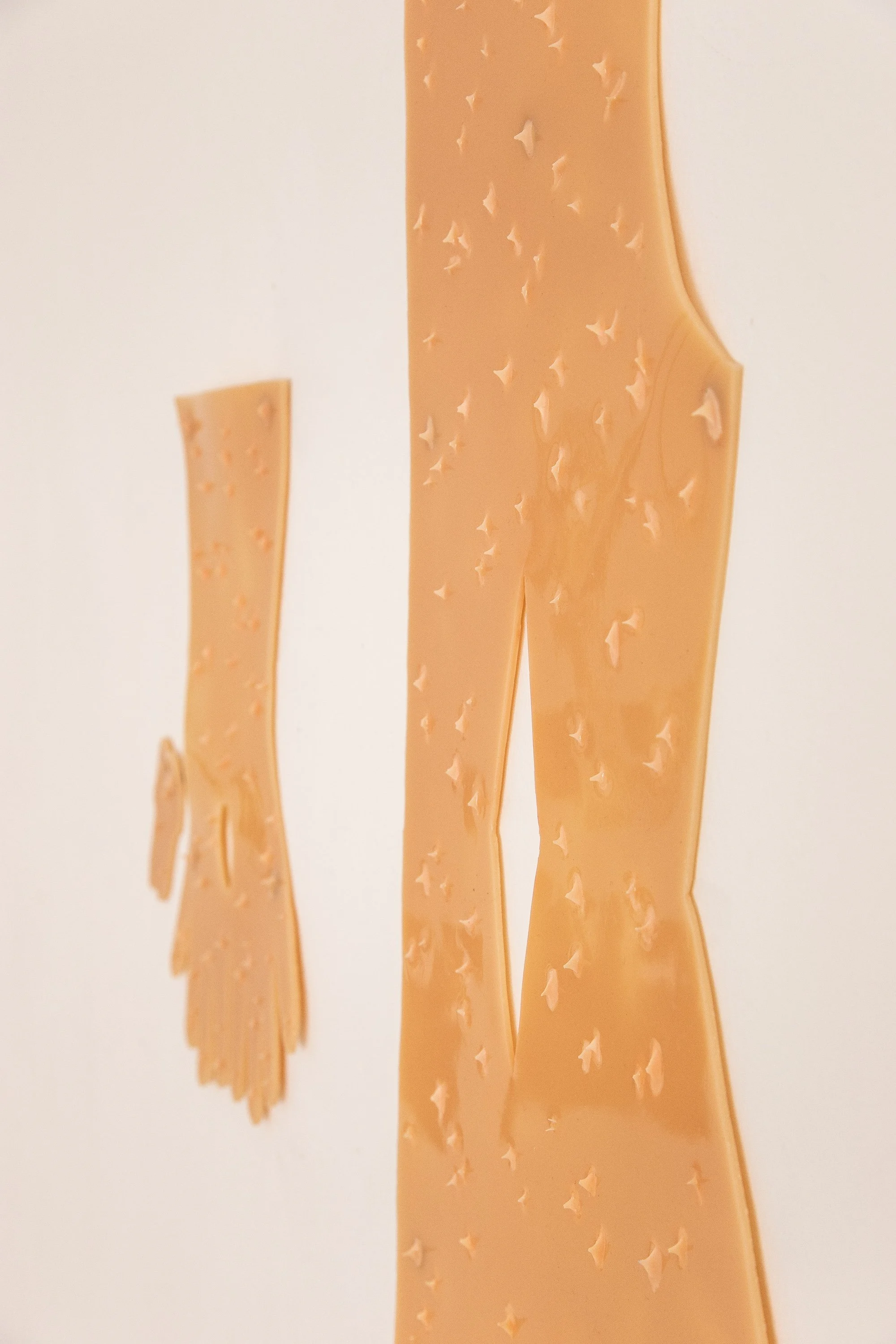
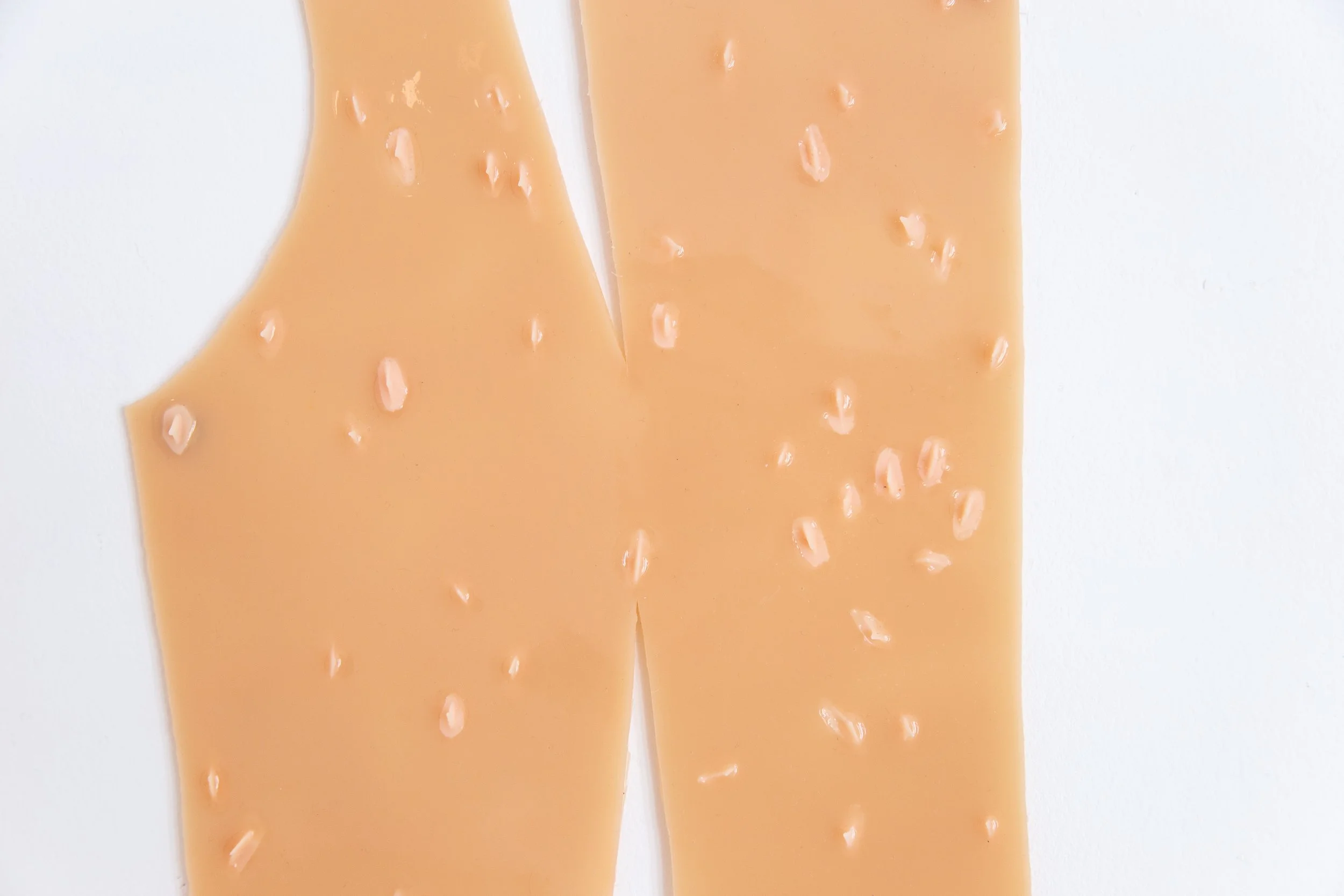
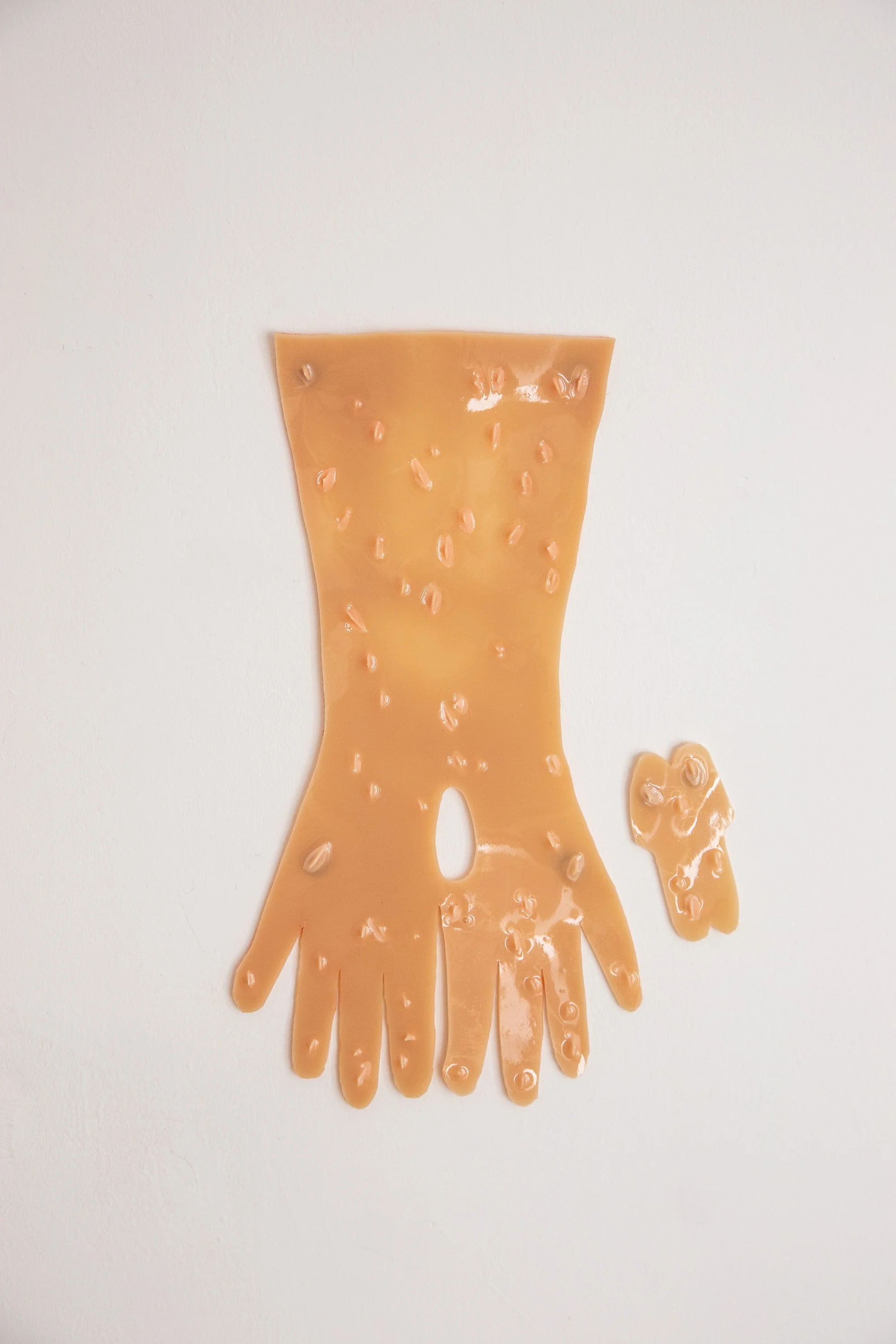
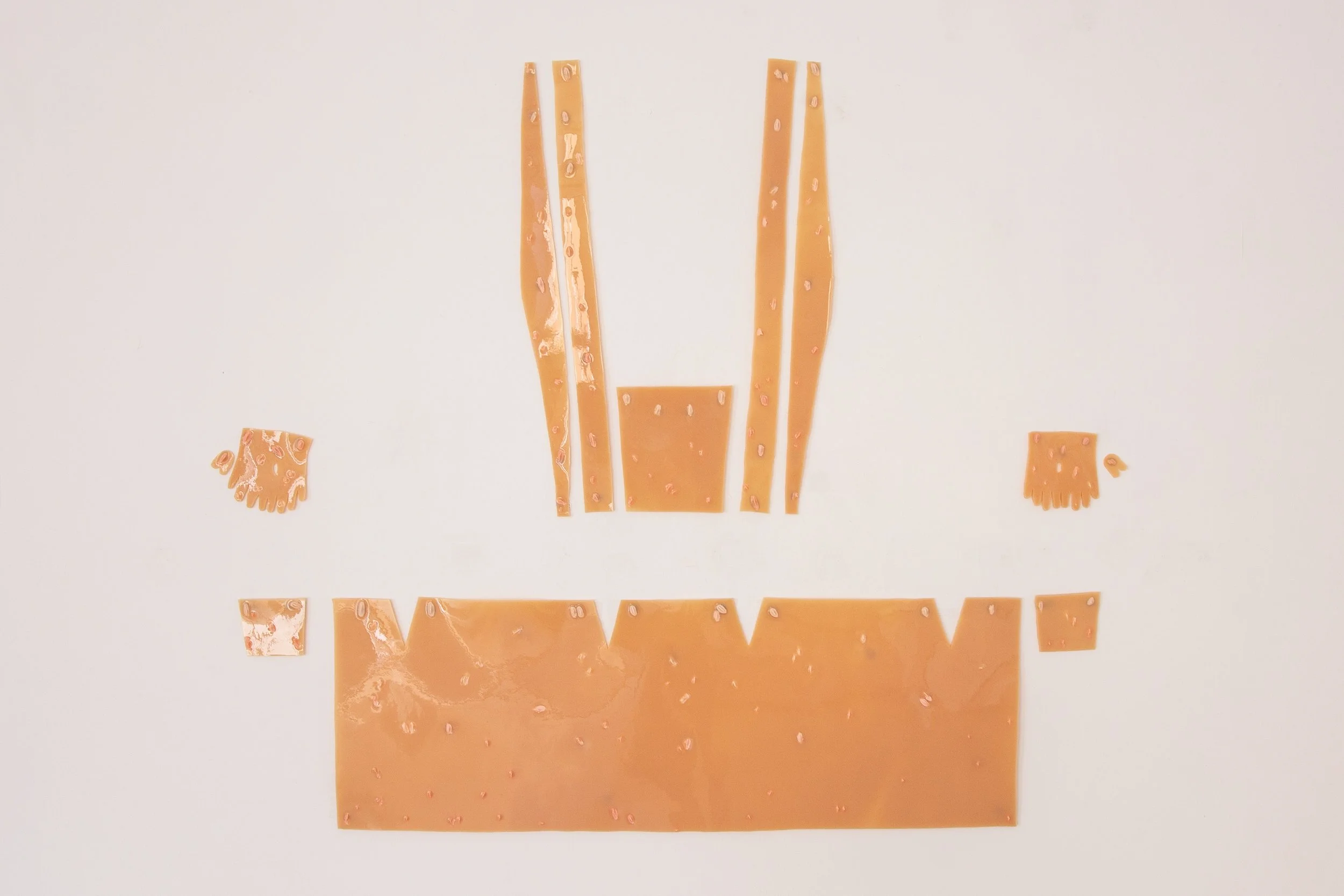
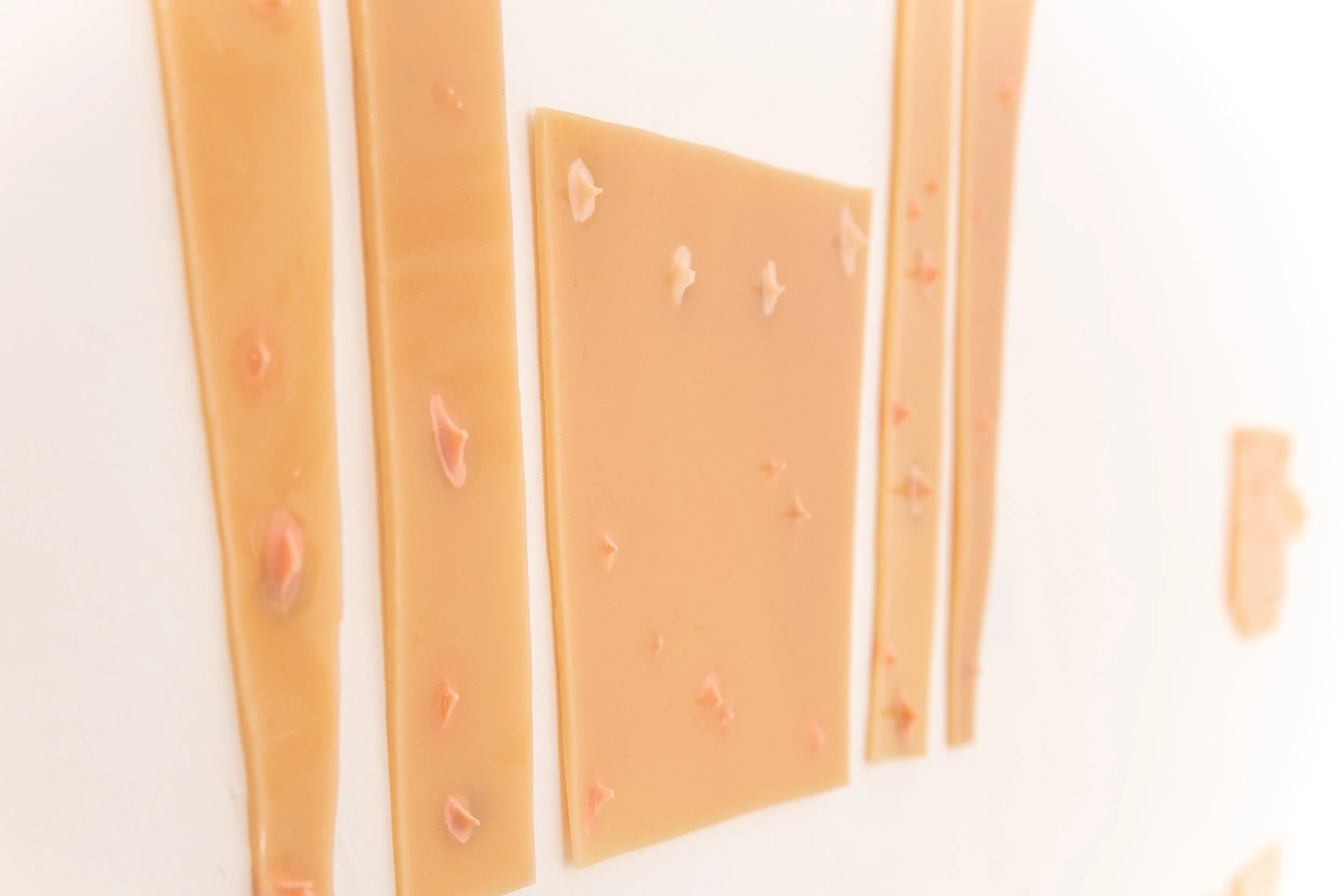
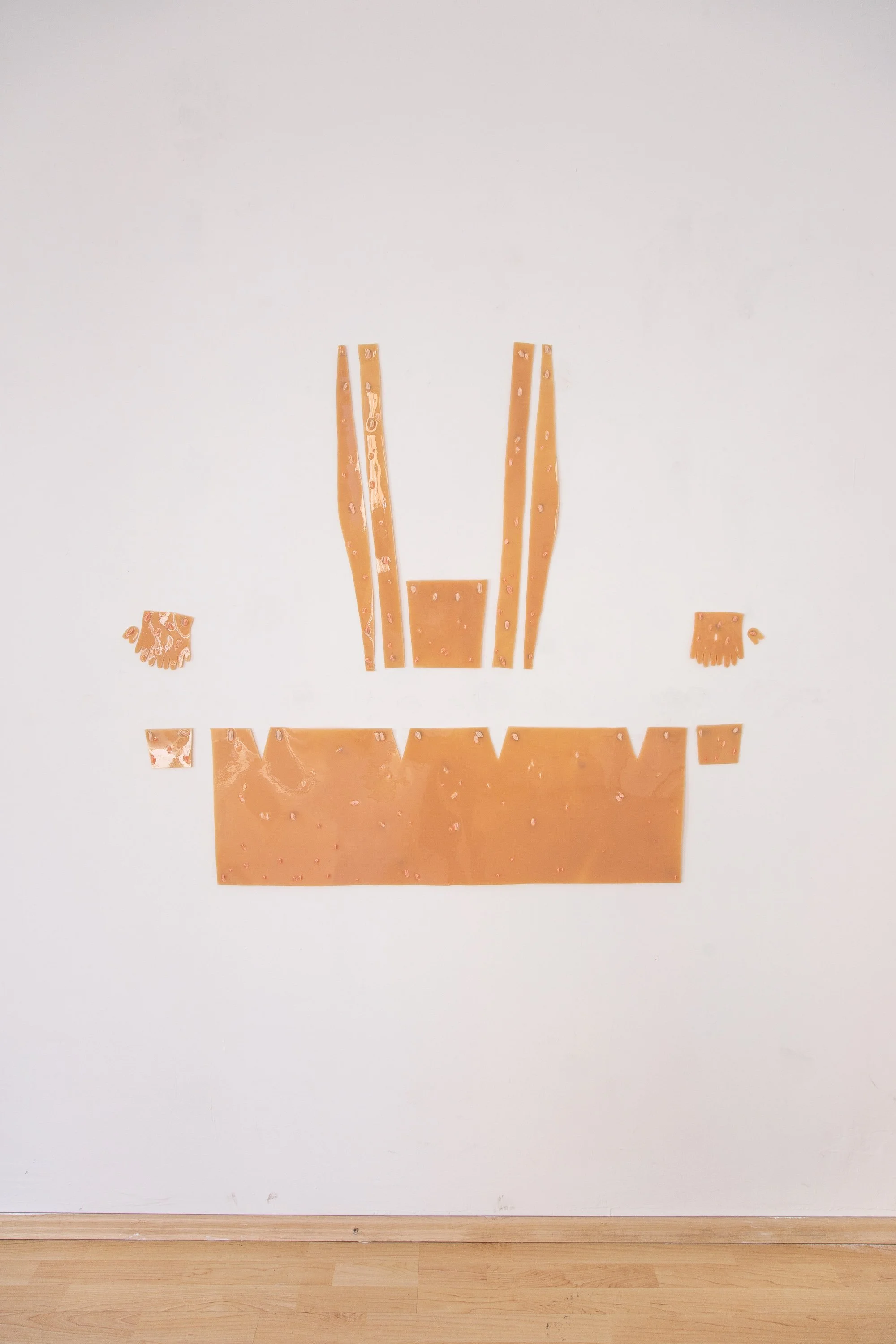
The wall-based work, I Remember How It Feels To Be Made of Flesh (2025) takes this logic into material form. Thorns are embedded into an artificial, performative bed of ‘skin’. Shiny, seductive, and yet ultimately repellent upon closer inspection. The shapes are based on sewing pattern pieces, originally cut from fabric to make up a dress. The two works metaphorically illustrate the matrilineal line of pain endurance through the size and style of the would-be garments. The thorns lining the child-sized pinafore are pink and raw, as if freshly formed. Contrastingly, the adult-size dress pattern has thorns that are flesh toned, insinuating their ingrained and endured status. Repeated over and over, they create a visual archive of persistence, showing how inherited pain does not disappear but is reiterated again and again into the body and memory.

Together, these works point to a cycle: resistance taught as necessity, discomfort absorbed as habit, pain handed down as legacy. But the exhibition does not stop at representation. It turns the question back to us: is recognising these patterns, seeing them, naming them, even staging them enough to break the cycle? Or, are we bound to repeat what we already know, caught in the structures of gender, intimacy, and social expectation?

Essay by Marcela Villanueva, Director bardo Projektraum / Karne Kunst

Bardo Projekt Raum | September 11-30, 2025

Opening night + Performance: September 11th, 18-21h

Visiting Hours: Wednesday to Saturday 12-6pm Jessnerstraße 33, 10247 Berlin

Previous
Previous

Limited Terms of Grace (2024-2025)

Next
Next

Verse, 2023