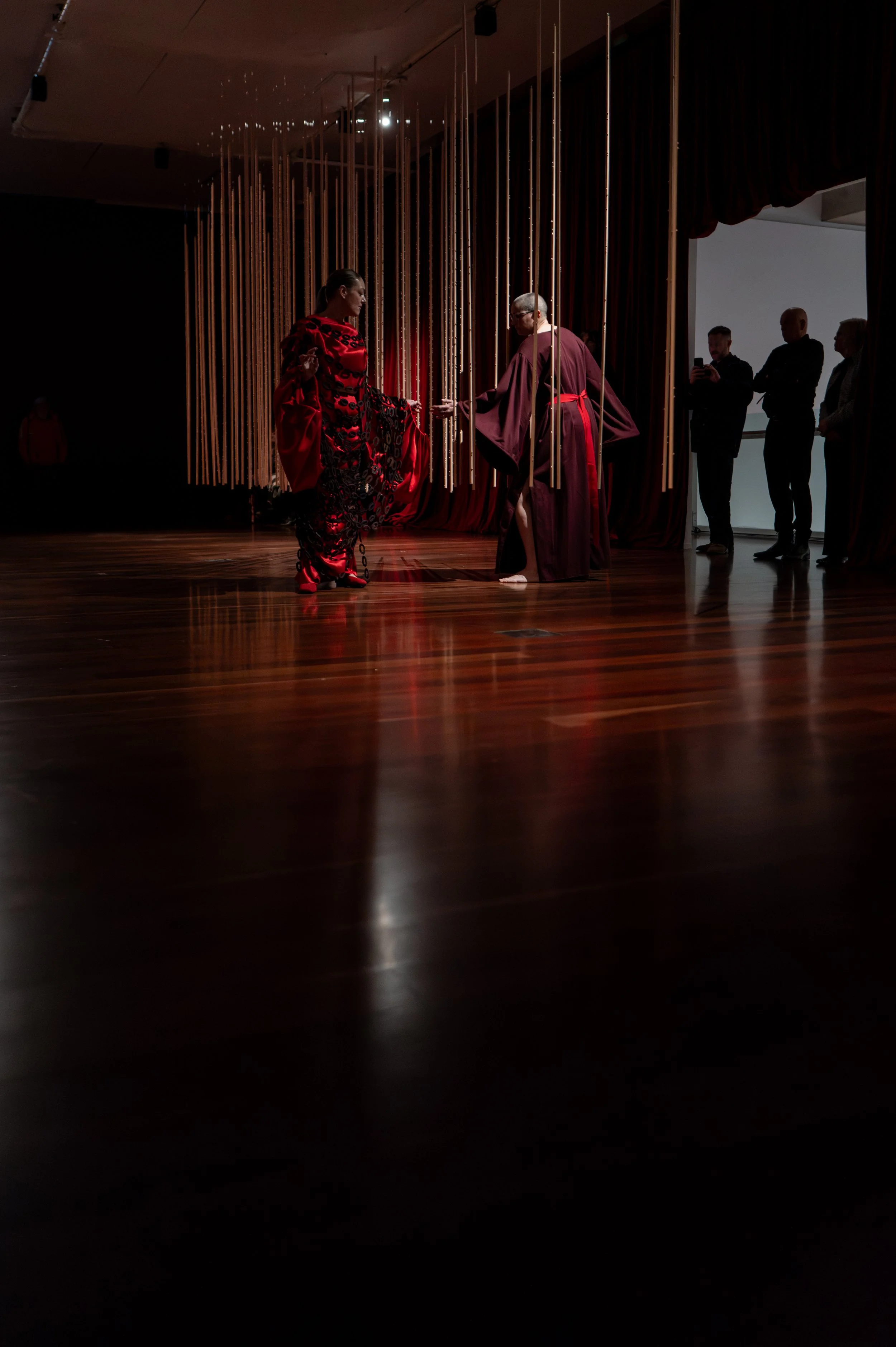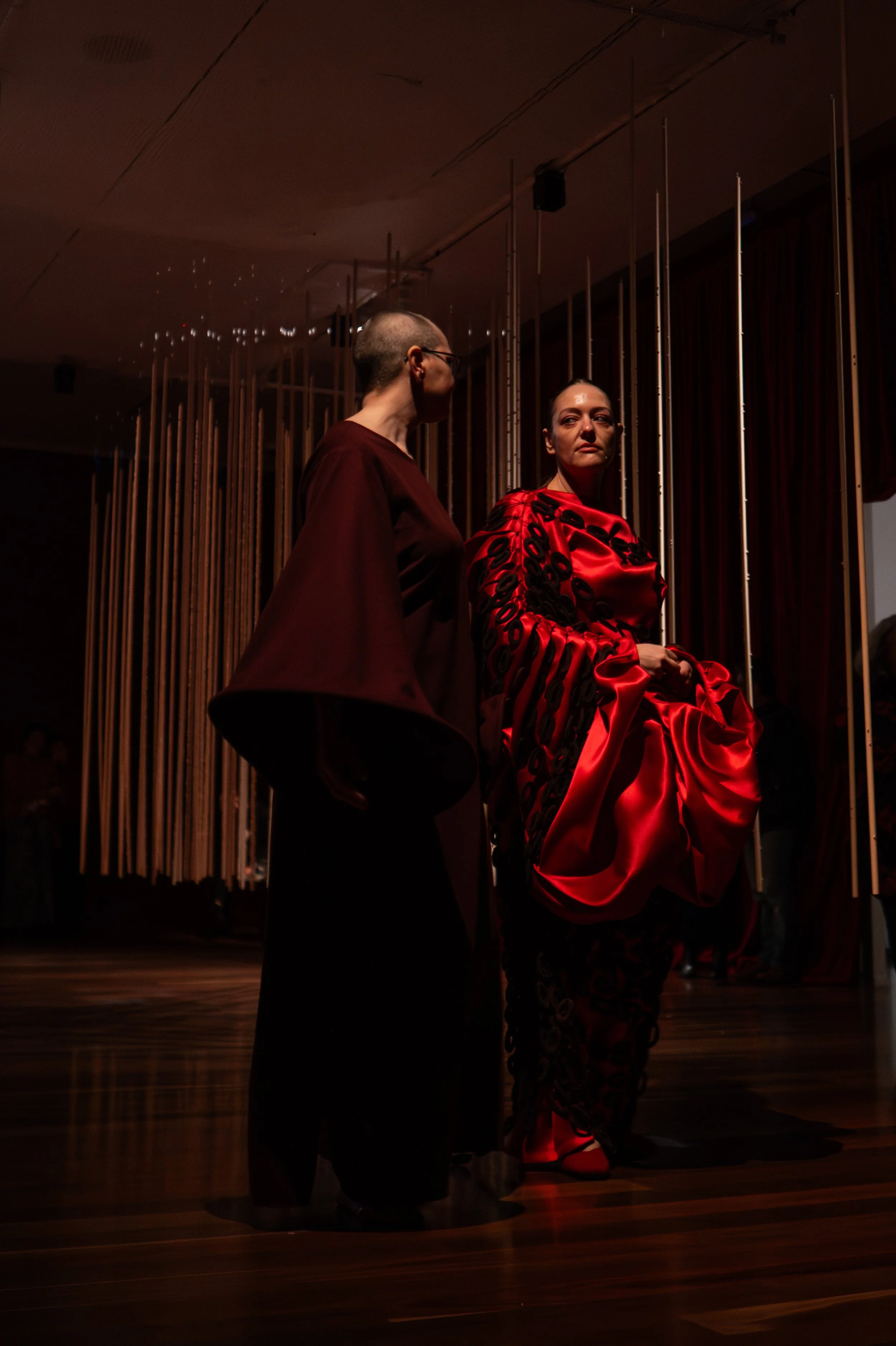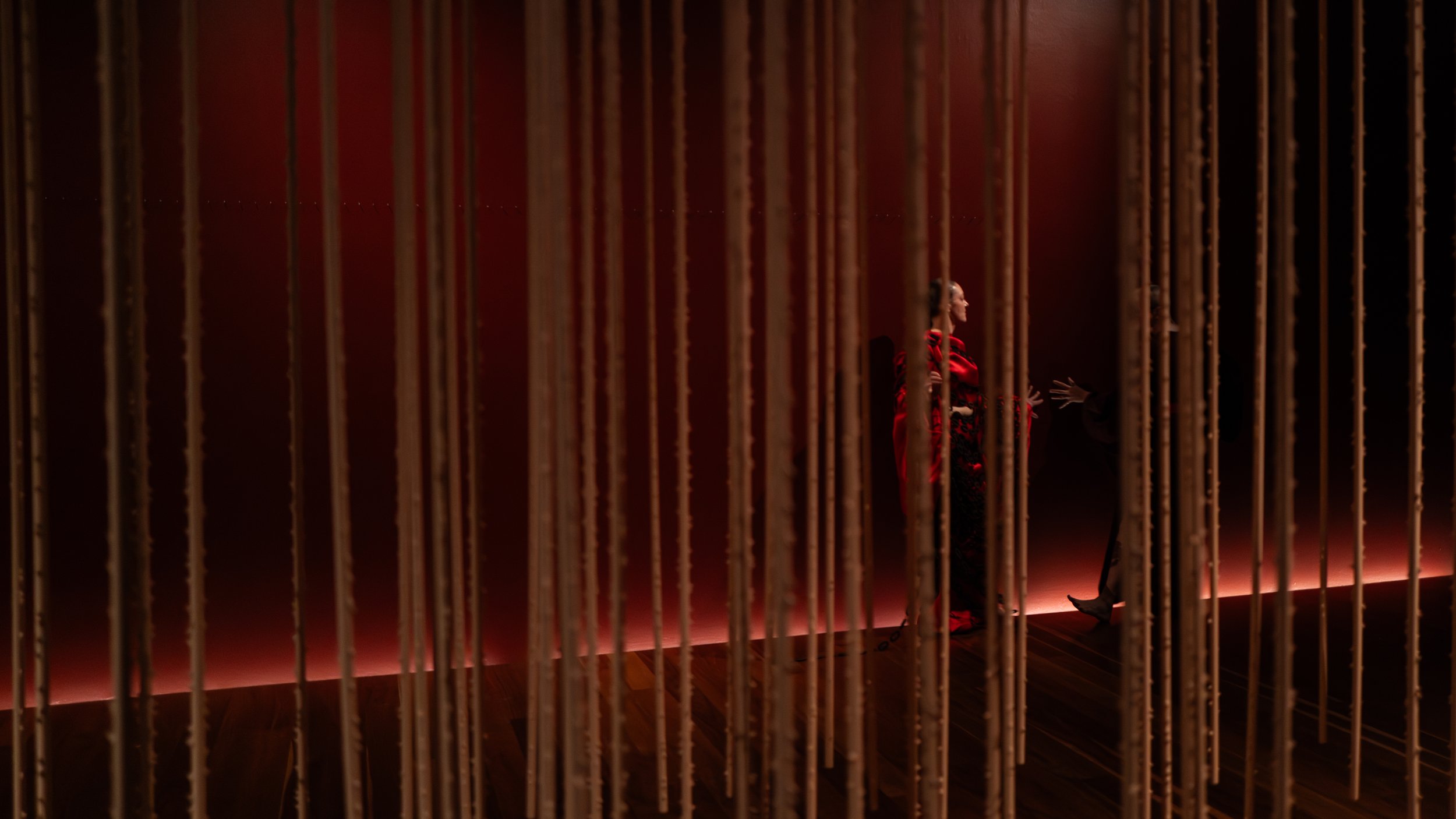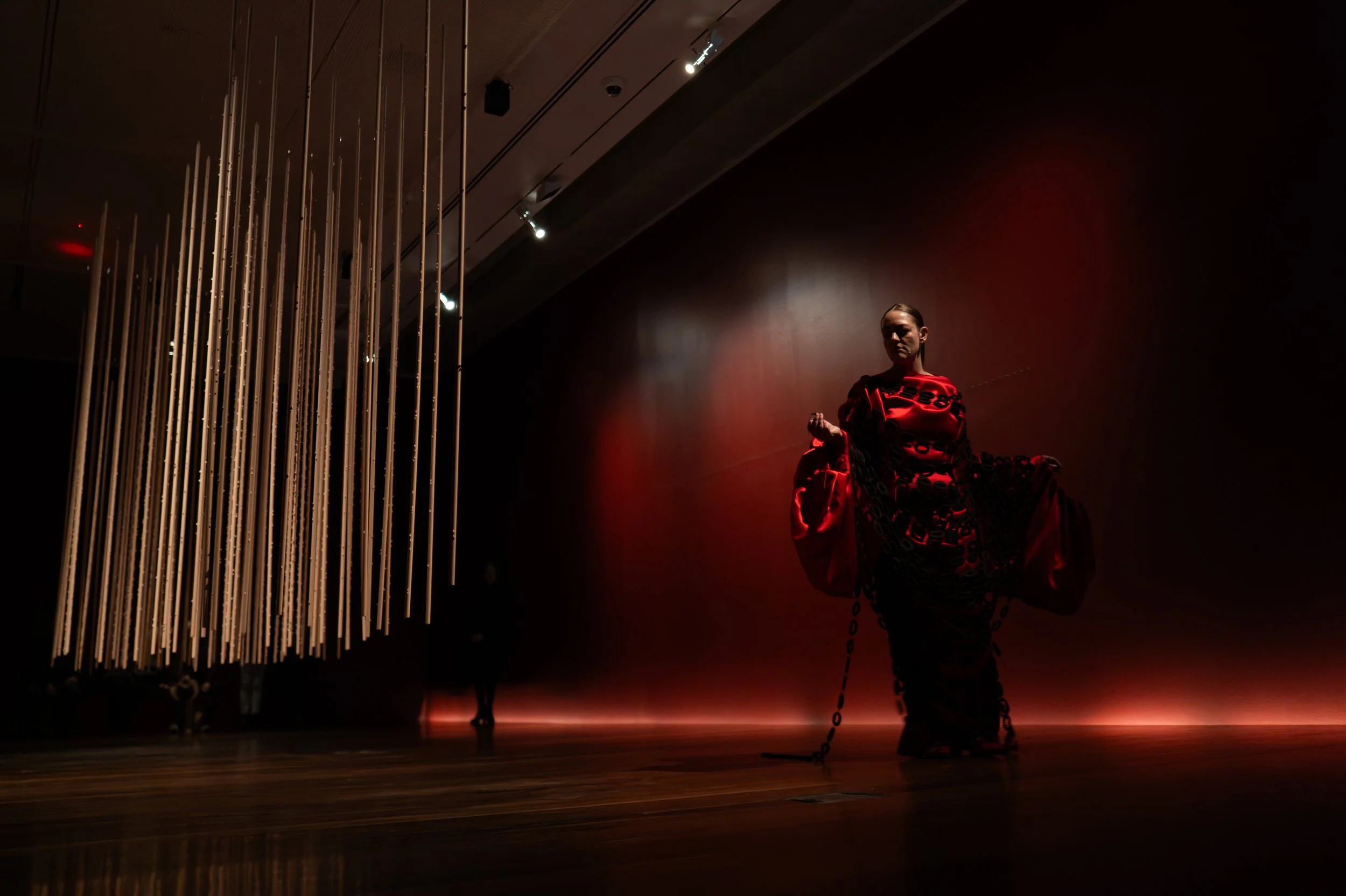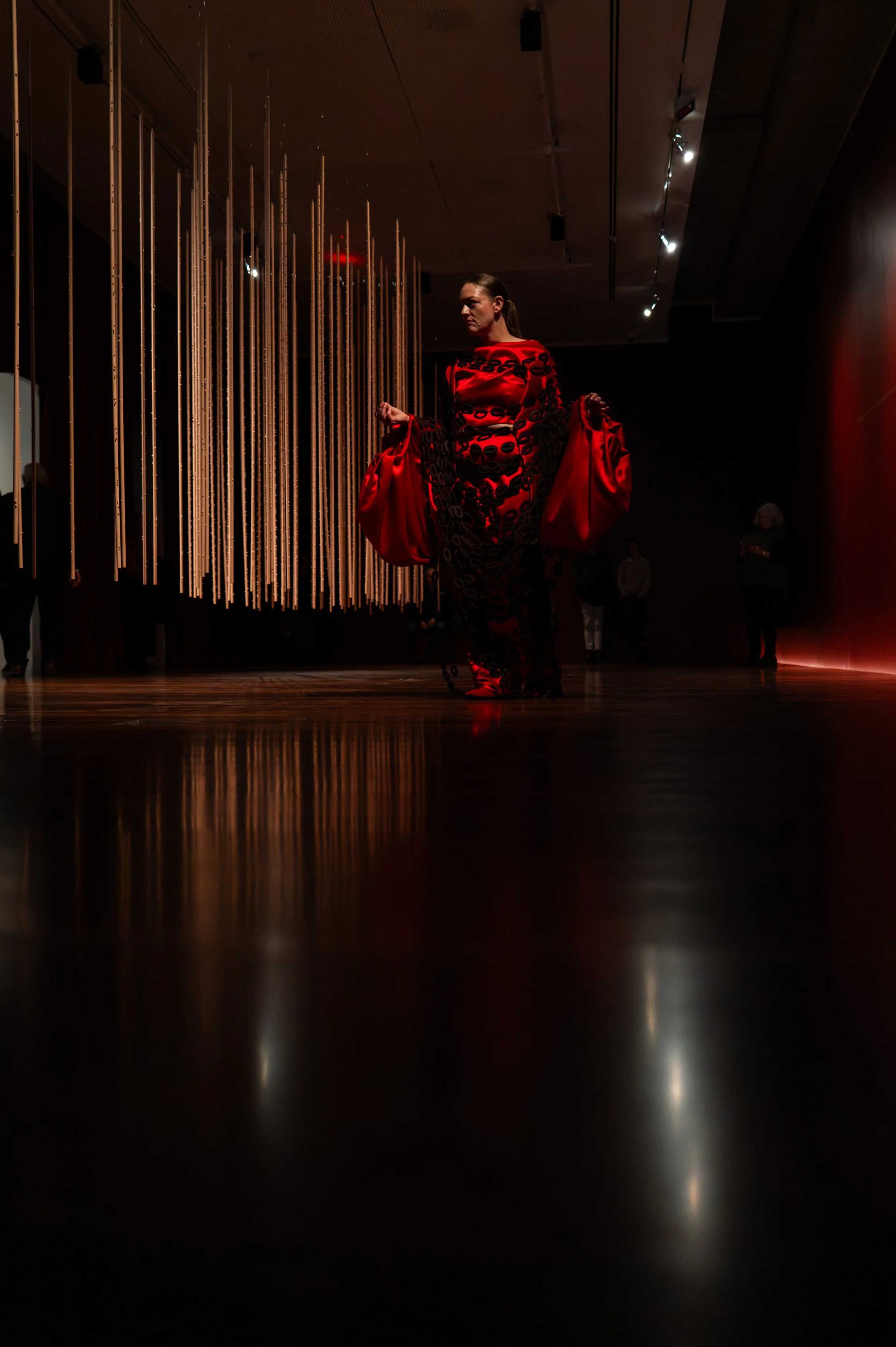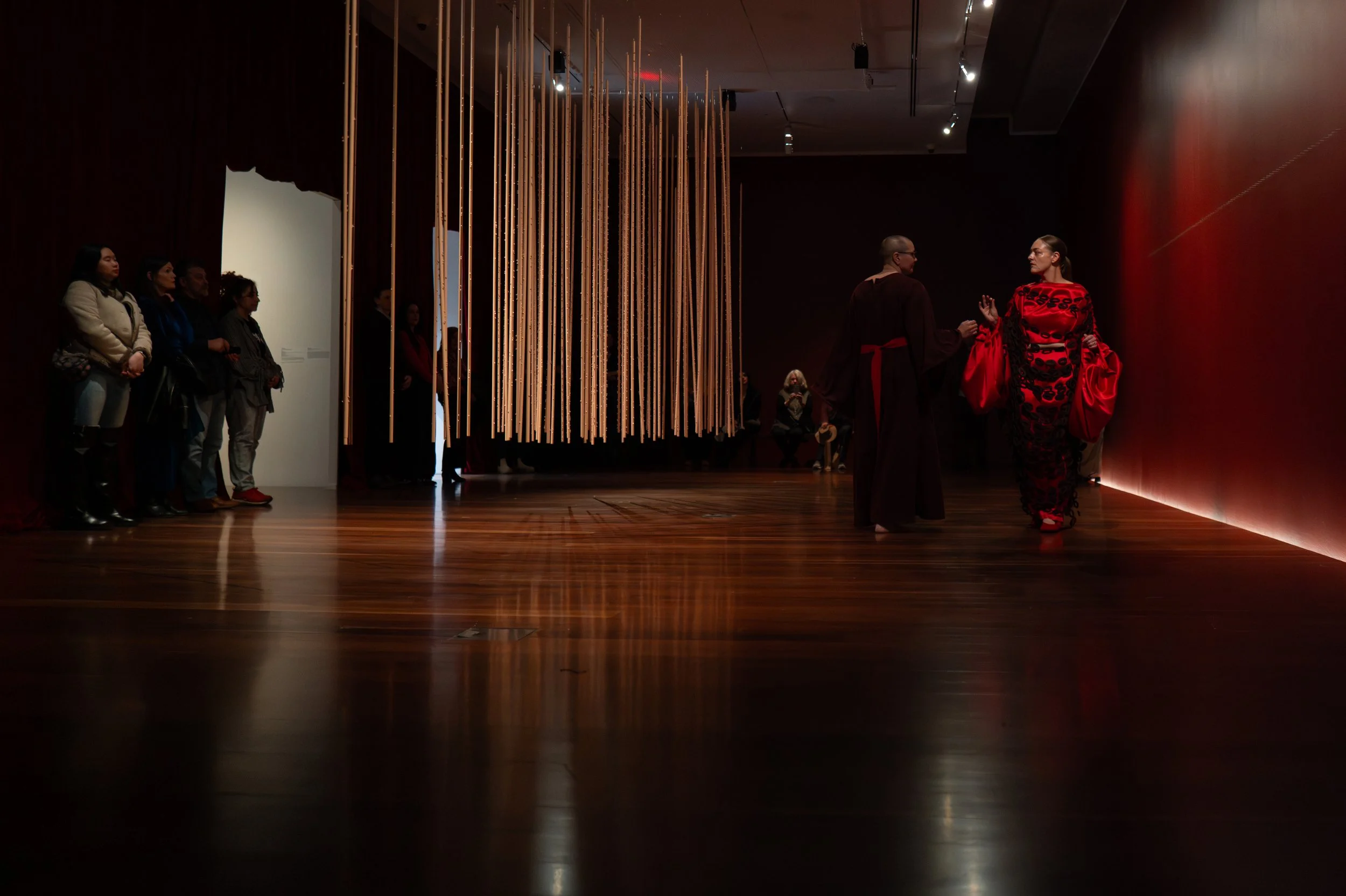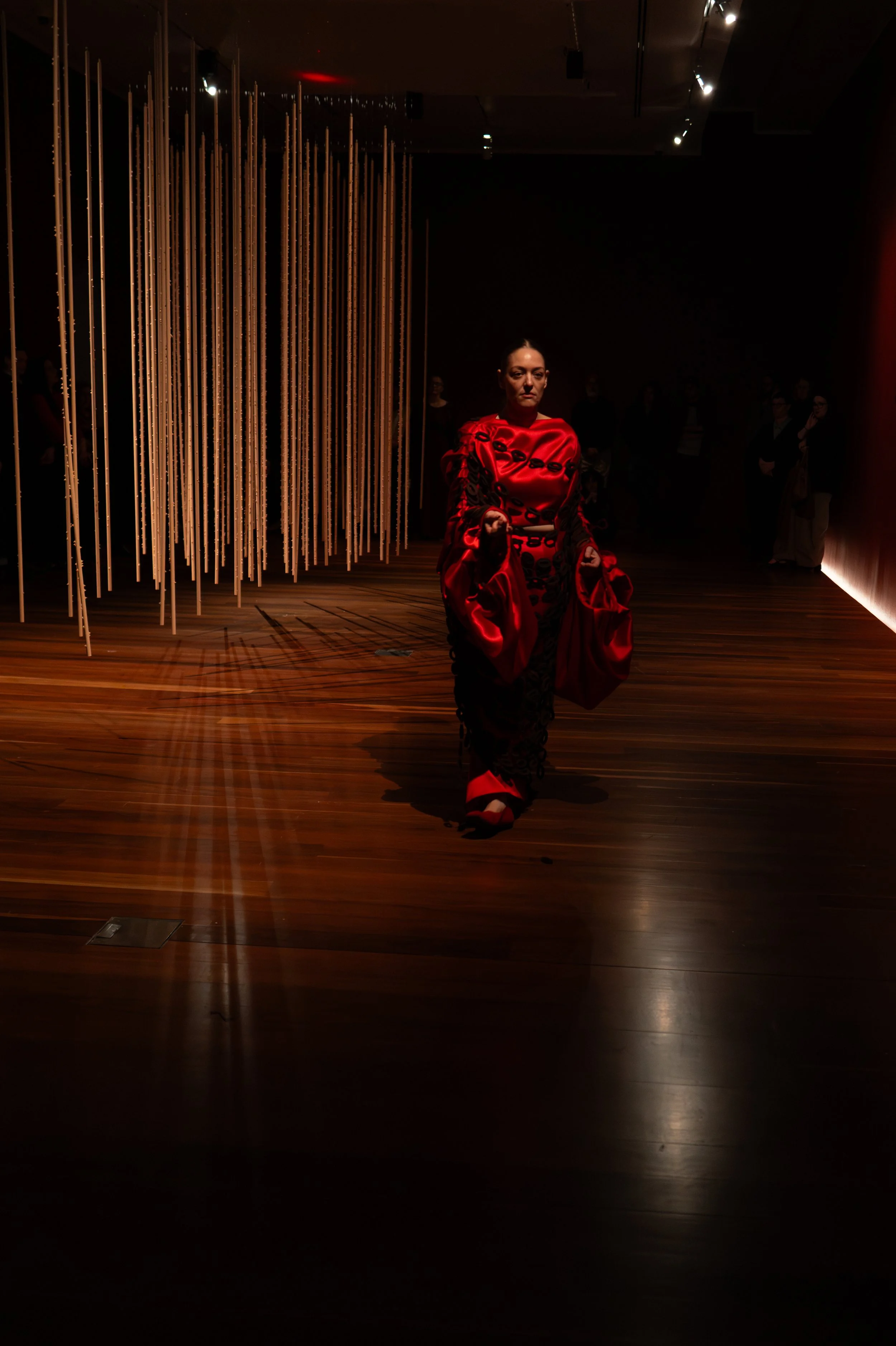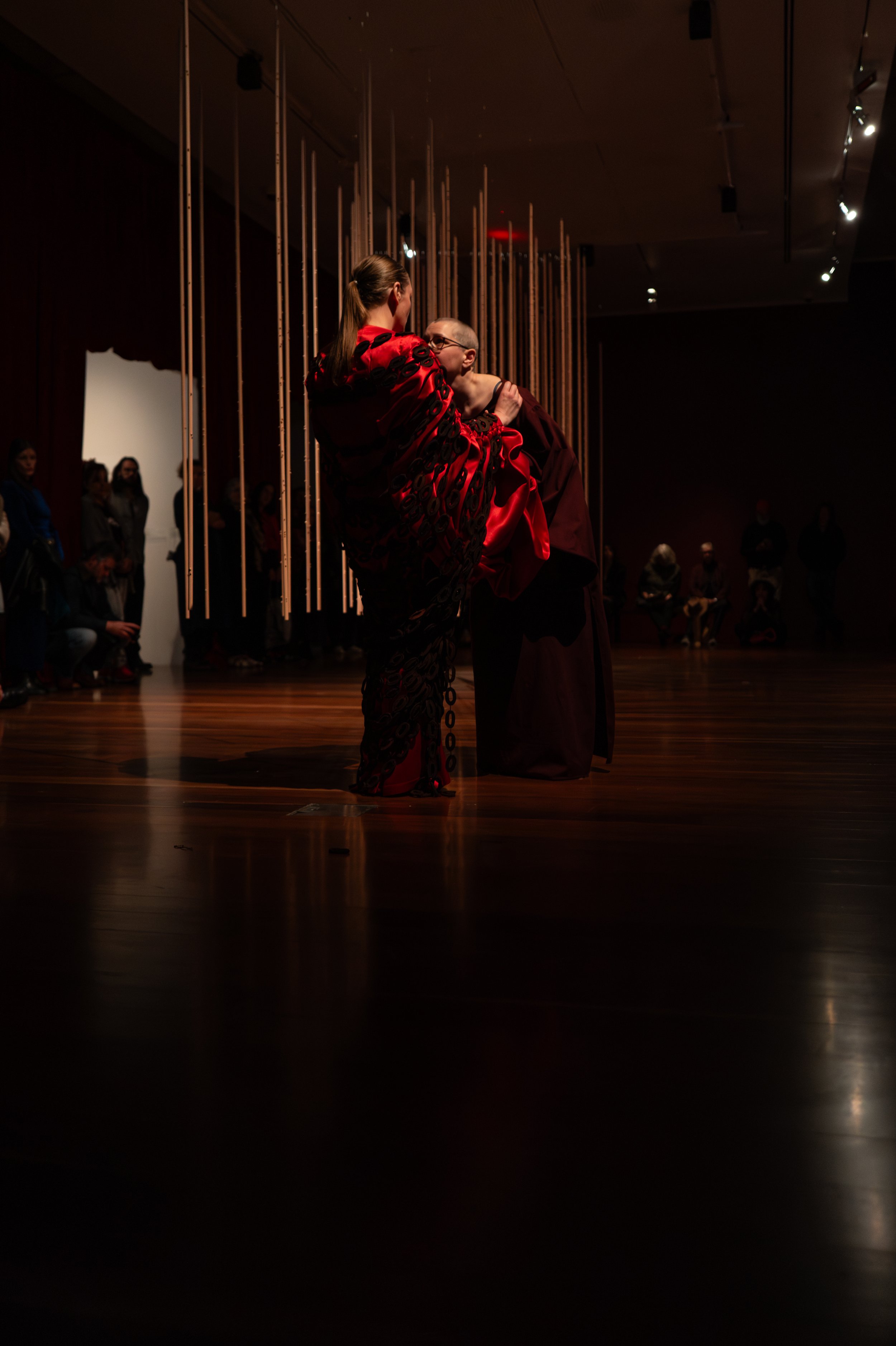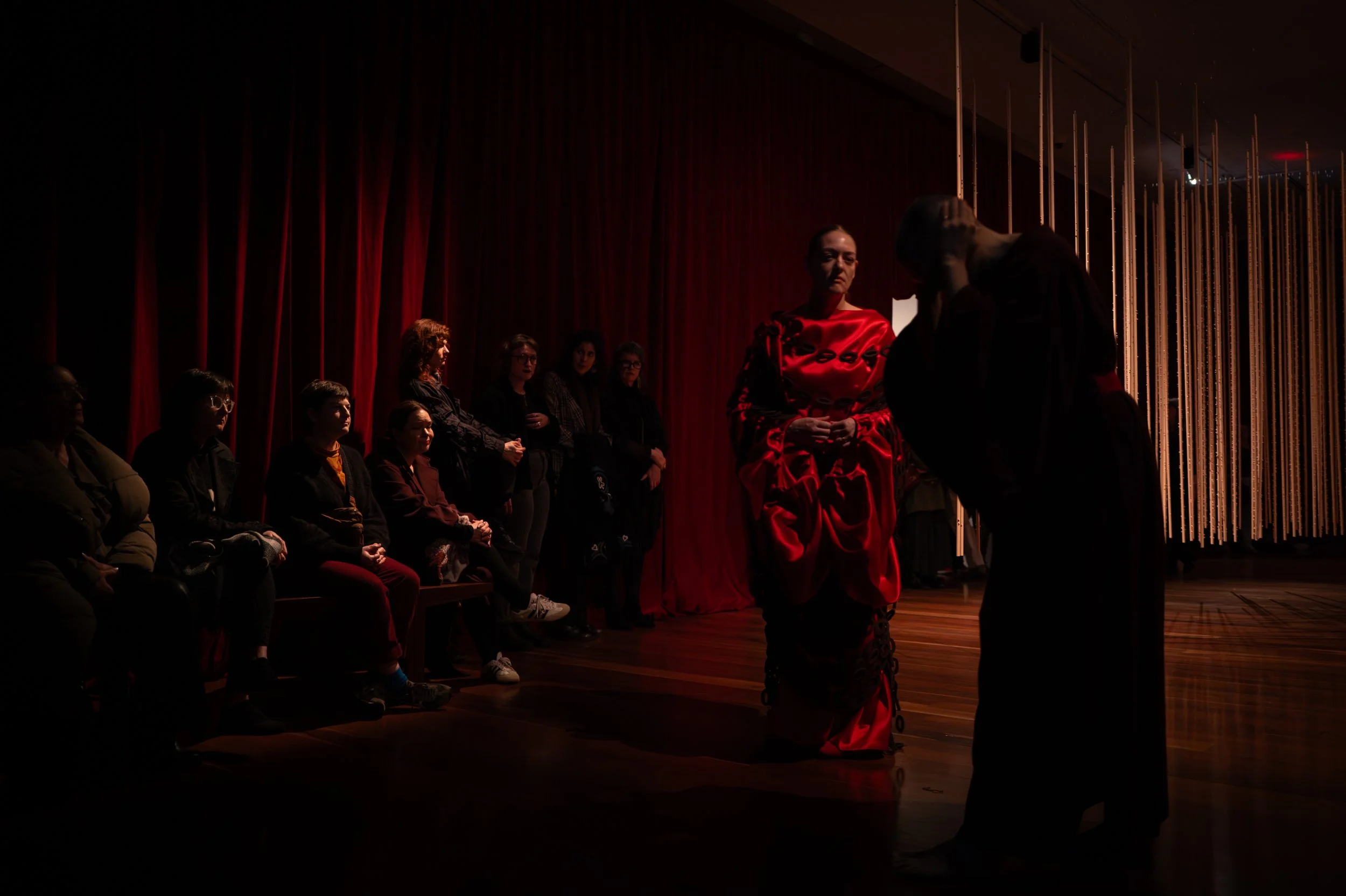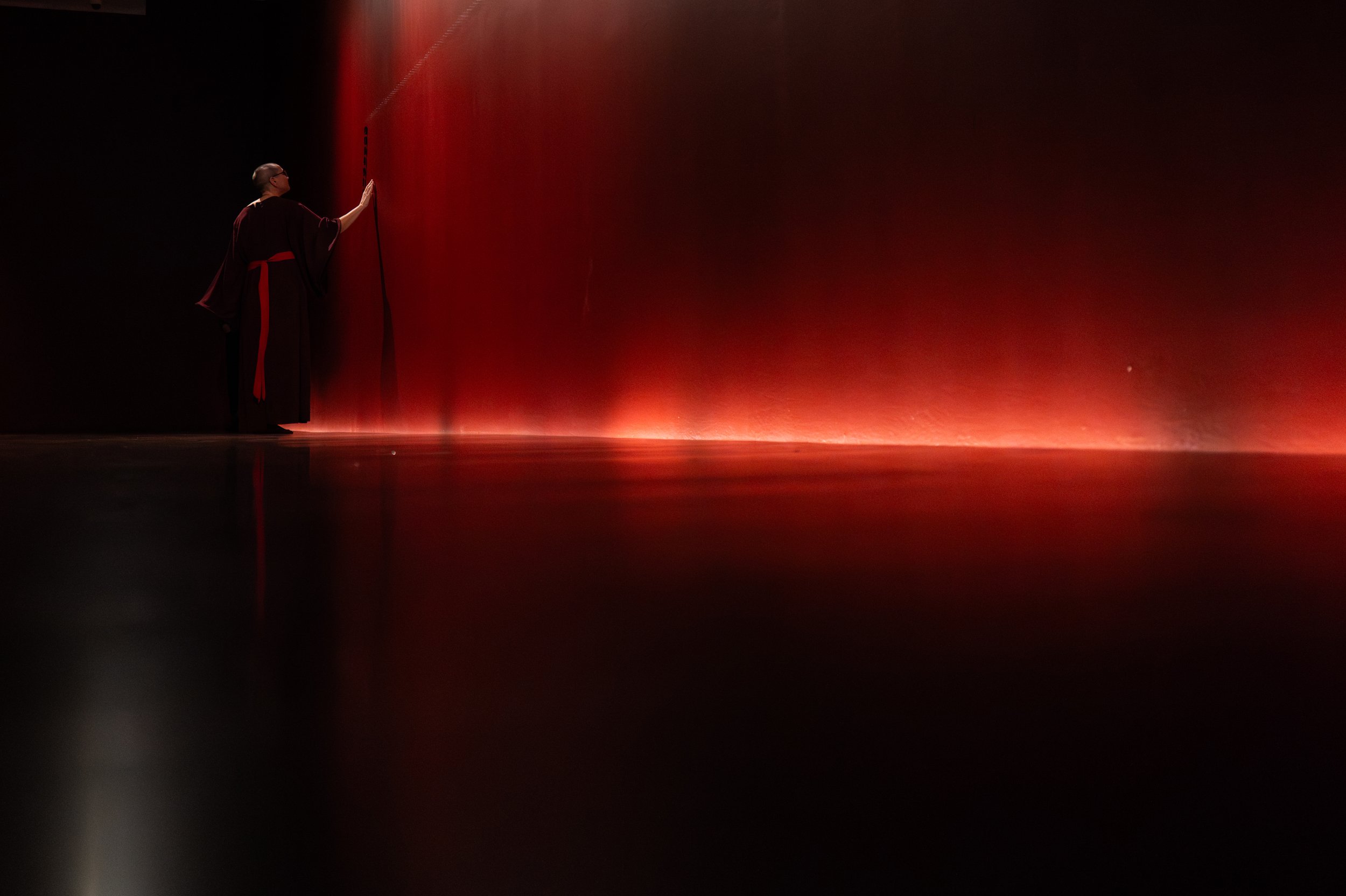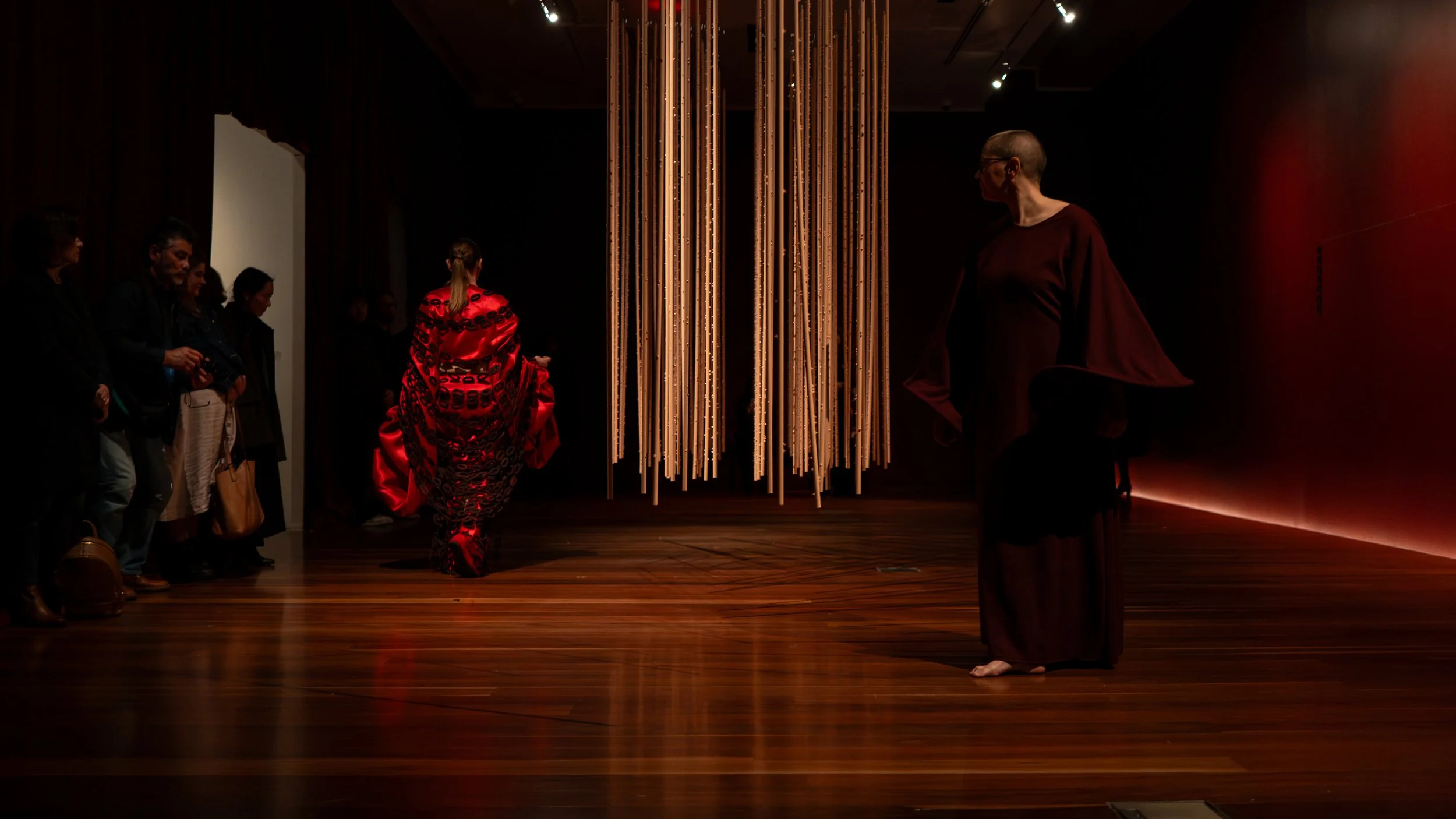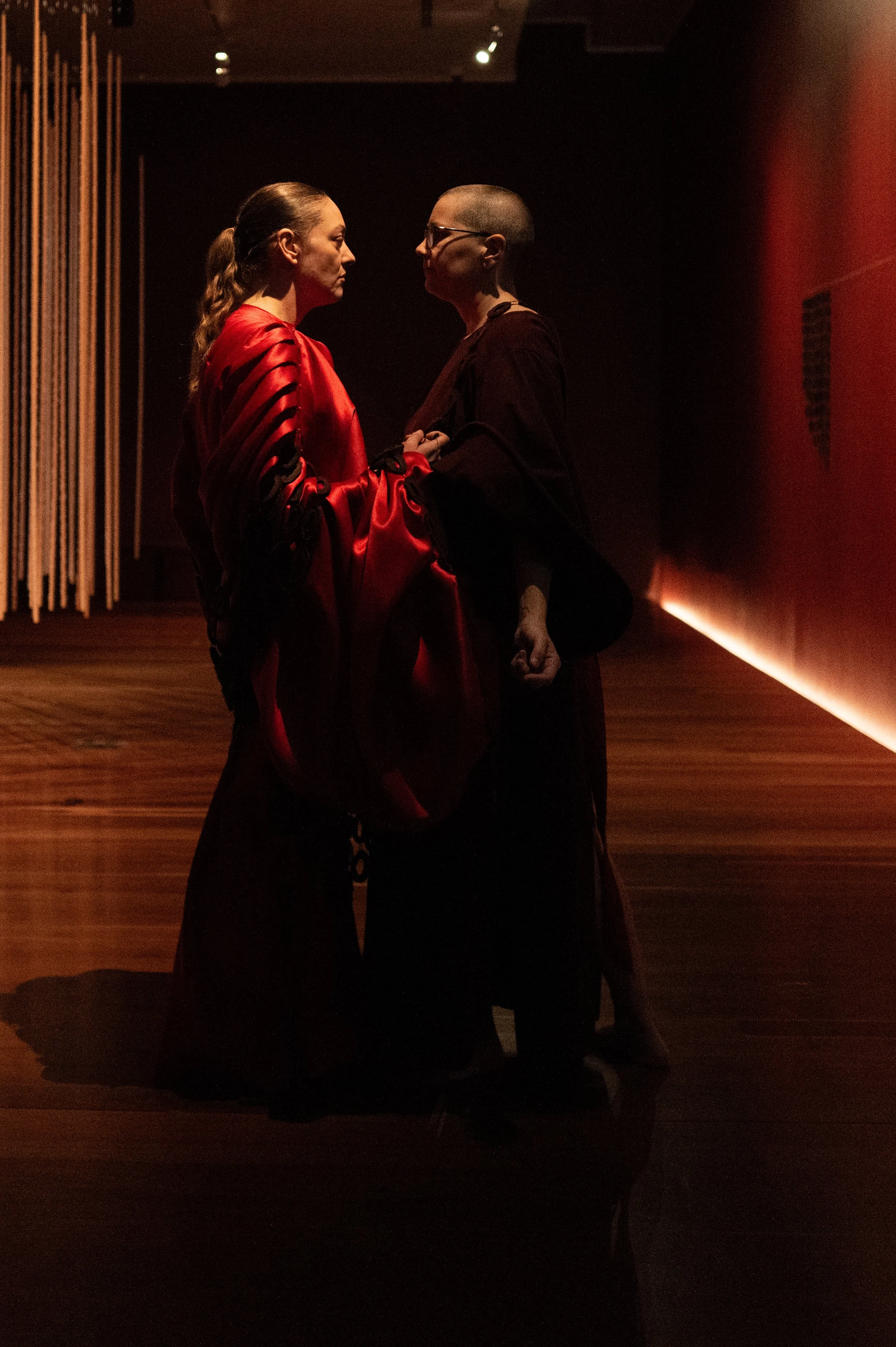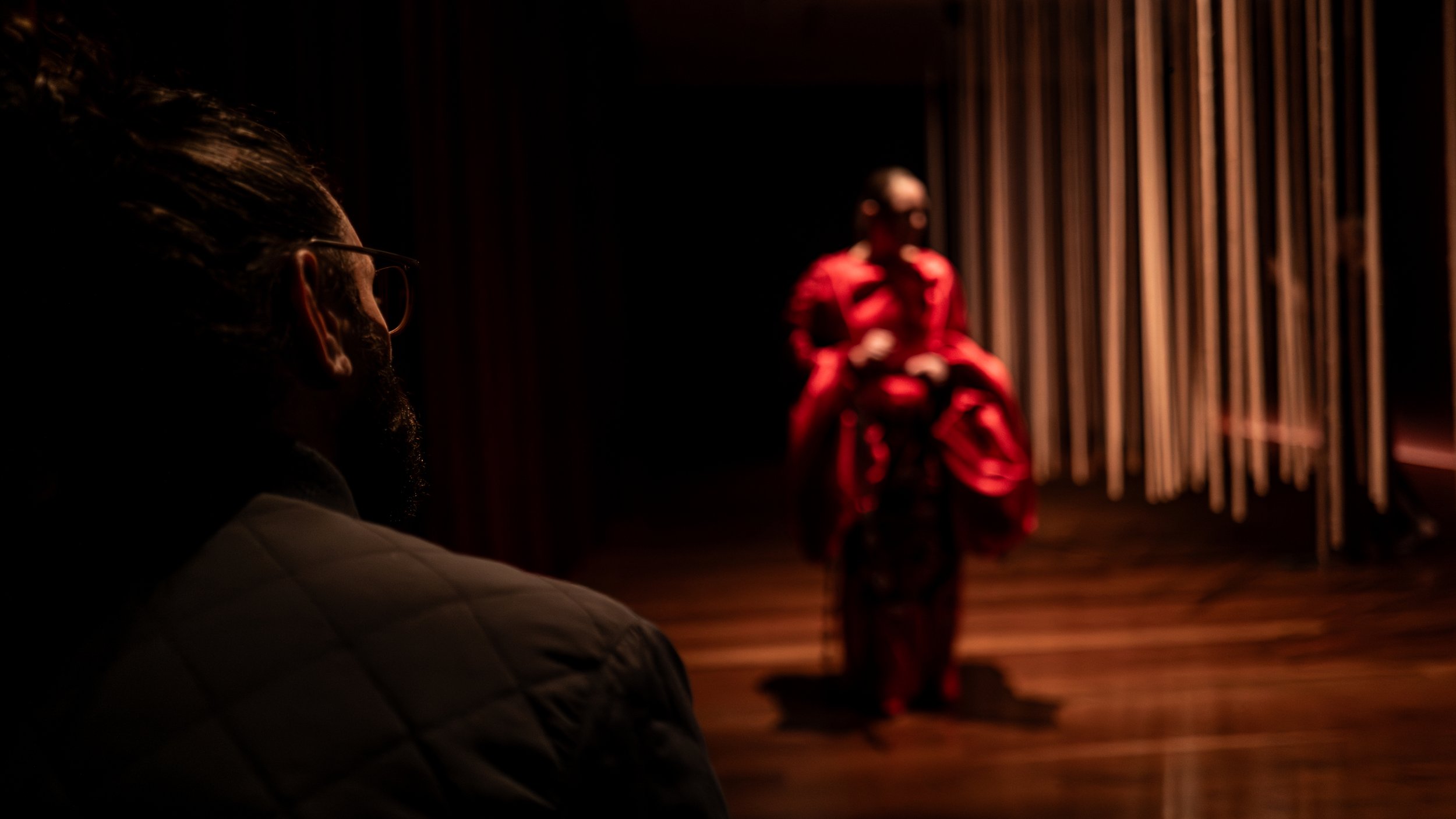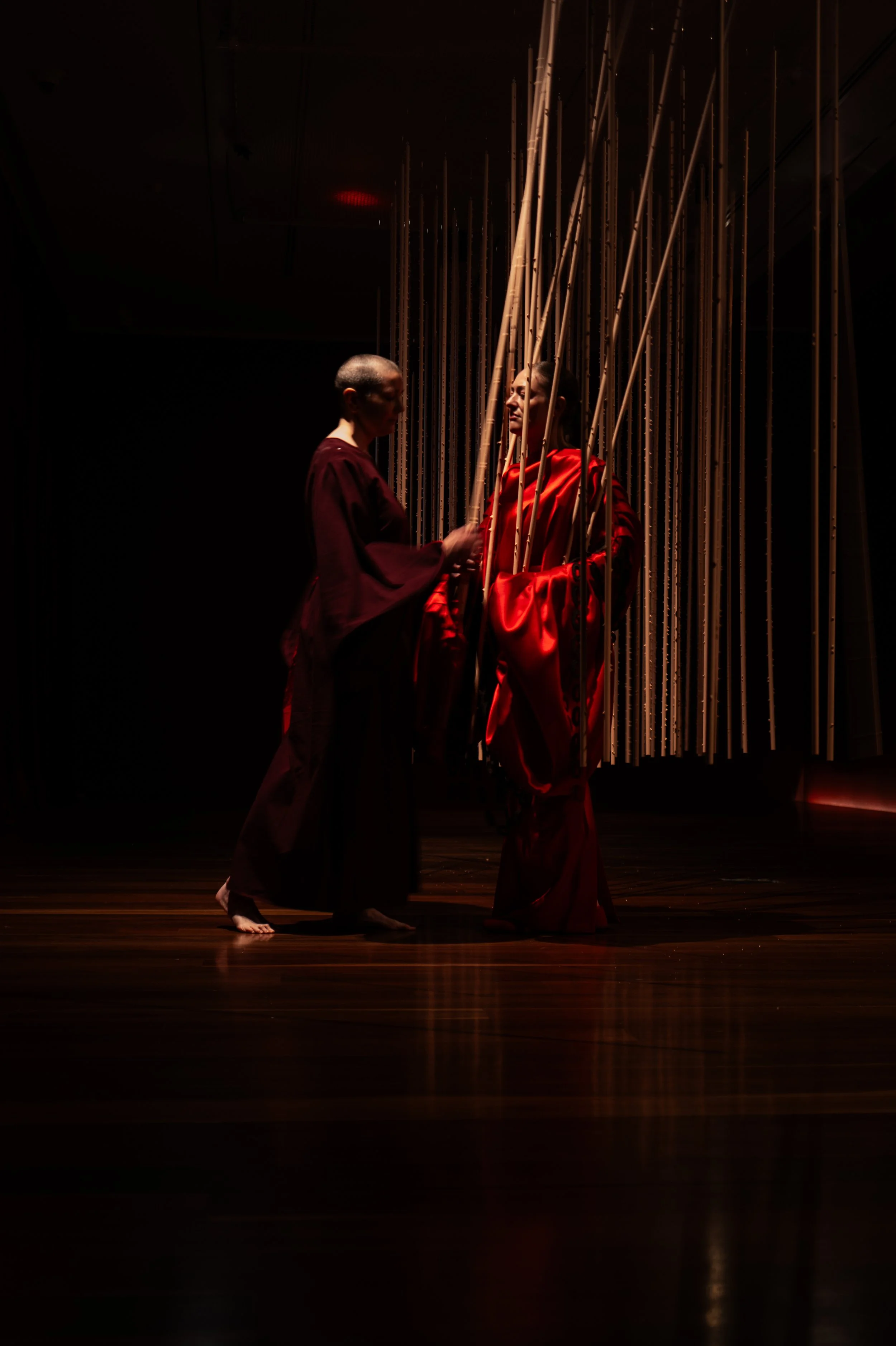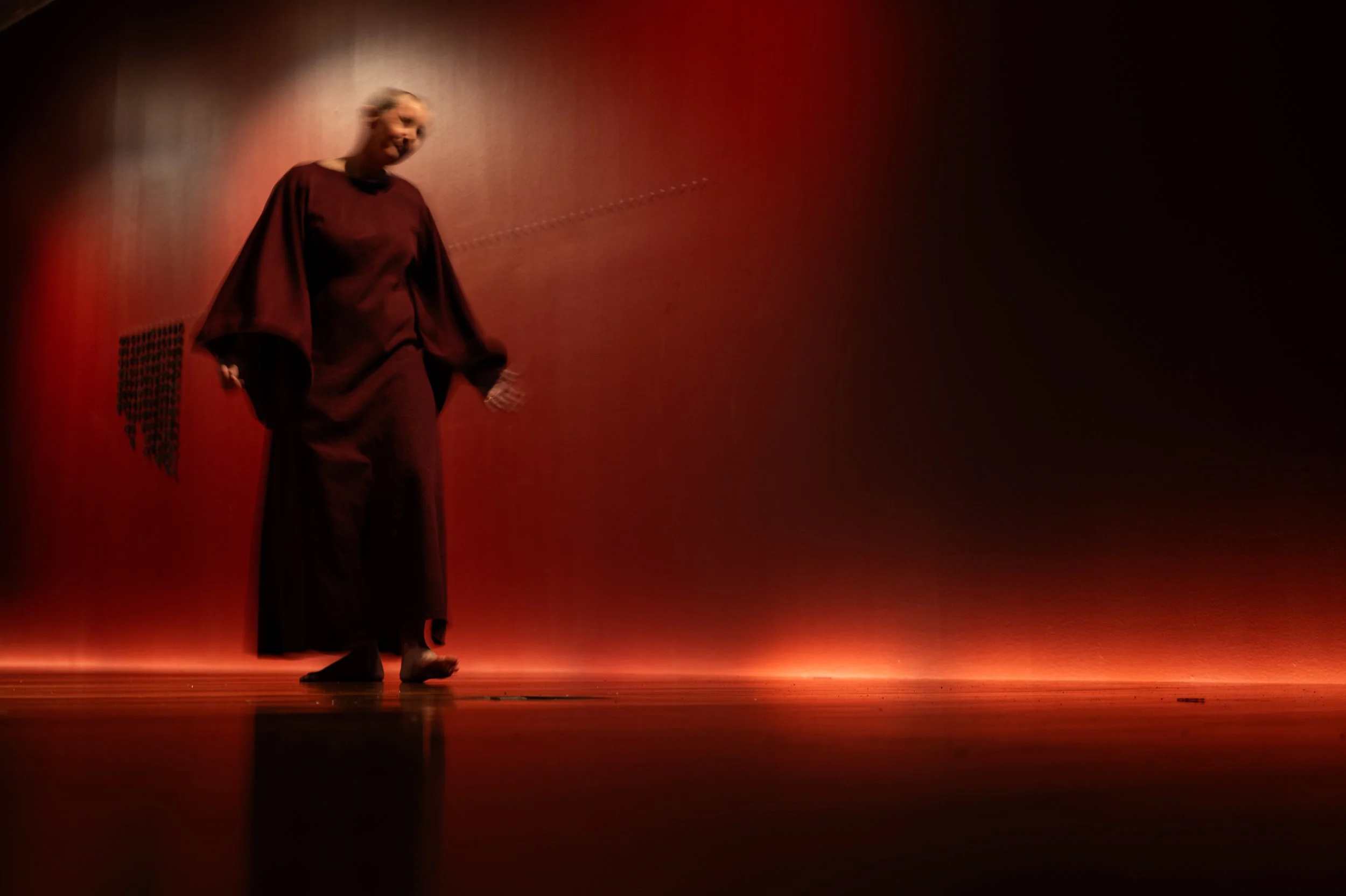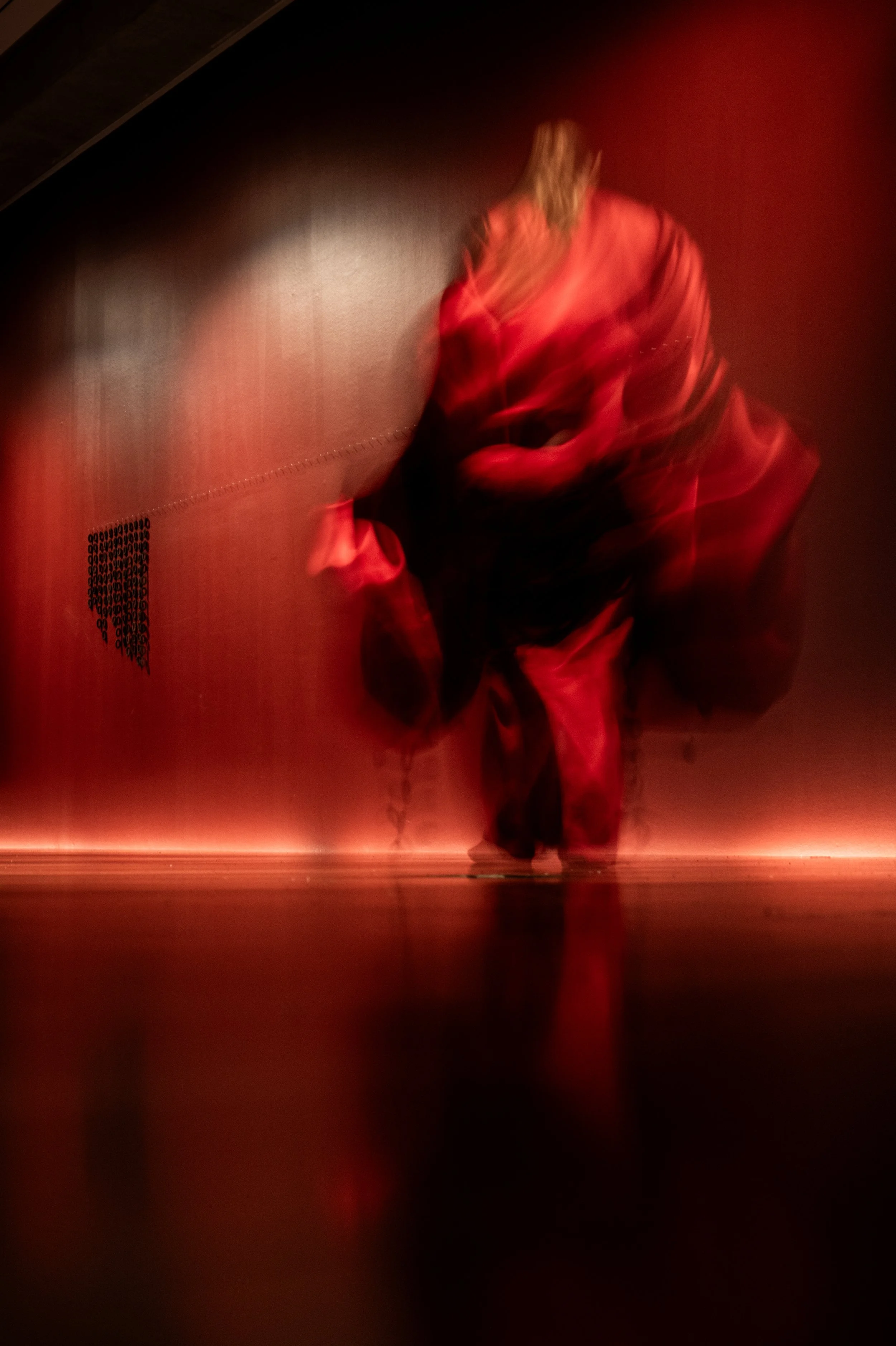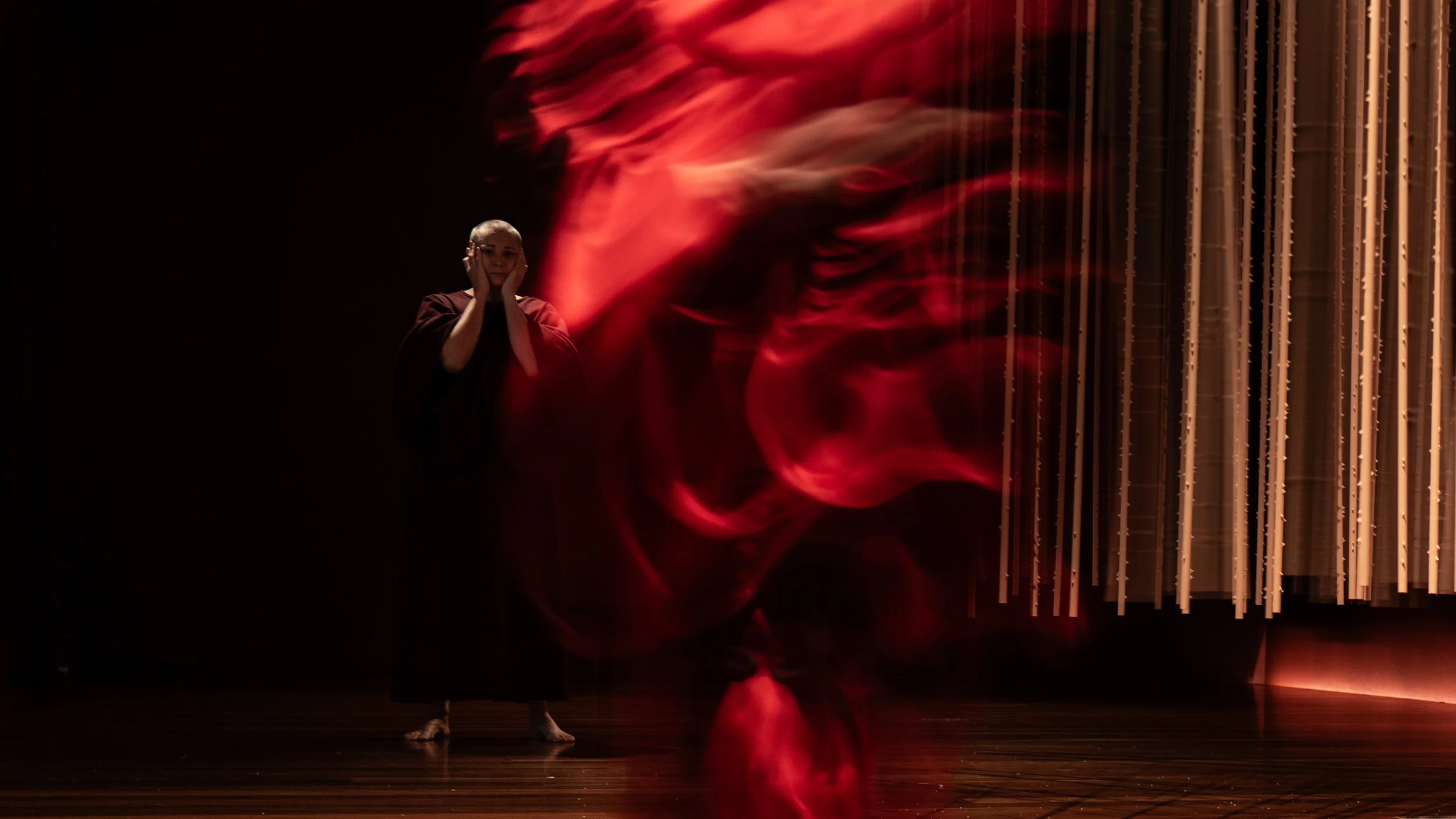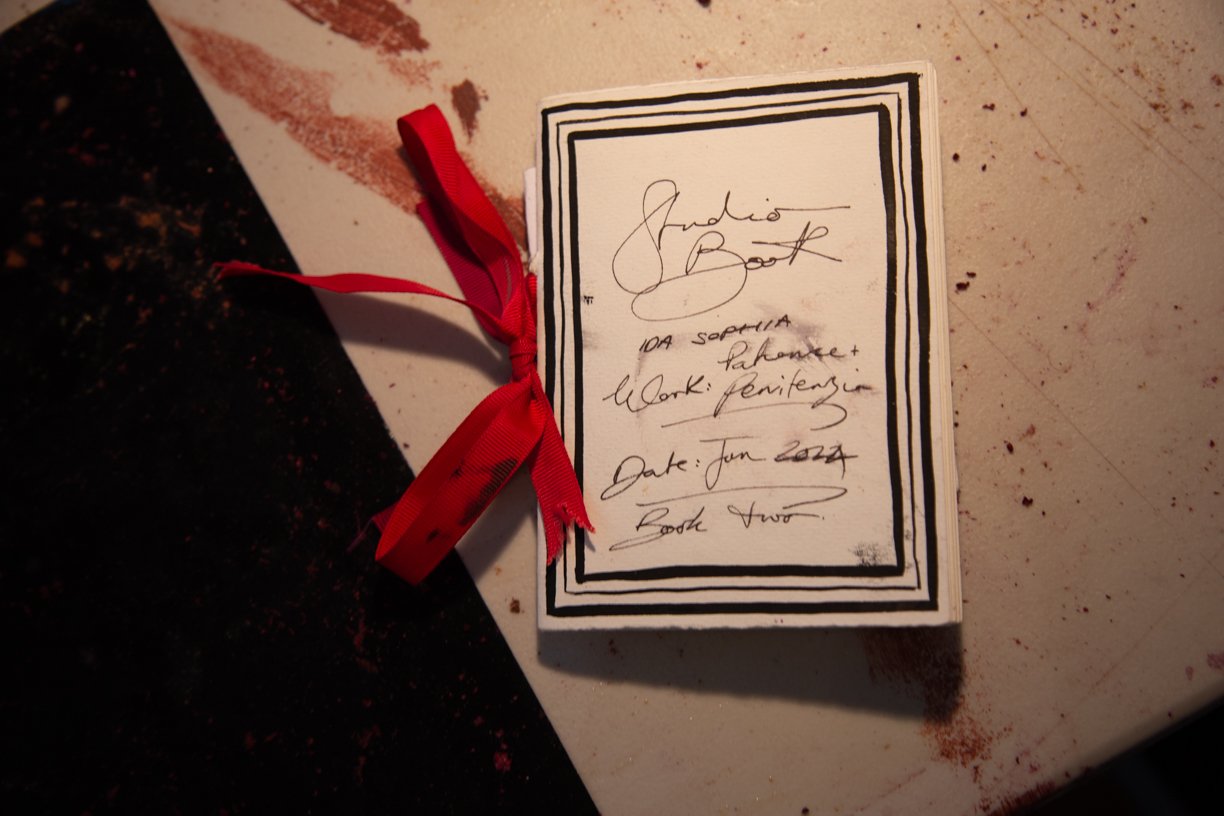
Patience & Penitentia, 2026
40 day durational performance by Ida Sophia
Accompanied by: Ashton Malcolm, Sarah Neville, OAKEY and Isobel Stolinski
7 hours per day, June 25 to August 22nd, 2026
Samstag Museum Of Art, Adelaide
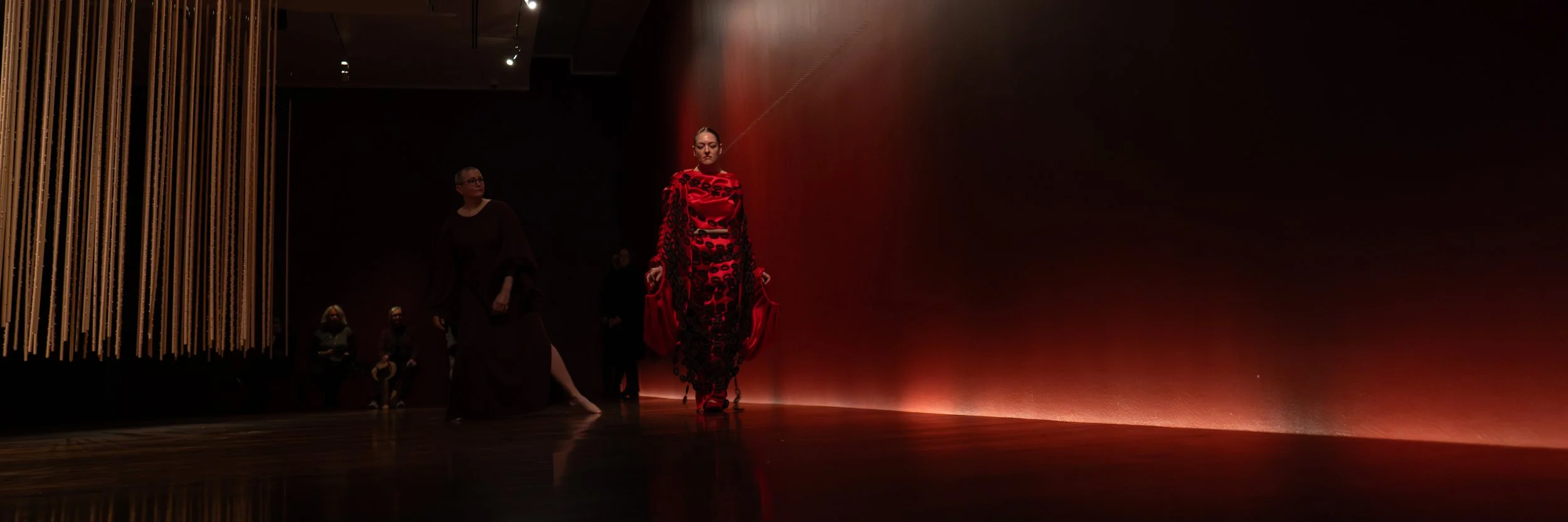
Patience & Penitentia is a durational performance about silence; inflicted and endured, witnessed and repaired. It centres on the silent treatment, as given and received by women.
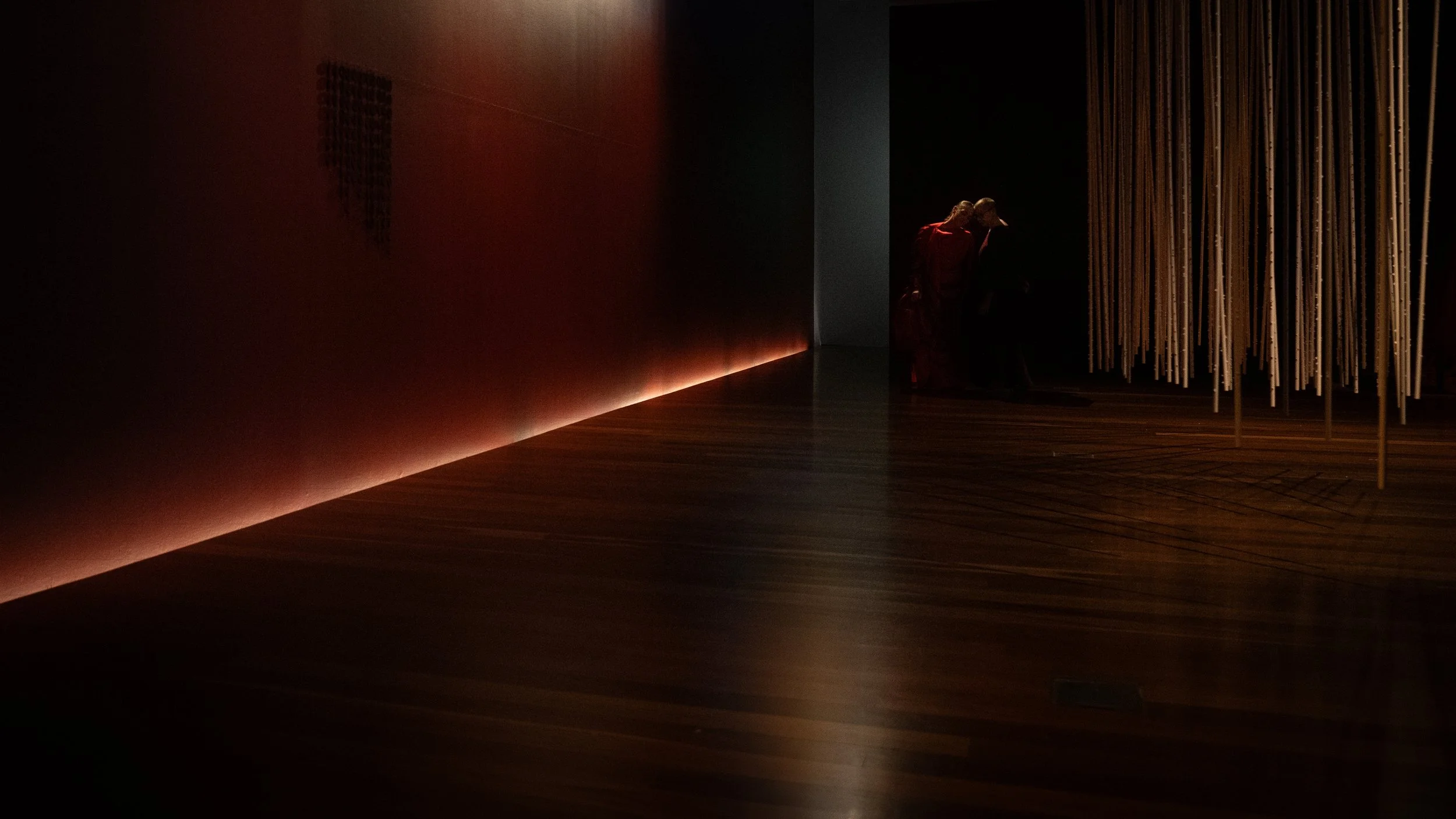
“Ida Sophia’s installation and durational performance Patience and Penitentia explores the painful and damaging experience of relational withdrawal – the silent treatment – in a work that enacts the power dynamics, strategies of control and form of punishment at its core. This work by Berlin-based South Australian artist expands on her earlier interest in performance and the exploration of extreme psychological states and limits of endurance. Over the span of the exhibition a participatory ritual performed by the artist and a select number of performers will see Sophia incorporate elements of sound, language, movement and gesture to publicly transfigure private suffering through collective release.”
Photographs/Performance Evidence co-authored
by Ida Sophia (Artist) and Vilma Leino (Editor)
Patience and Penitentia is a project supported by the Government of Australia through Creative Australia, as well as The City of Adelaide and The Australian Cultural Fund.
Patience and Penitentia
Essay by Elspeth Pitt commissioned by The Samstag Museum of Art
I
Some things take time to come to fruition, to gestate before a suitable form is found. At the Basilica Della Santa Caterina d’Alessandria a fresco figure is chanced upon, one dressed in chains, mournful, little whip in hand, and below it in letters articulated carefully, plaintively in gold, wavering but upright and somehow withstanding this great figure’s weight—PENITENTIA. Penitence. A flare of recognition in a sorrowing figure. It gives rise to a riff on a family motto, Patience and perseverance now reembodied as Patience and penitentia. She expressed penitence for what she had done. She wept tears of penitence. As penance they brought her a gift.
II
Through time there are many who have been cast out. Christ in the wilderness. Nebuchadnezzar among the animals. Ovid banished to the Black Sea. In a way these are exceptional examples, but they reflect a prevailing occurrence and a universal fear—that of being set adrift. We may think of the ensuing silence as an absence but it can also be a presence, one that that is adaptable, capable of forming and of metamorphosing into myriad mental architectures which on the one hand can generate room for thought and insight, but equally, can also occasion the kind of rumination that grows unruly, unhealthy, obfuscatory, and which, once made giant, can overwhelm one completely.
III
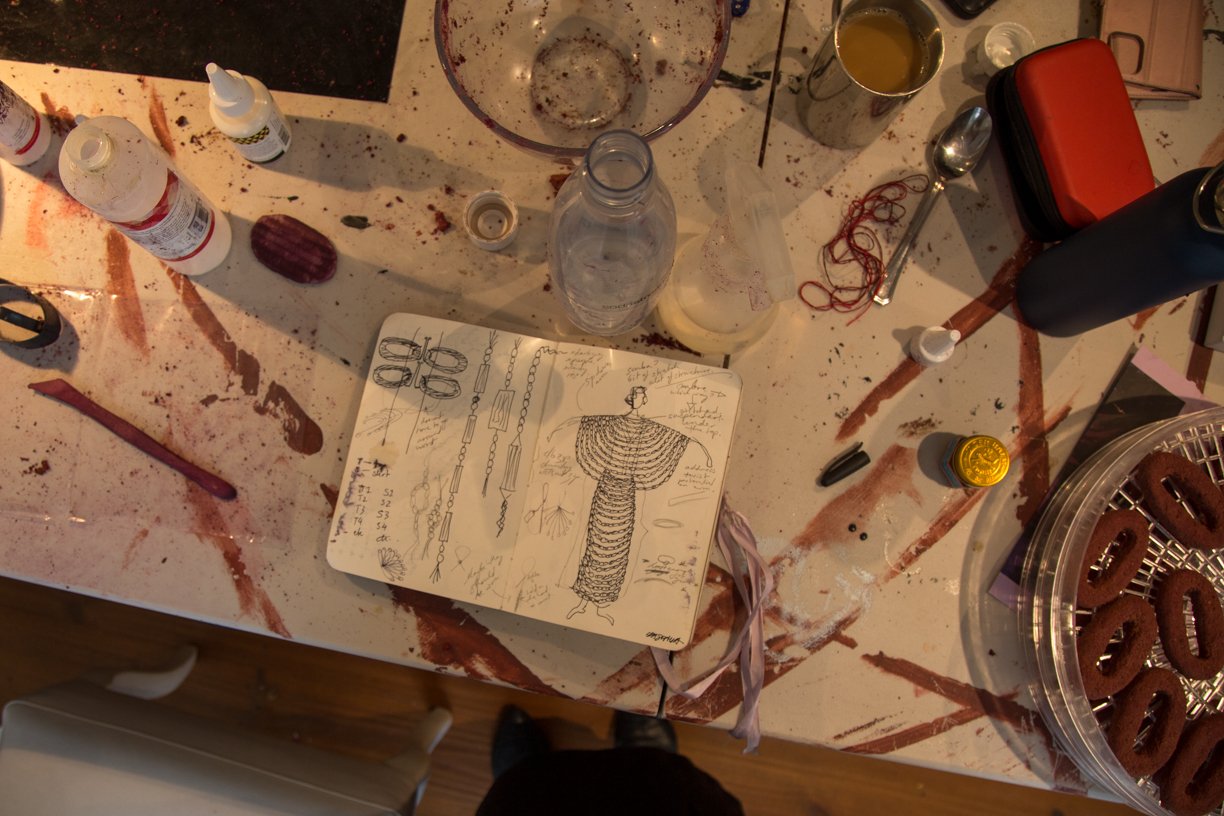
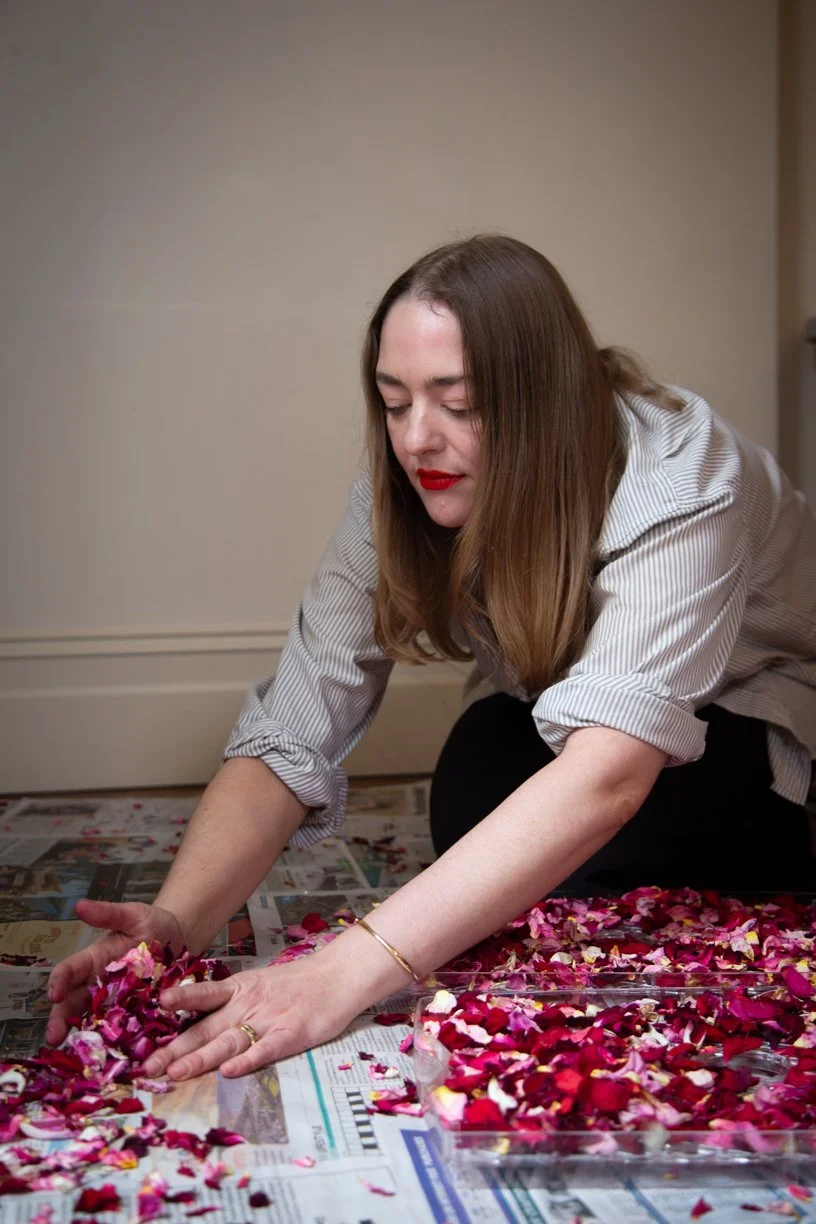
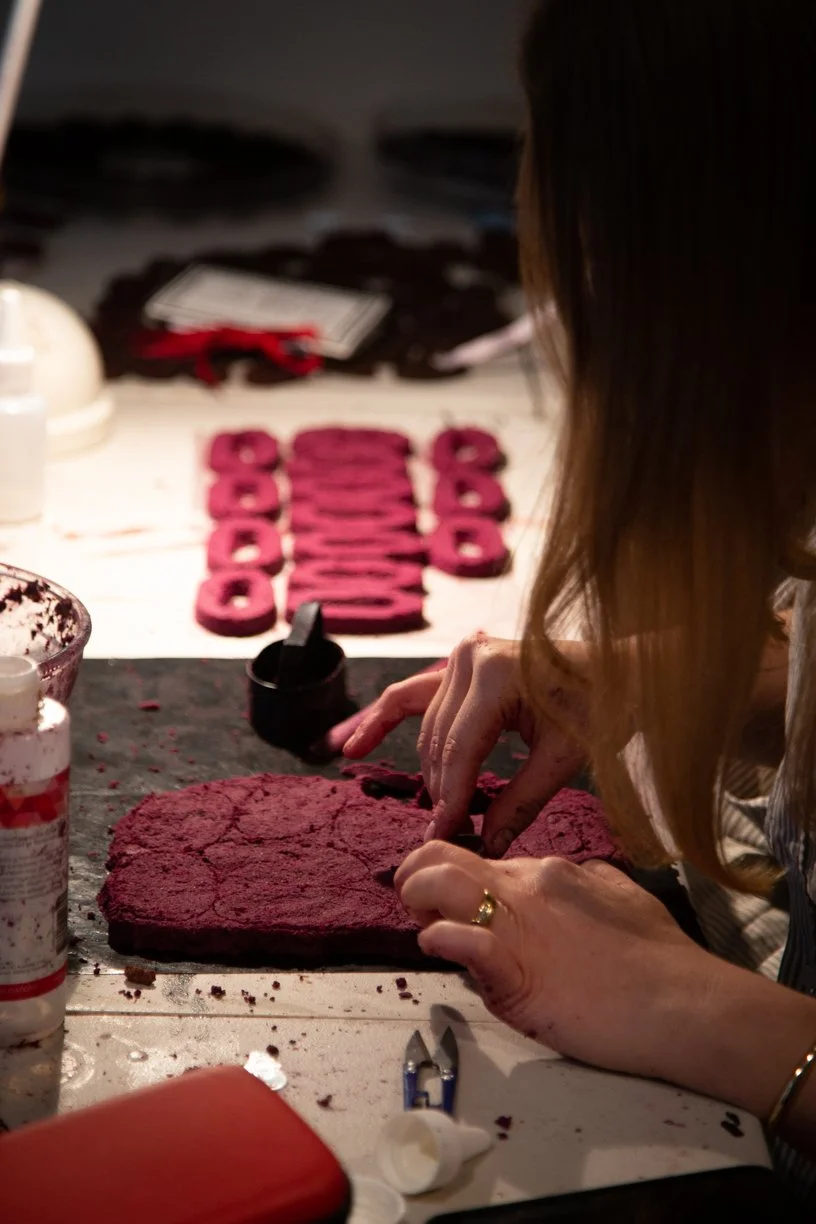
When Christ was cast into the wilderness he considered the flowers. To circumvent anxiety, look to something beautiful. What can we create in our cage that makes our experience of it bearable? Gather roses from the gardens of those who have cared for and held you. Dry these thousands of flowers, crush them, draw out their fragrance, intensify their colour—red—redolent with connotation and symbol. Make from them formal structures, fashion them as rosary and as clothes. Now adorn yourself. You are Penitentia anew. You are armoured by love.
IV
Performance suggests artifice, perhaps even falsehood. But with it, Ida Sophia pursues, isolates, then scrutinises human behaviour, both its humdrum and confounding particulars. This she does as an act of endurance, so as to exhaust the possibilities of her material, to look over it keenly and with the clearest of eyes. Catharsis may be a typical attribute of performance, but conversely, she is skilled at keeping balance, and of forming delicate interplay between charge and release. She may be a central figure in the environments she makes but they are, by design, ones not only to observe but undergo.
V
As her work has evolved it has increasingly, and perhaps necessarily, encompassed collaborators who have helped her, through searching choreographies, to expand beyond the limits and experience of her body. The structure of Patience and Penitentia, which includes accumulating performed, material and sensorial elements, begins to figure as the petalled arrangement of the rose itself. I am hiding, in a rose. wrote the poet Sweeney Reed. The images of Ida Sophia’s work, while playing out over days as opposed to the moment of Reed’s poem, feel similarly concentrated, nonetheless. What has been excised, and at what expense, to make this work which, while durational, is distilled, as though requiring many conditions, both intentional and serendipitous, to coalesce?
VI
Altarpieces, baptisms, votive candles, ritual intended to seduce, to mollify, to inculcate, give meaning. Some say art is in itself incapable of effecting change but art in the context of religion has helped influence people every day for millennia. And even those among us who can’t commit to religion still feel awe when entering a cathedral or temple or some other such place deemed holy – voices hushed, eyes turned upward, struck if not by the beauty then by the effort that has gone into its creation.
VII
While its infliction is painful it is fascinating to explore the reaches of silence, particularly the conditions in which its nuance and aural subtlety become something quite unlike silence at all, but rather, pervasive, alive, a sometimes even deafening score. Perhaps this is the essential power of the work—to explore and reconceive easy definitions, blunt assumptions, to stretch out in them, to probe and wonder at the clumsiness and carelessness of our interactions with each other, to plumb, deeply, what it is to be human.
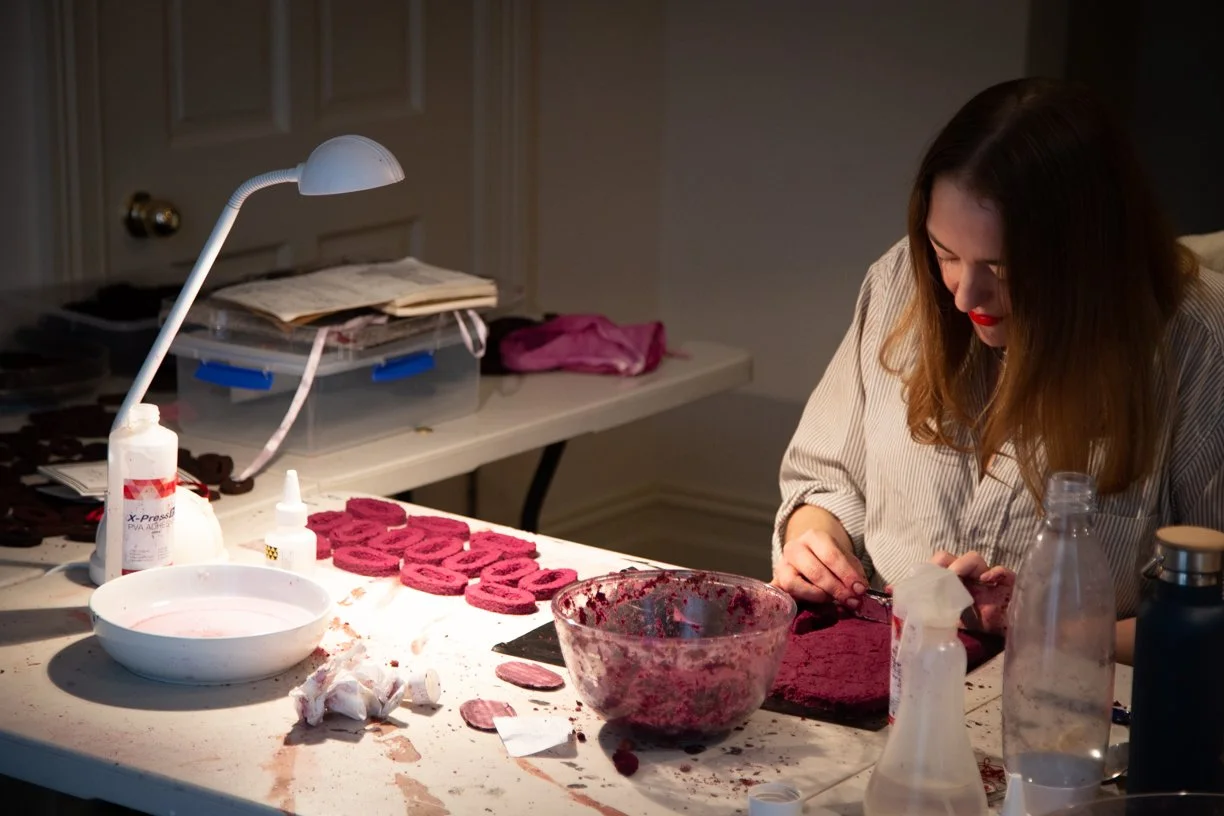
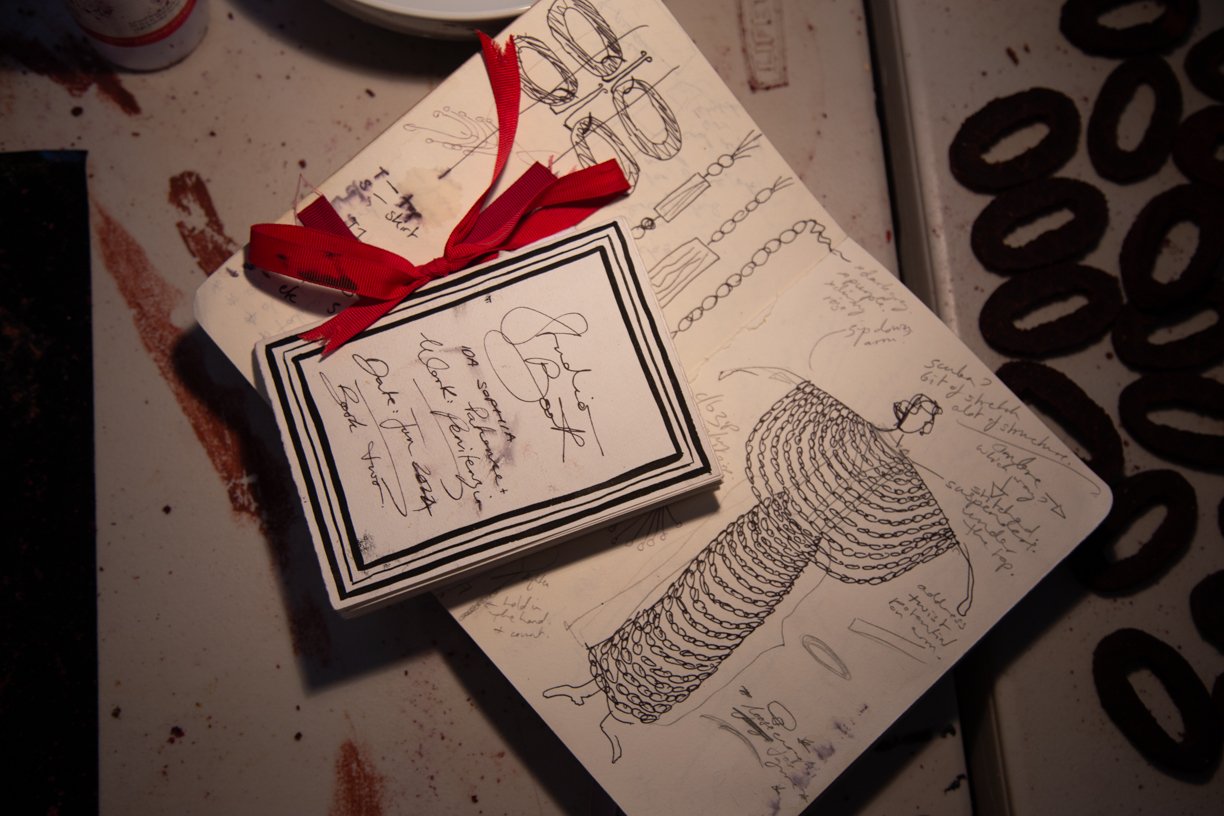
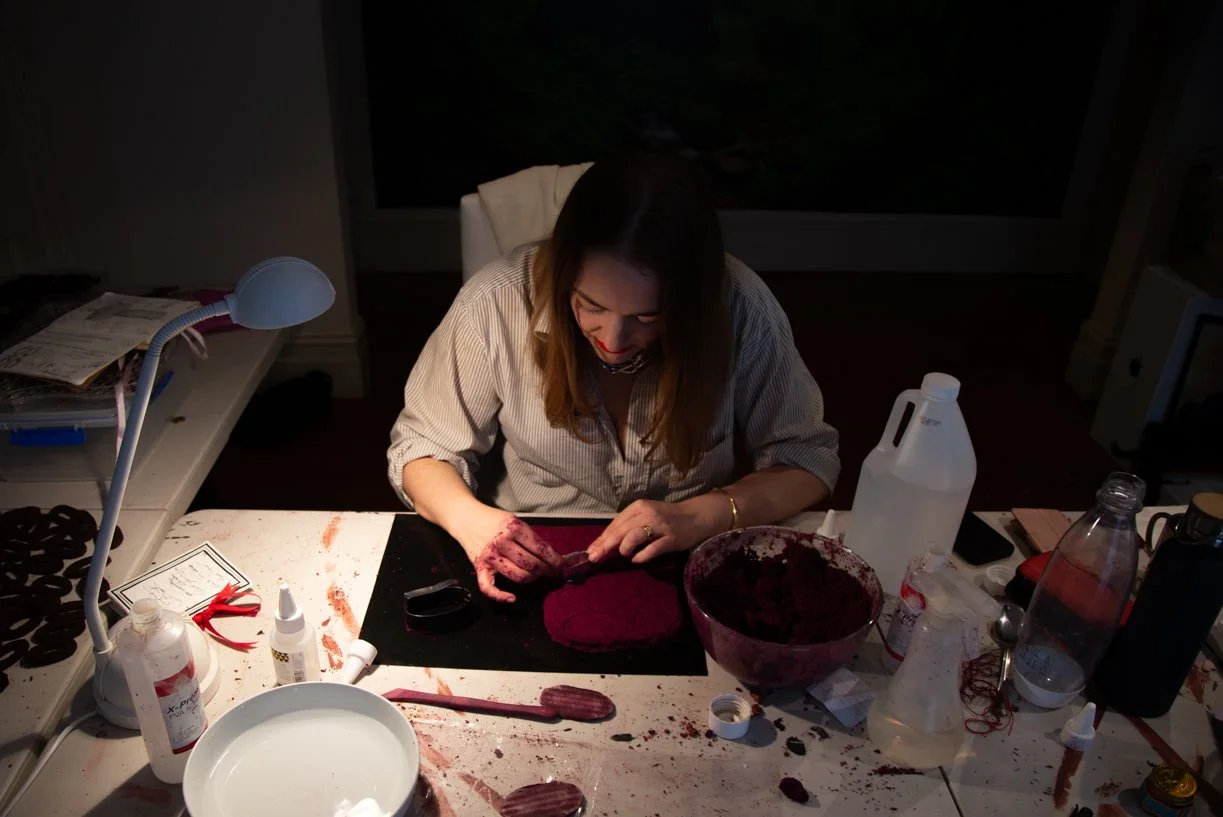
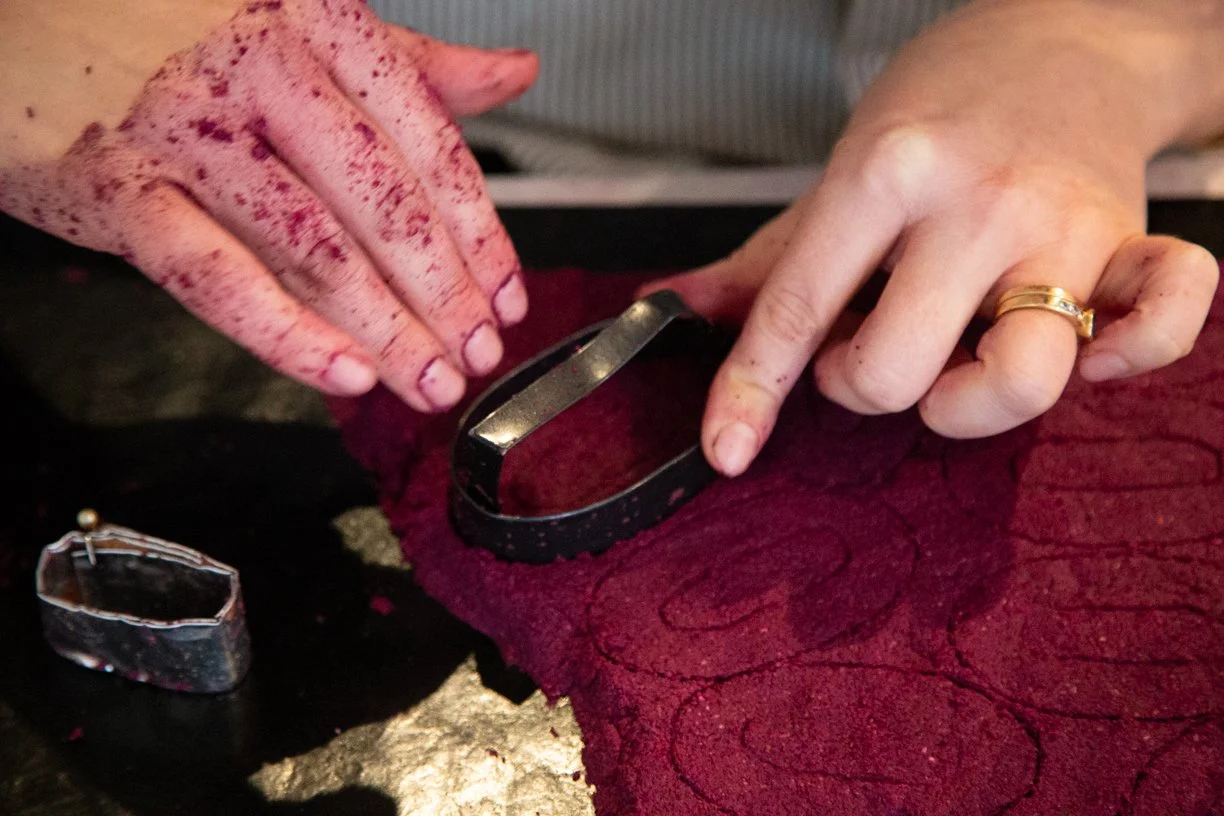
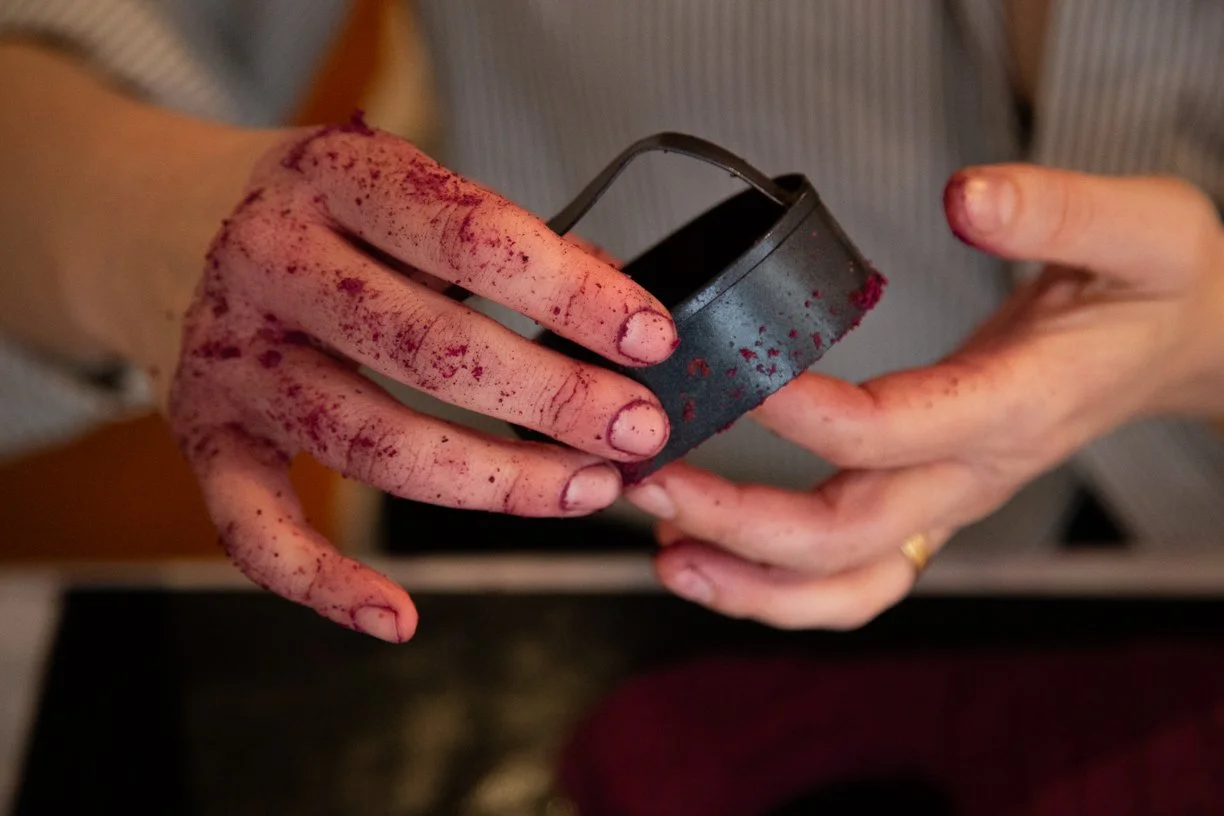
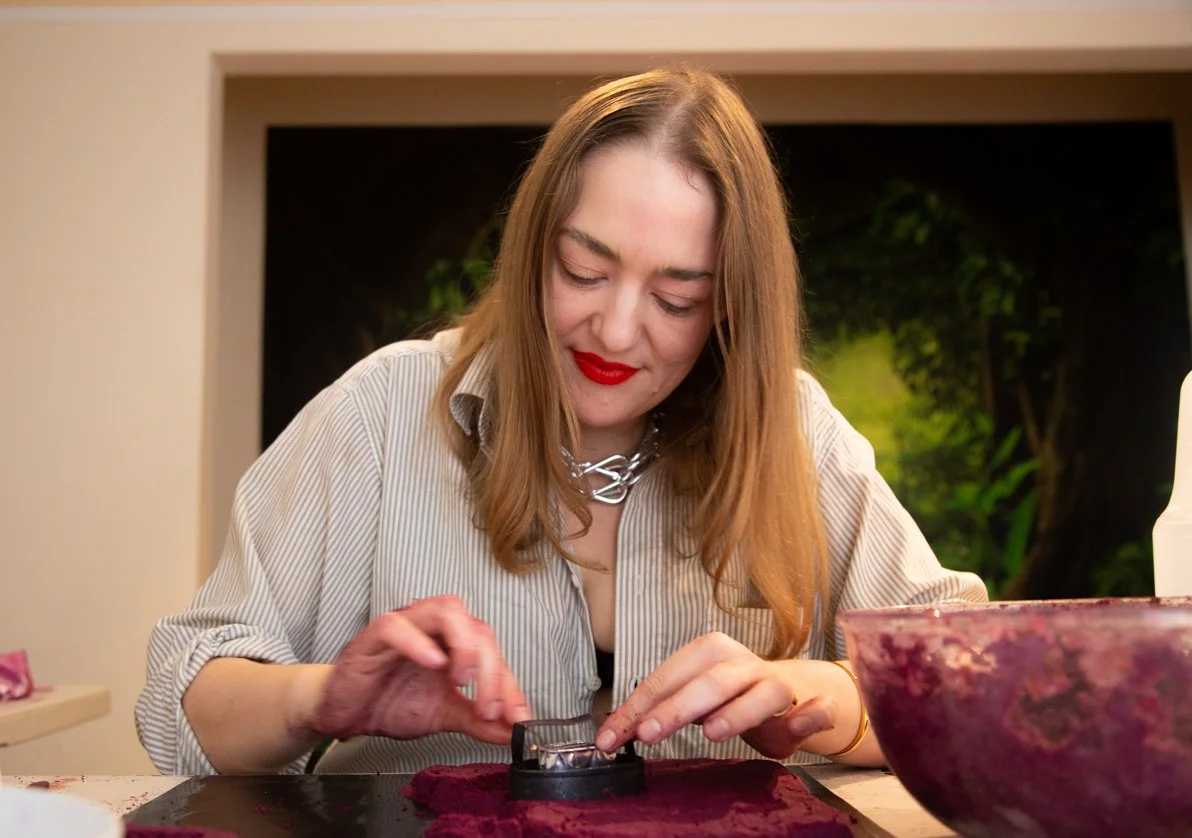
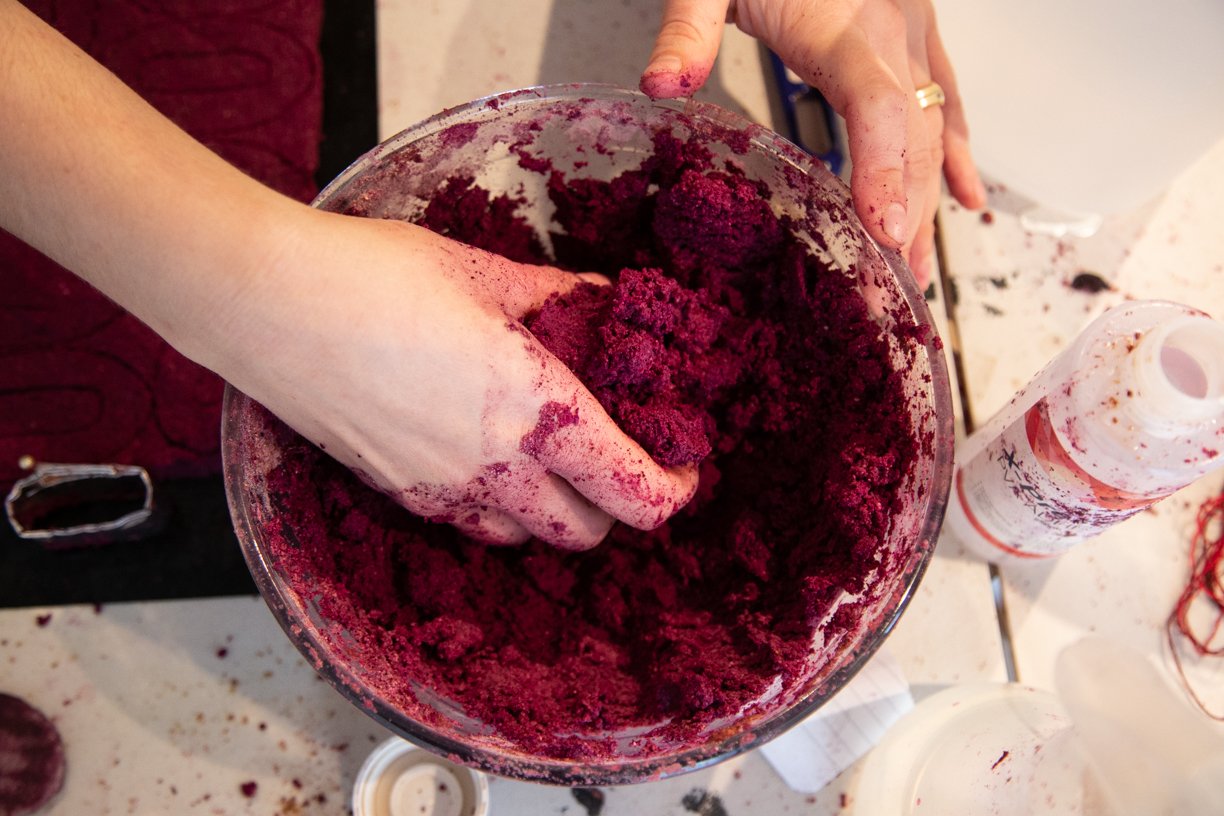
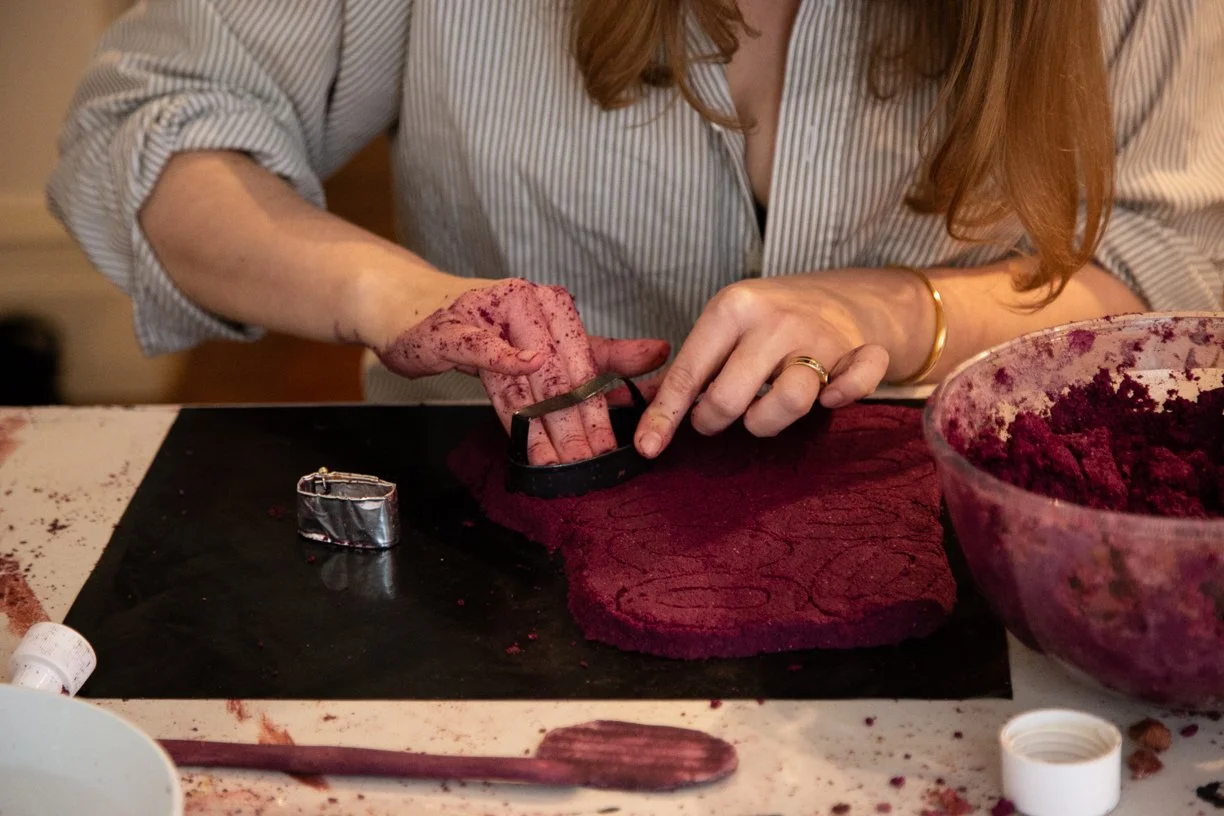
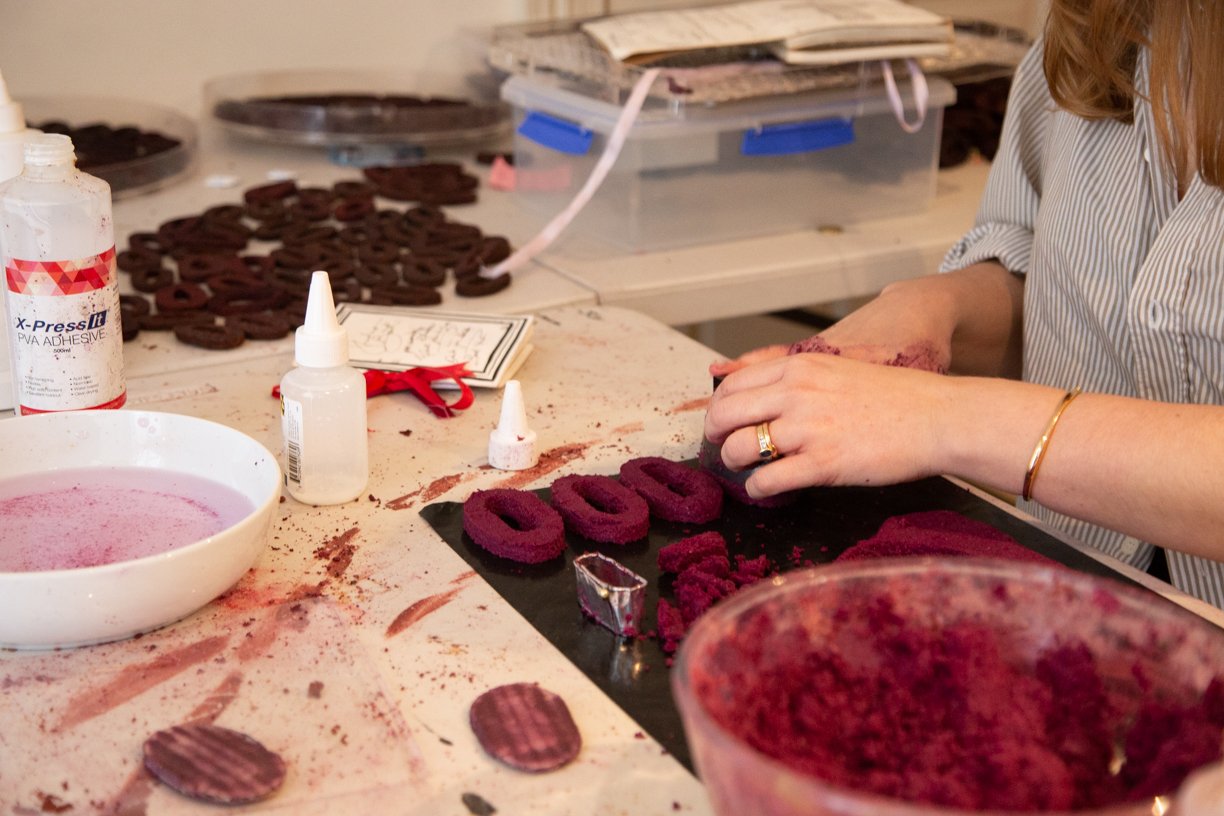
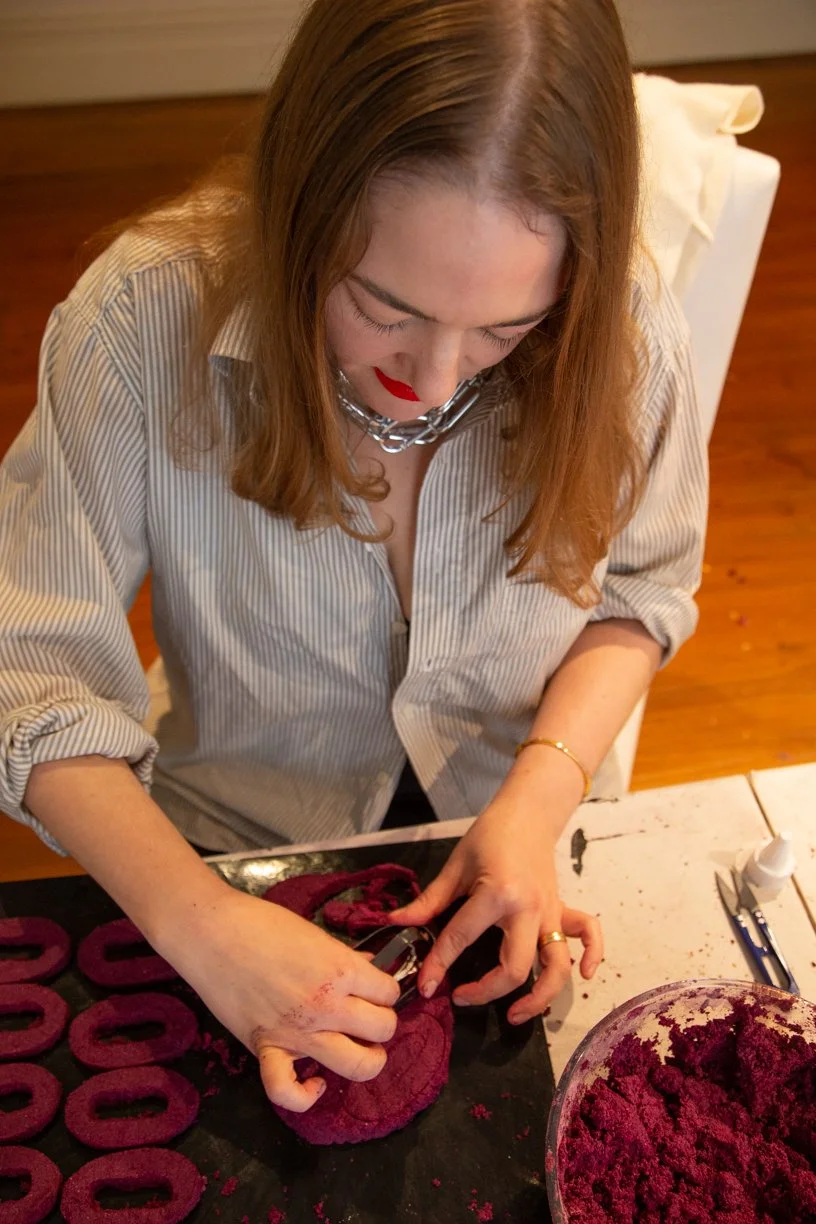
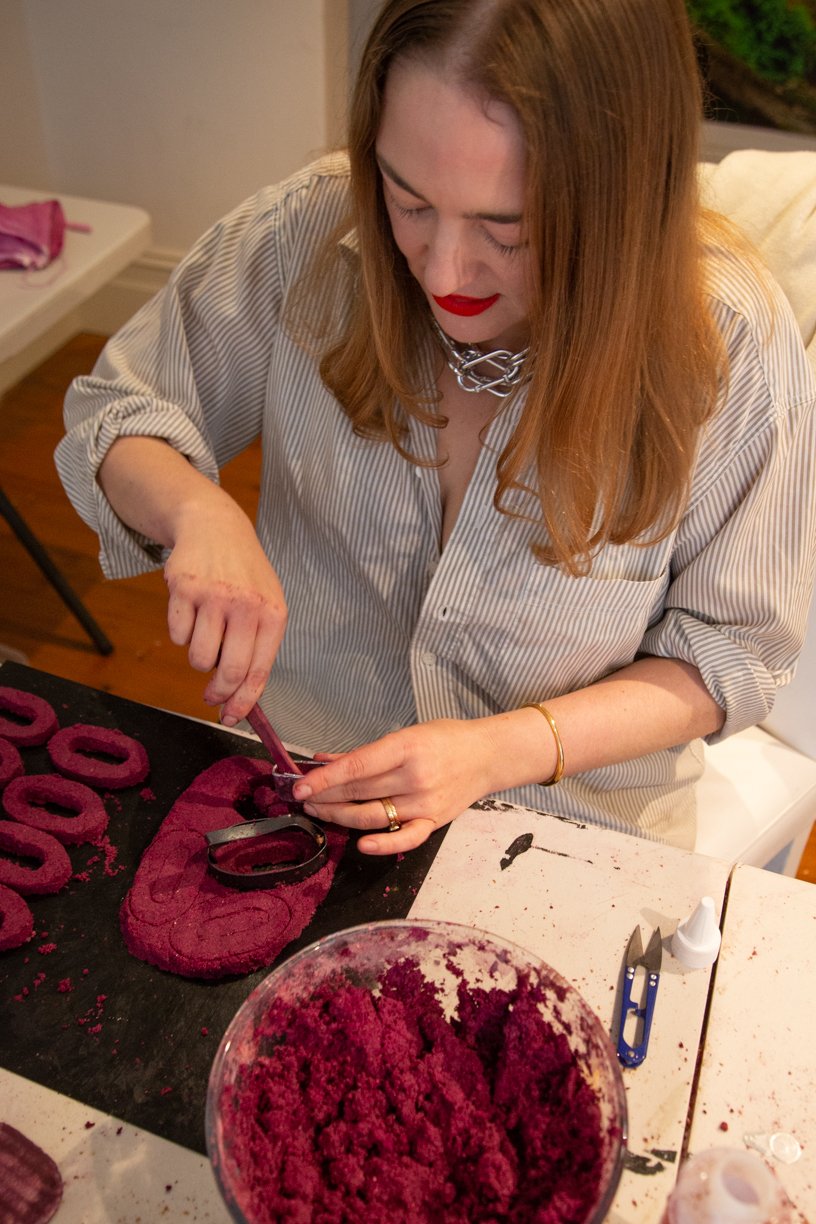
Behind the Scenes Materiality: Making the Rose Chain
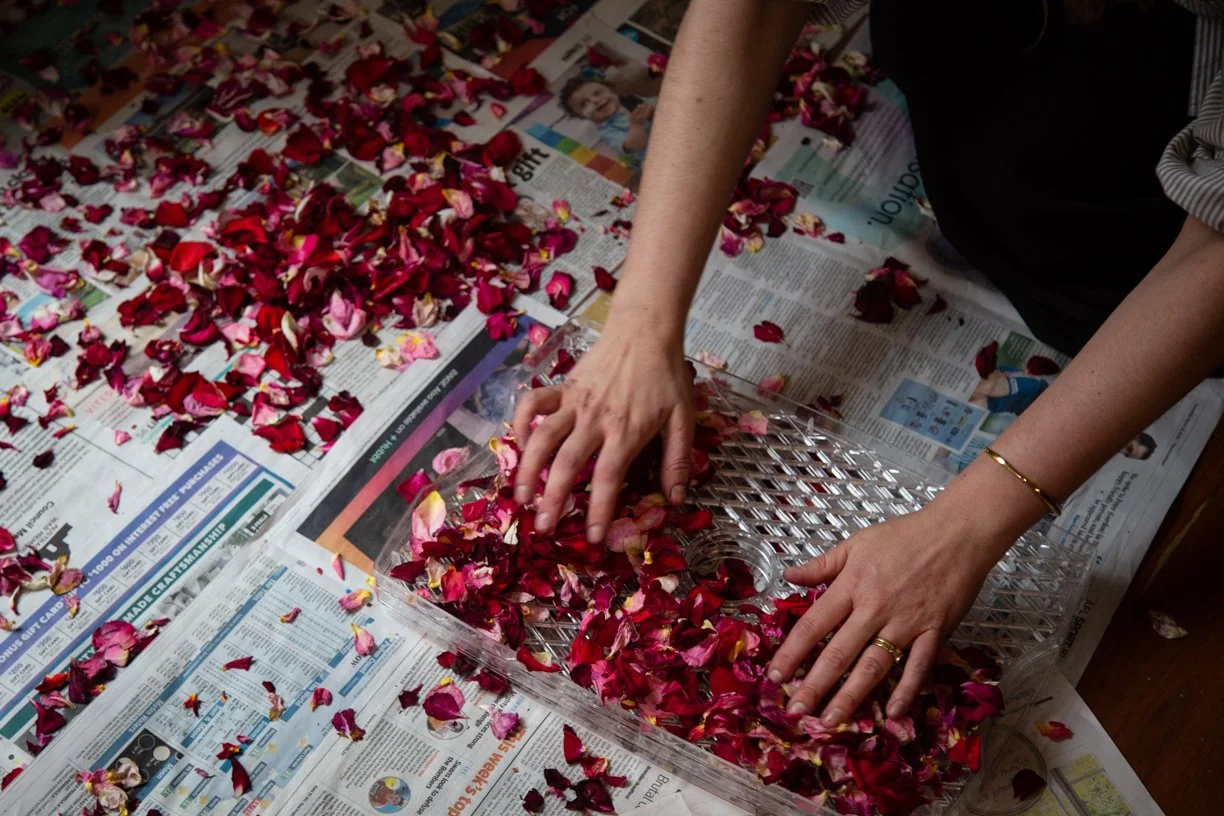
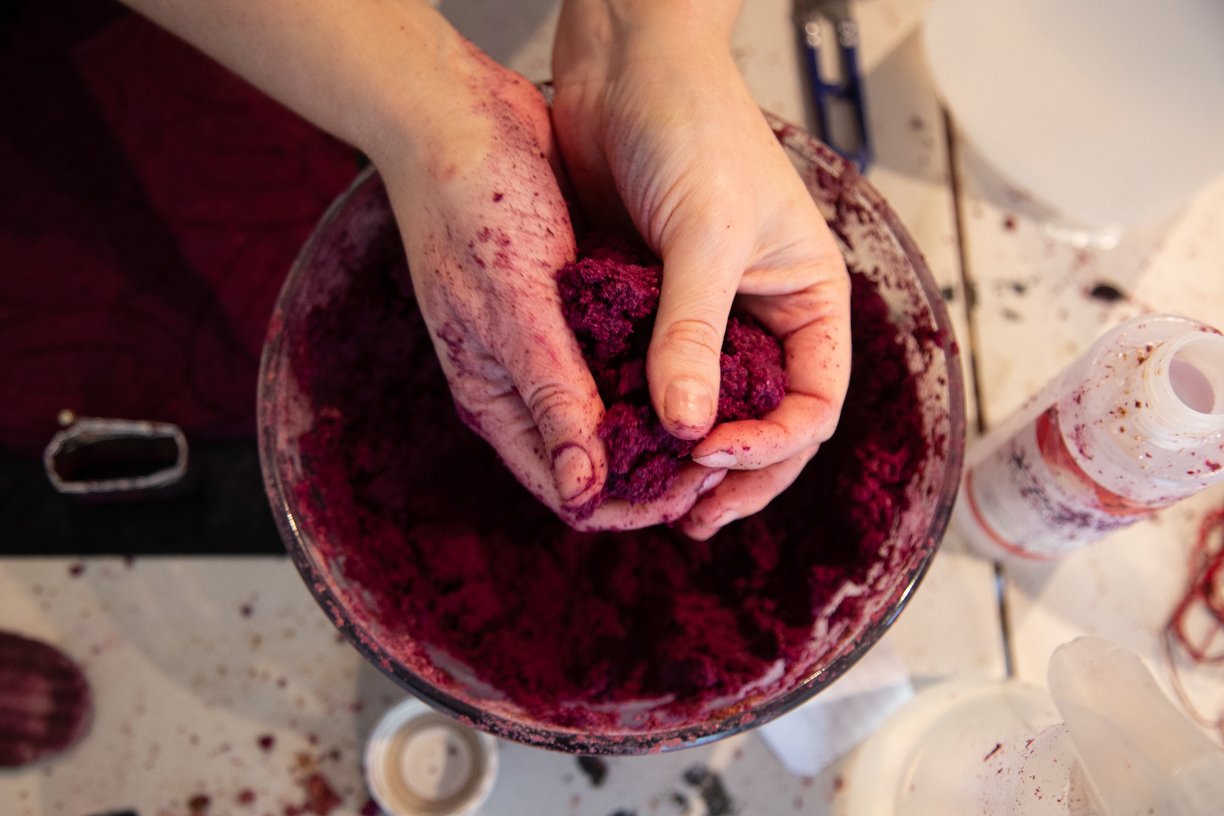
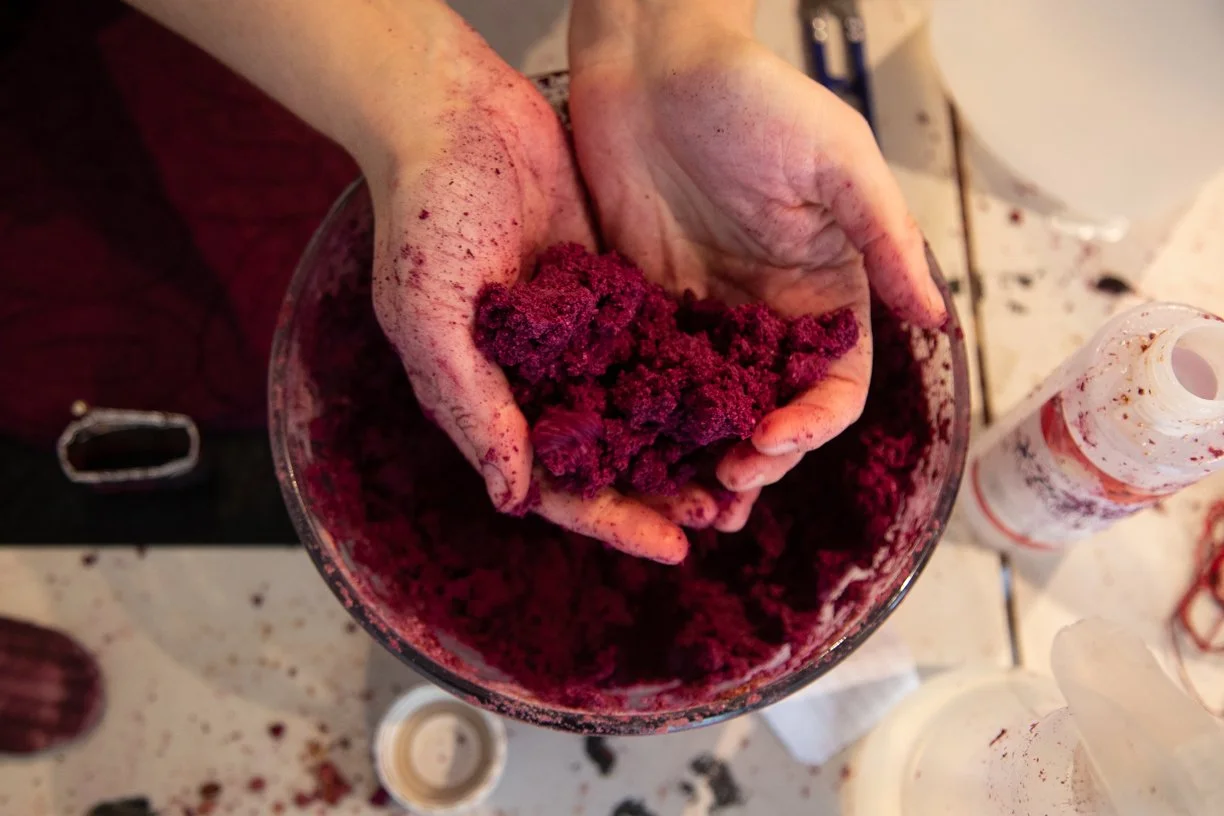
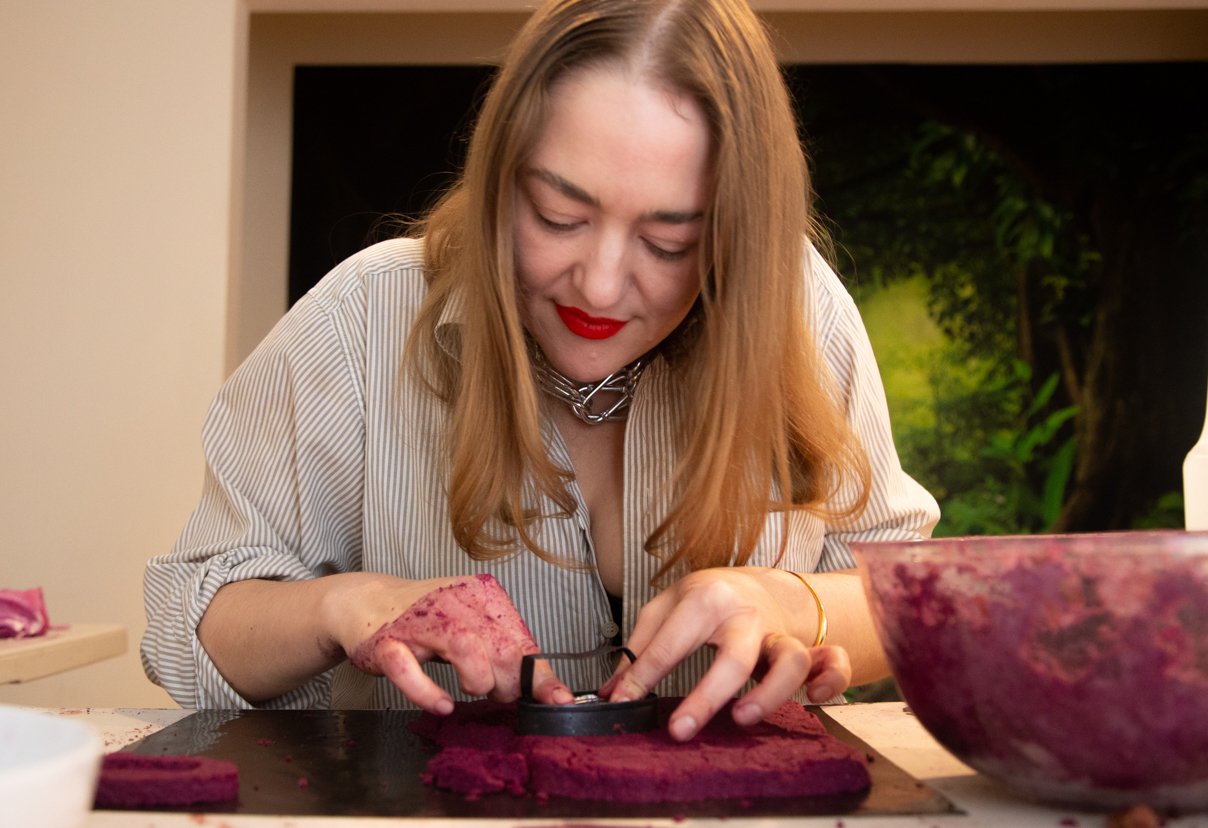
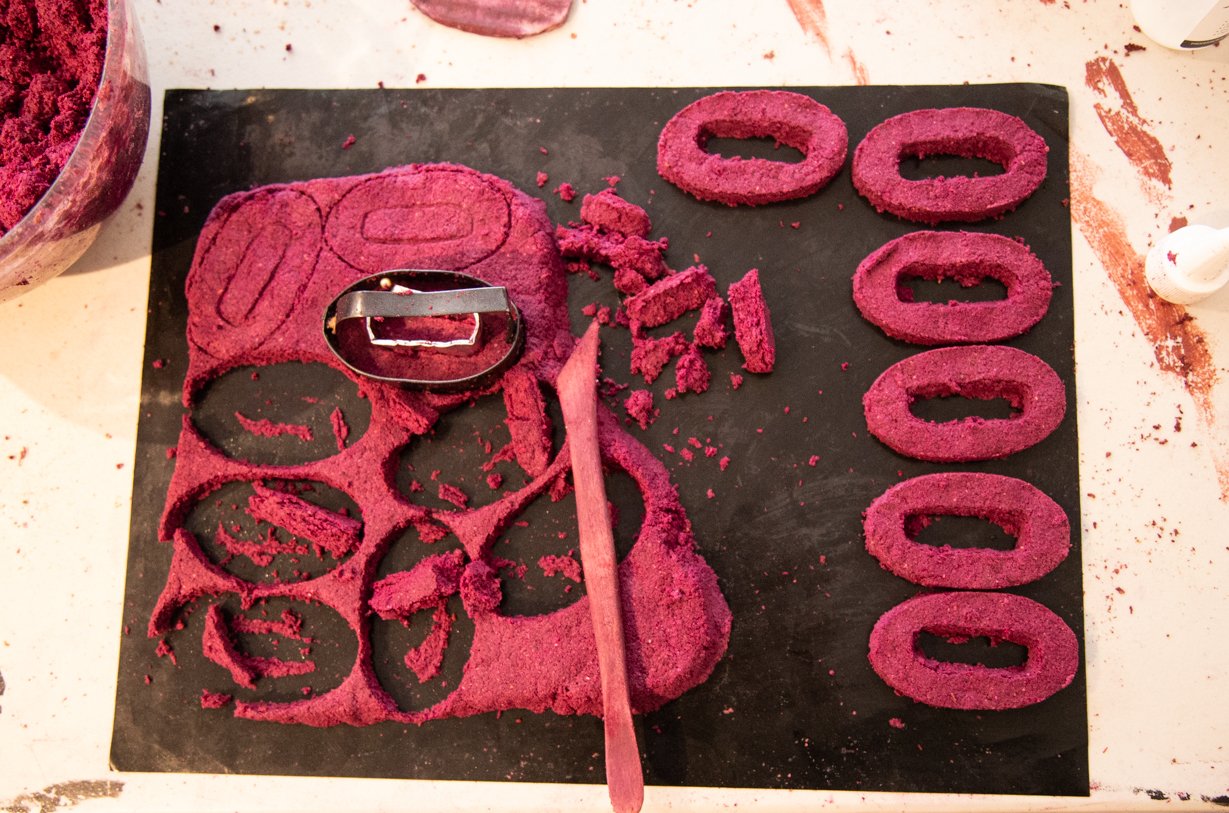
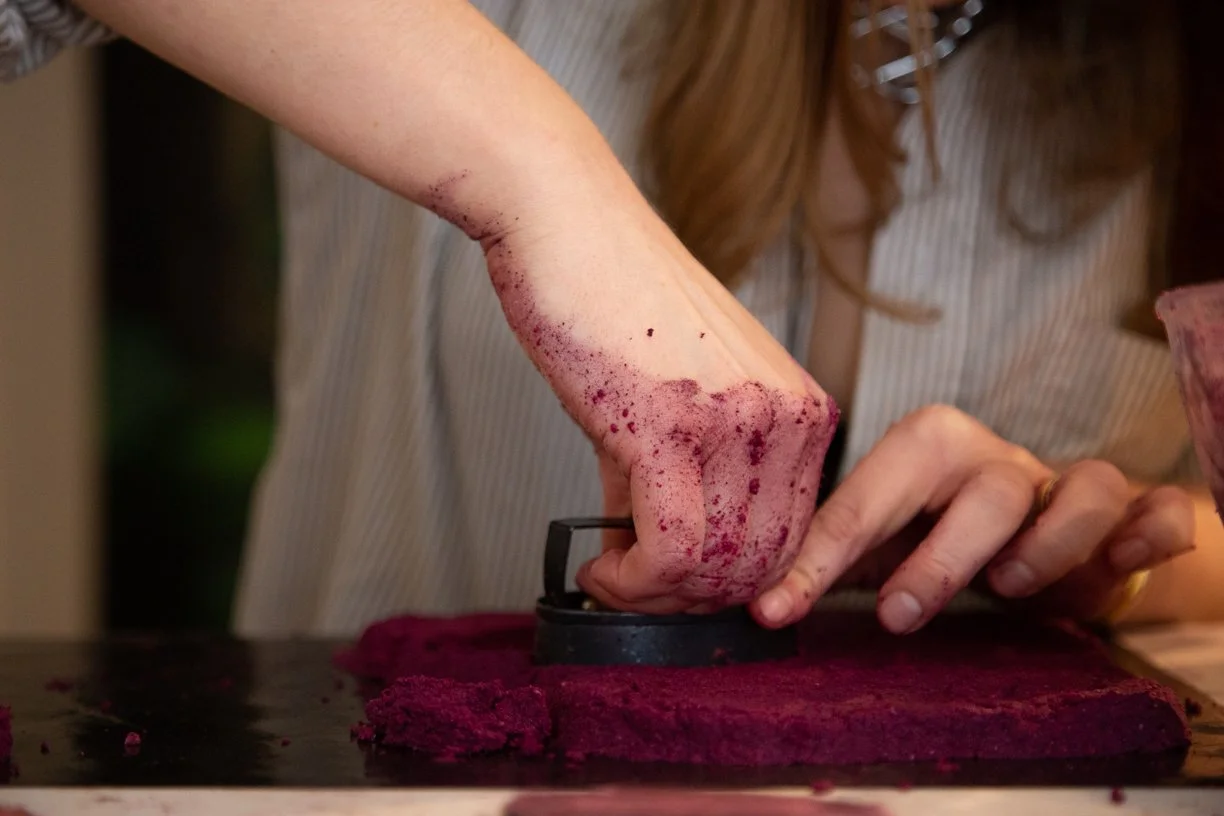
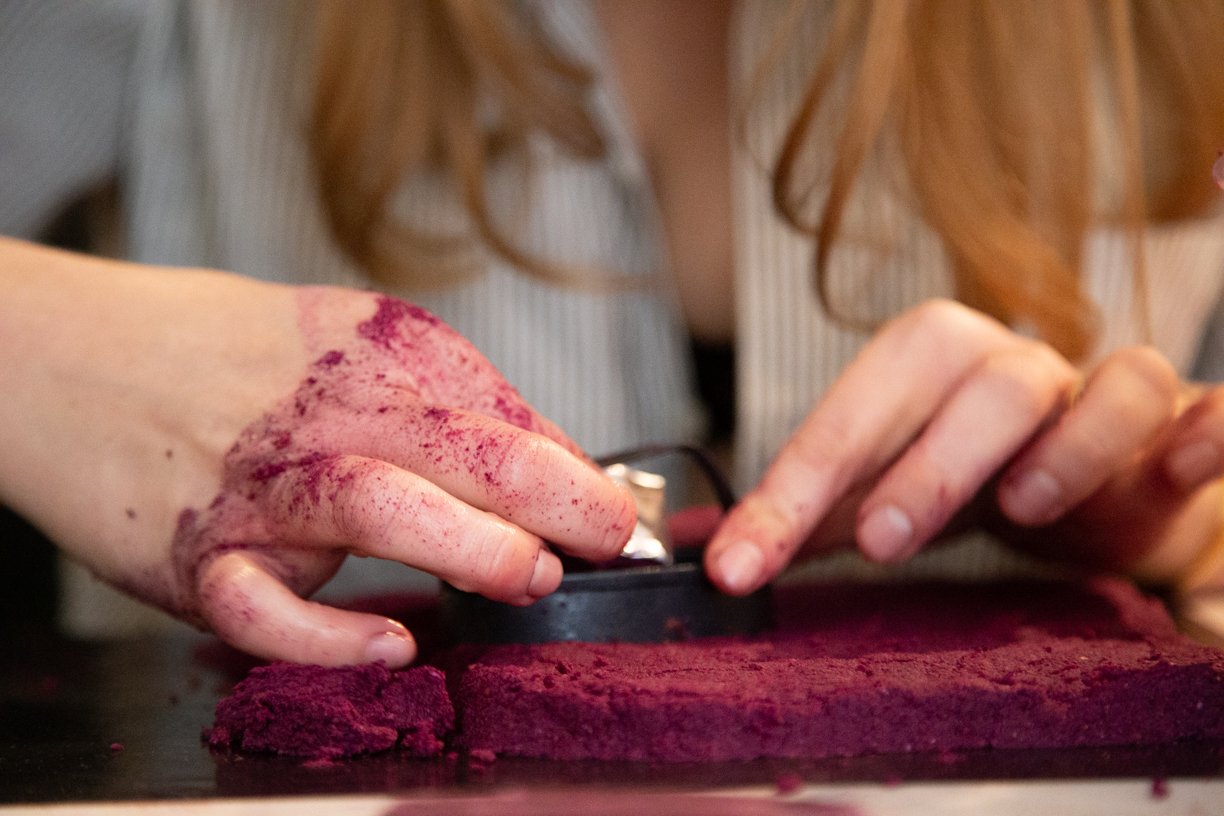
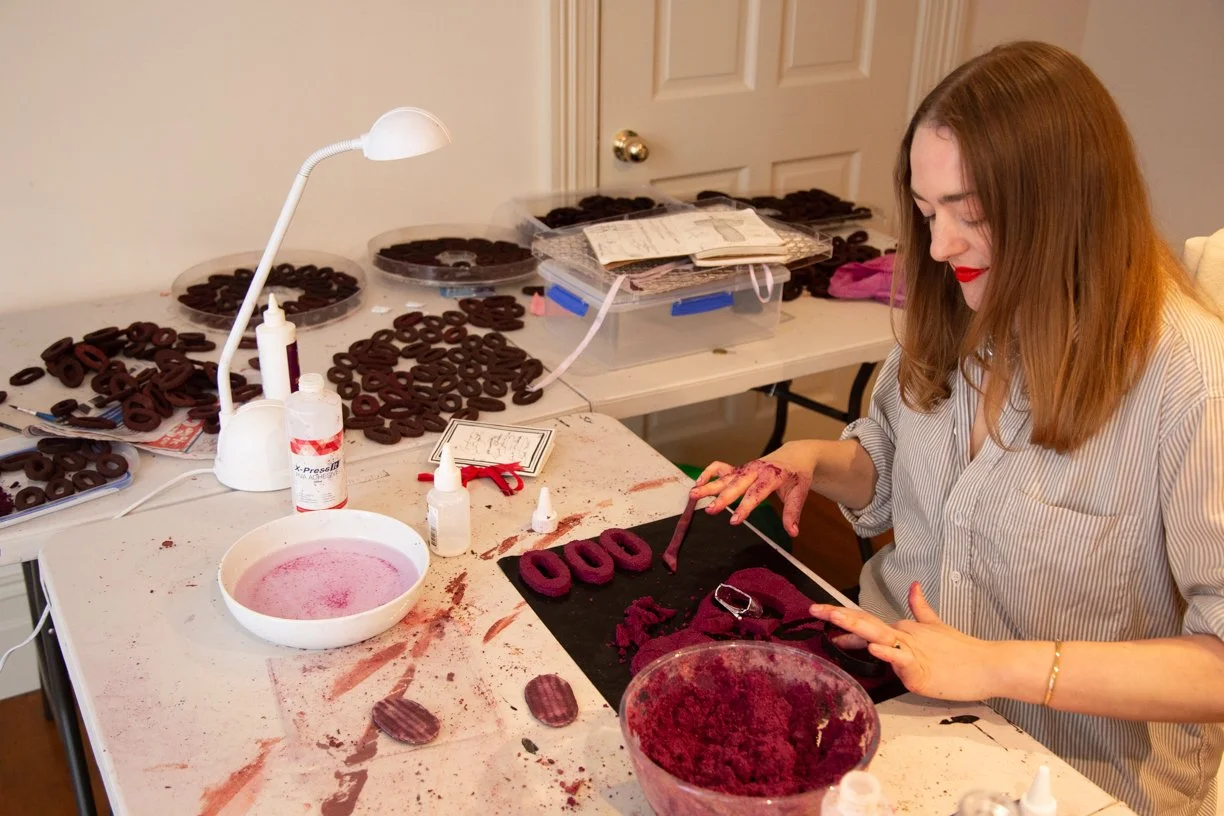
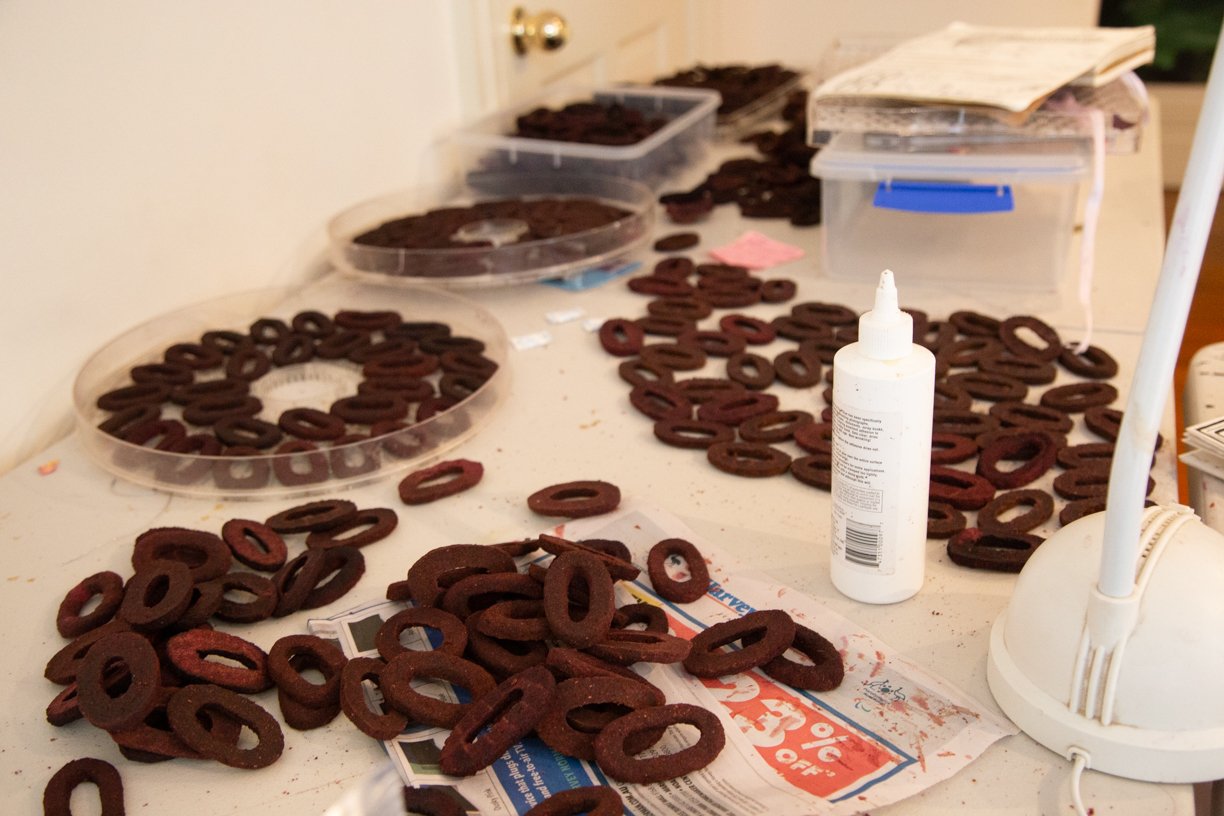
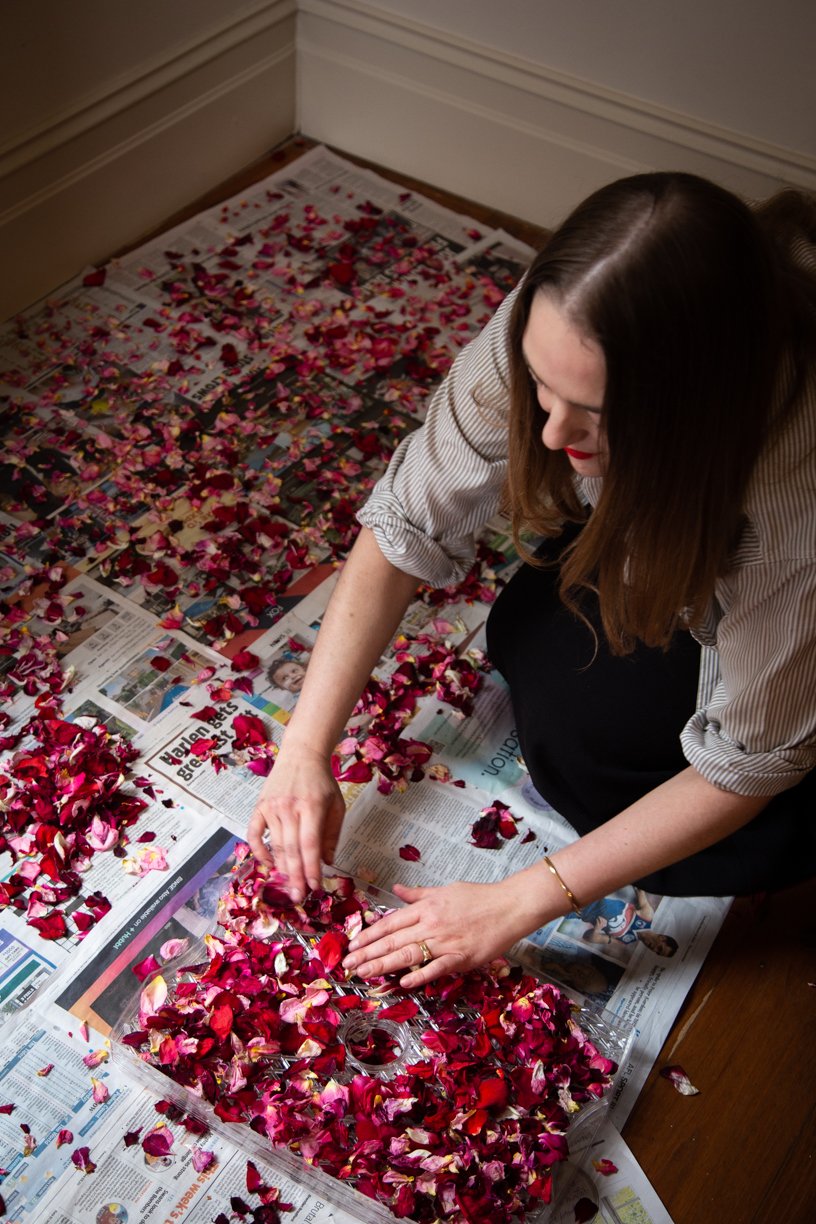
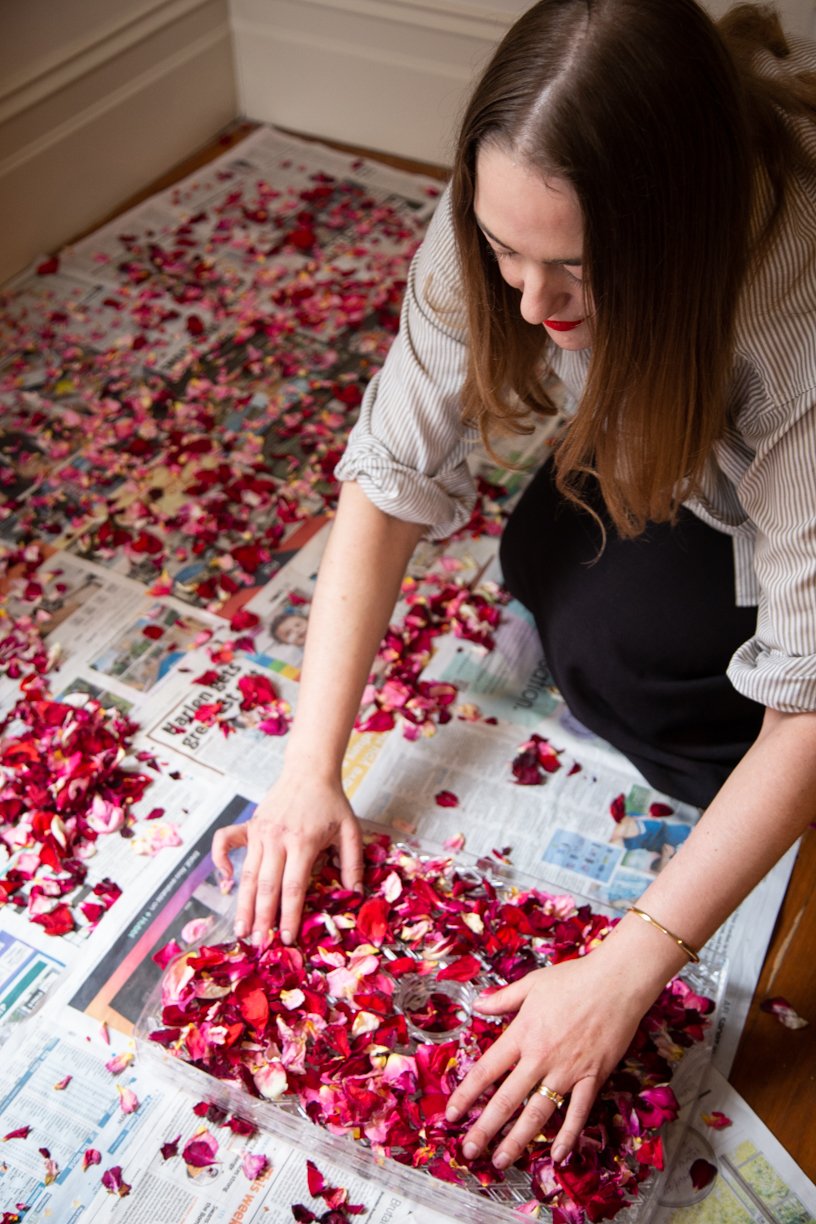
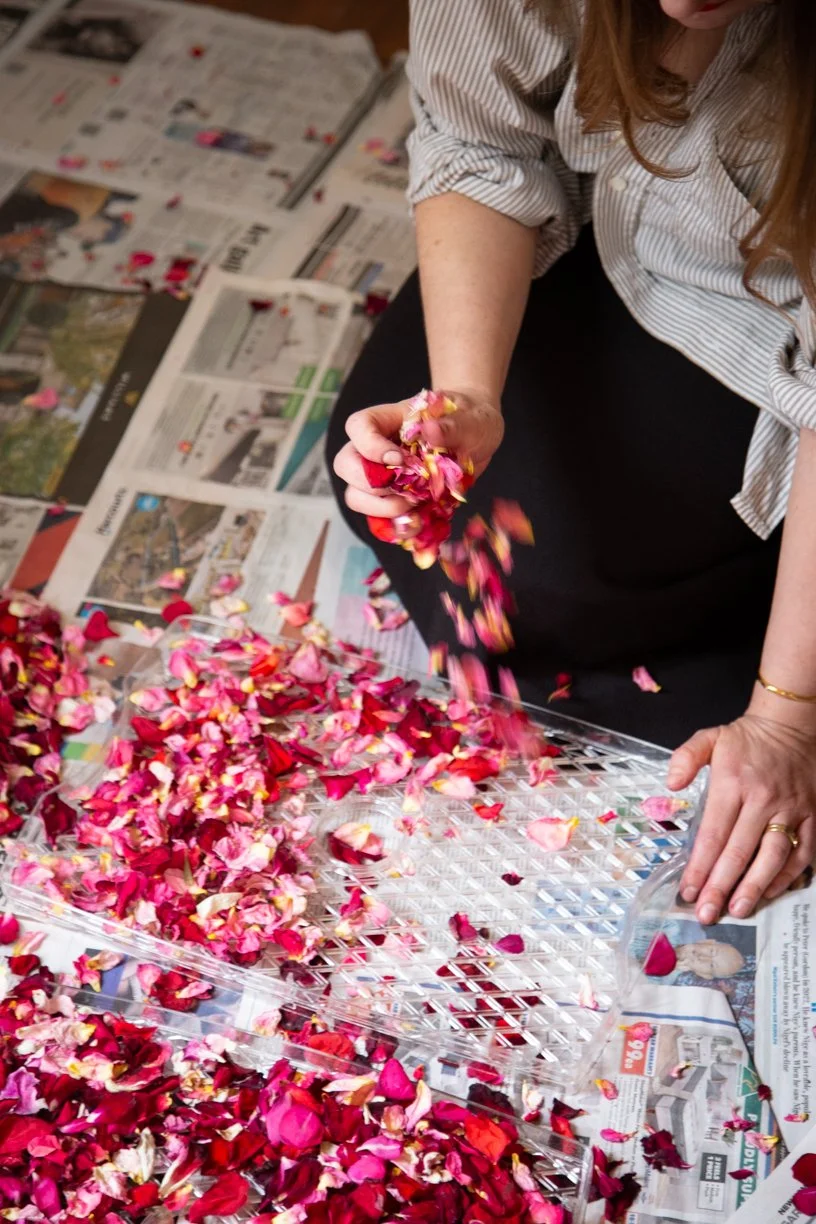
10s of thousands of rose petals were donated from the personally tended gardens from women across South Australia. This crucial material creates the counter narrative to the corrosive affect of the silent treatment. The garden represents long term maintenance and care. It represents our capacity to expect and accept the ‘thorns’ and our appreciation of the blooms. It stands for an understanding of the seasons of life, of the resiliance that plants and people have and the symbiotic relationship that ultimately transforms over time. The roses speak to womens material culture and my own childhood, languishing and playing among the many bushes women in my family had planted. I would become caught in the thorny branches in attempts at diving nose first into the fragrance of the petals. It is here, in the South Australian garden that I situate our capacity for repair over time and offer a space to consider our capacity to work through that which is both prickly and enveloping.
With special thanks to the 20+ south australian women who donated rose petals and shared their stories. Each of you is deeply engrained in this work.
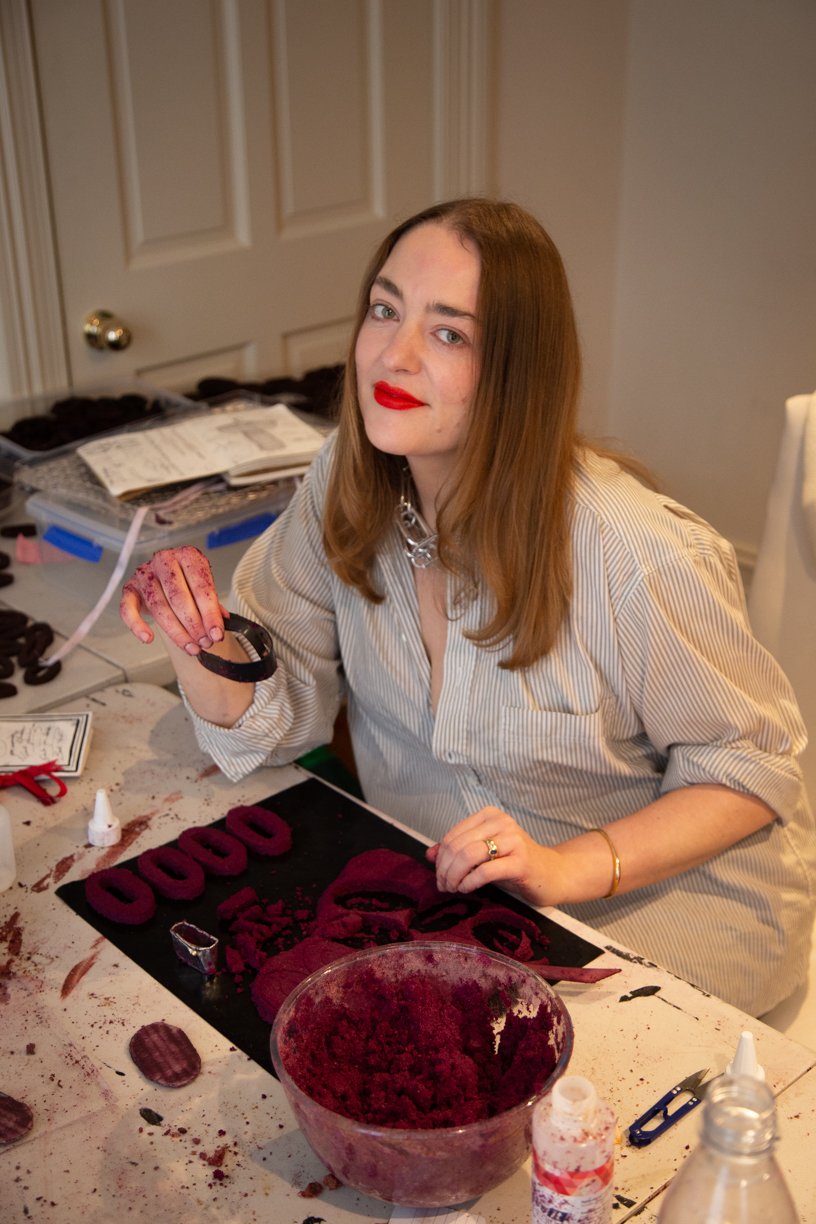
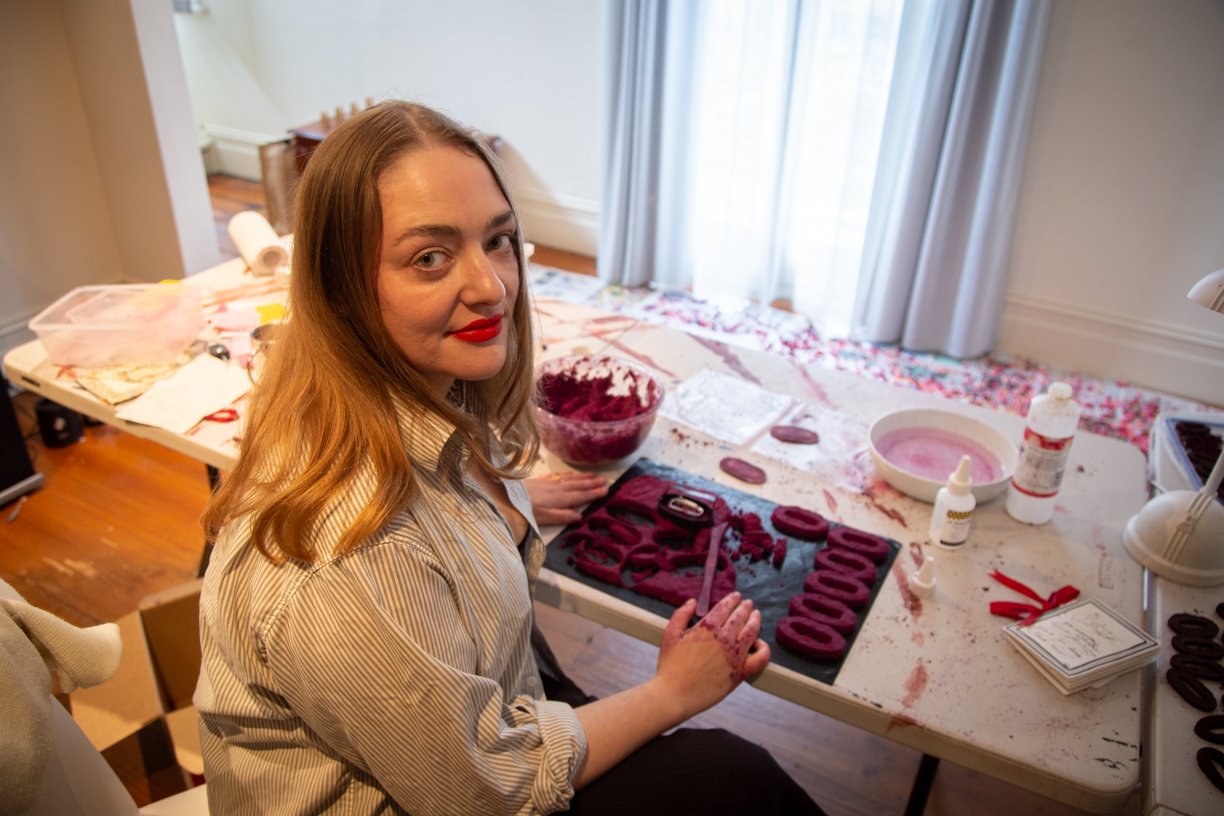
Ida Sophia photographed in her studio by Joseph James Francis, 2024.