
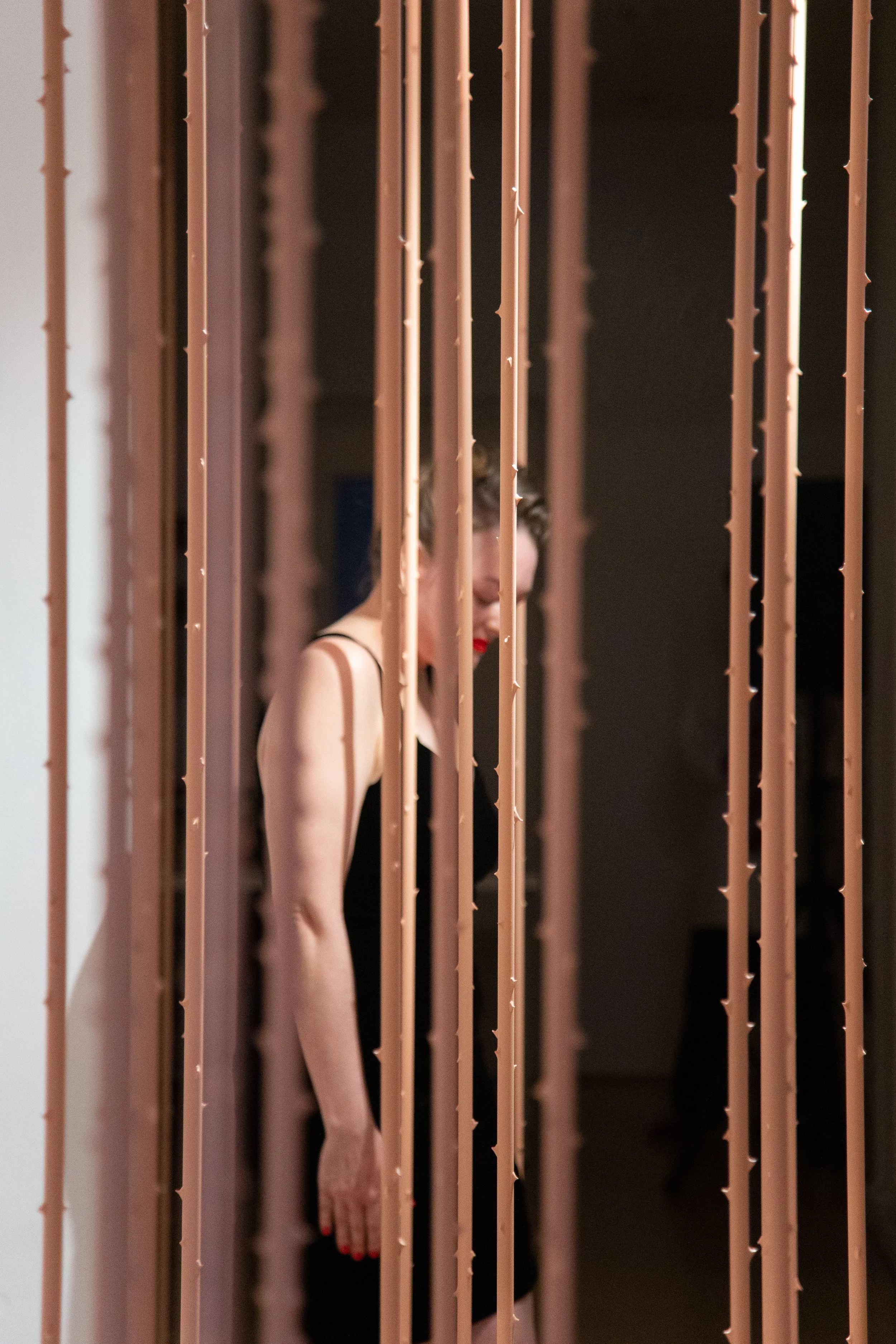
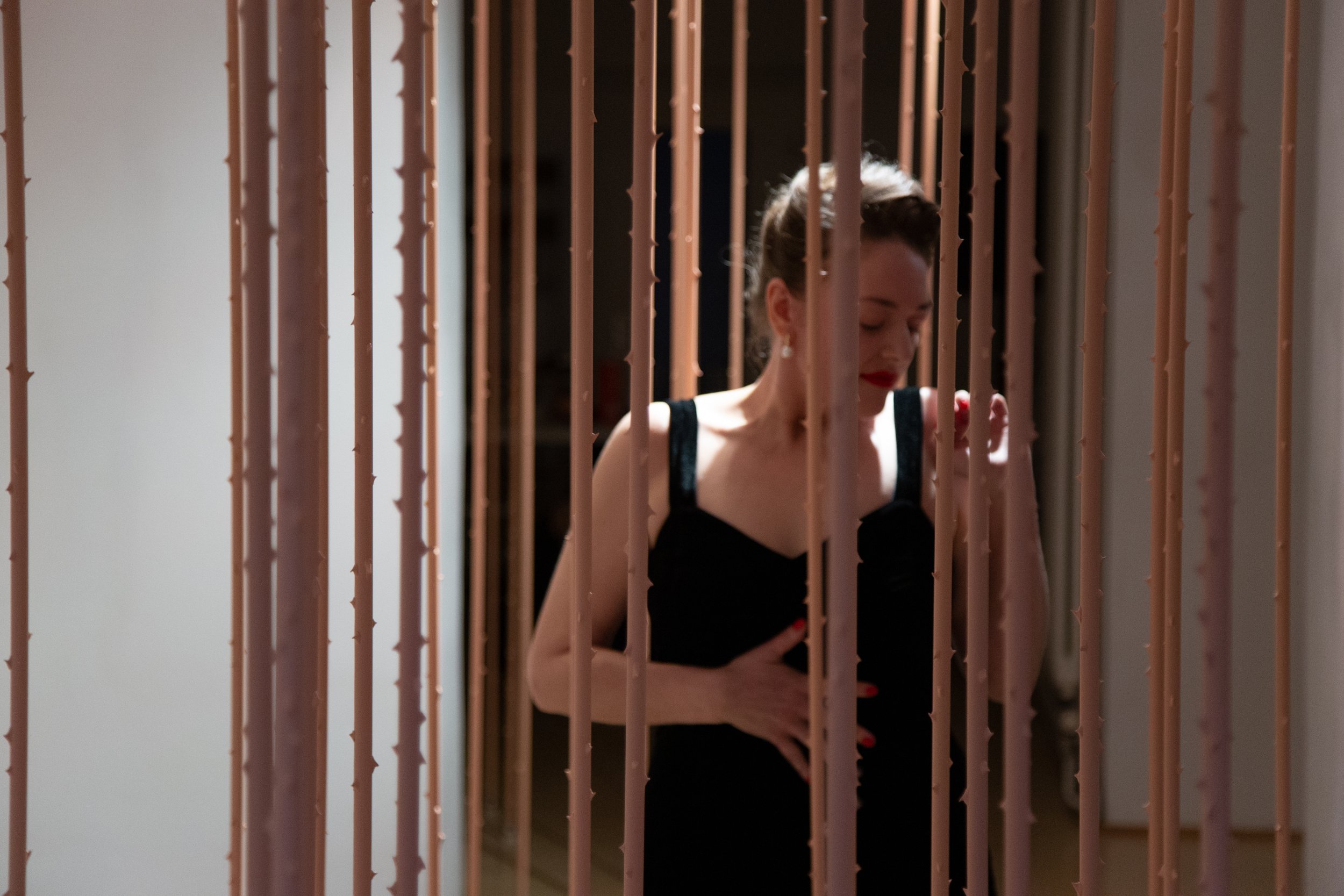
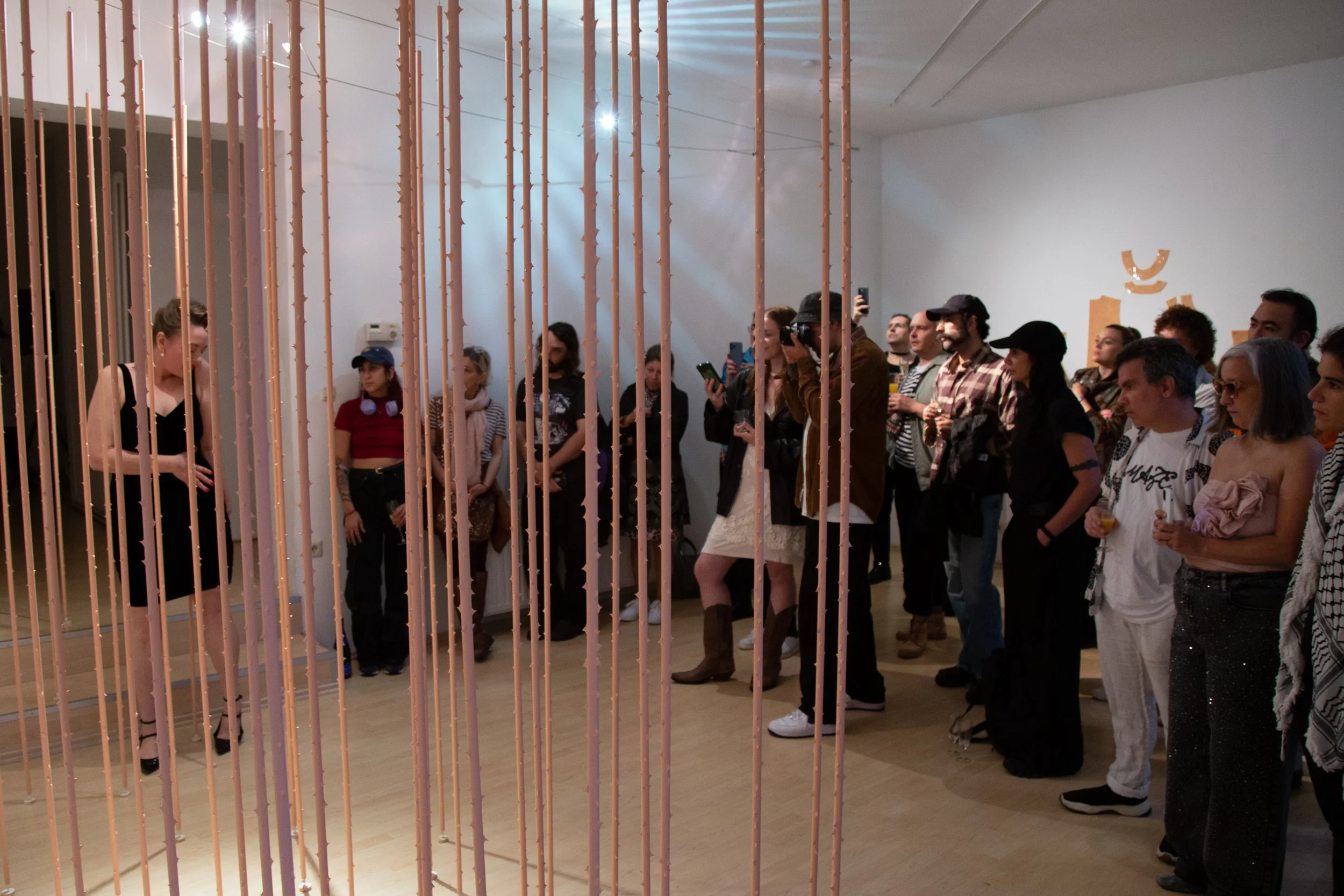


To Work At Wreckage (Performance, 3 Hours, 2025)
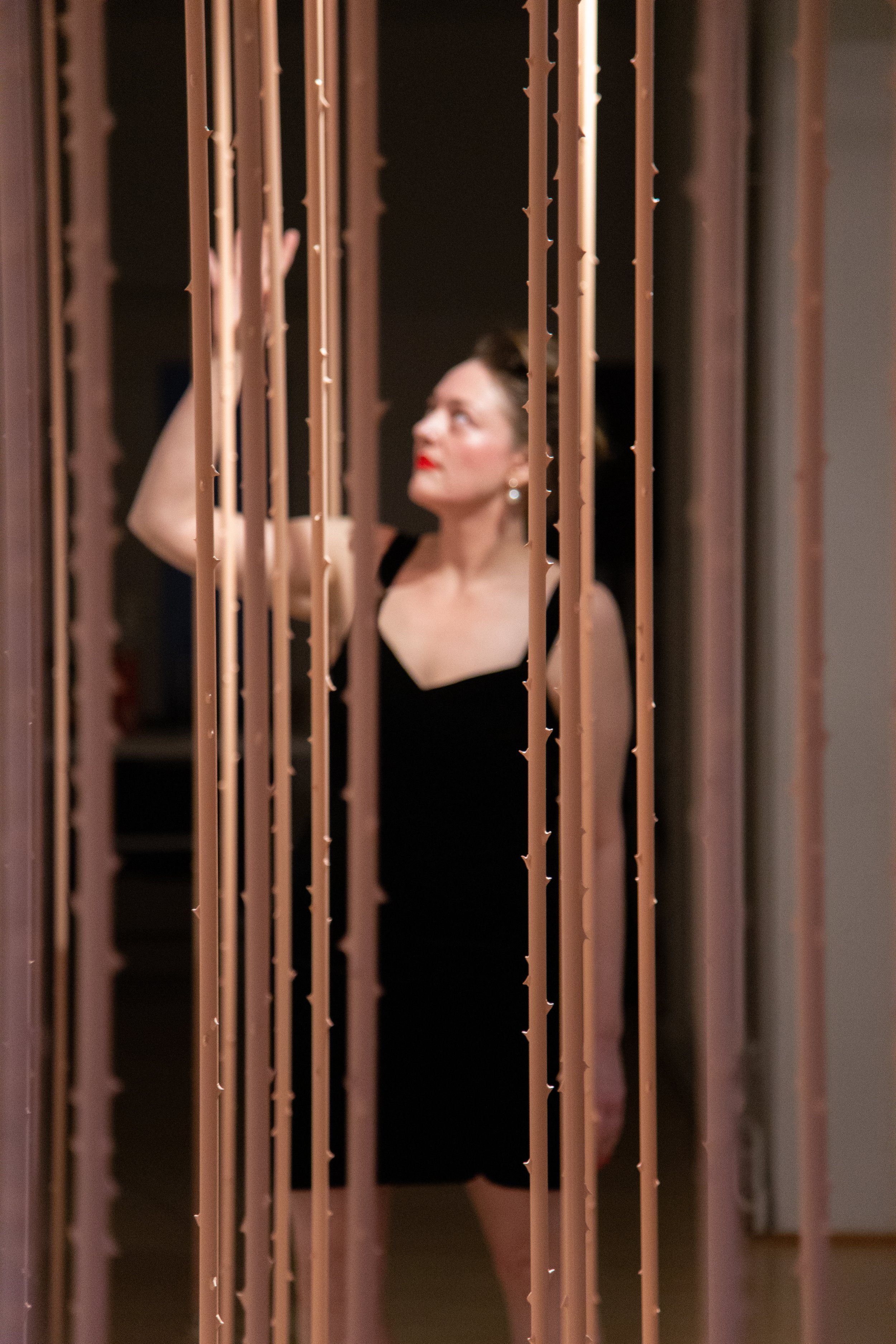
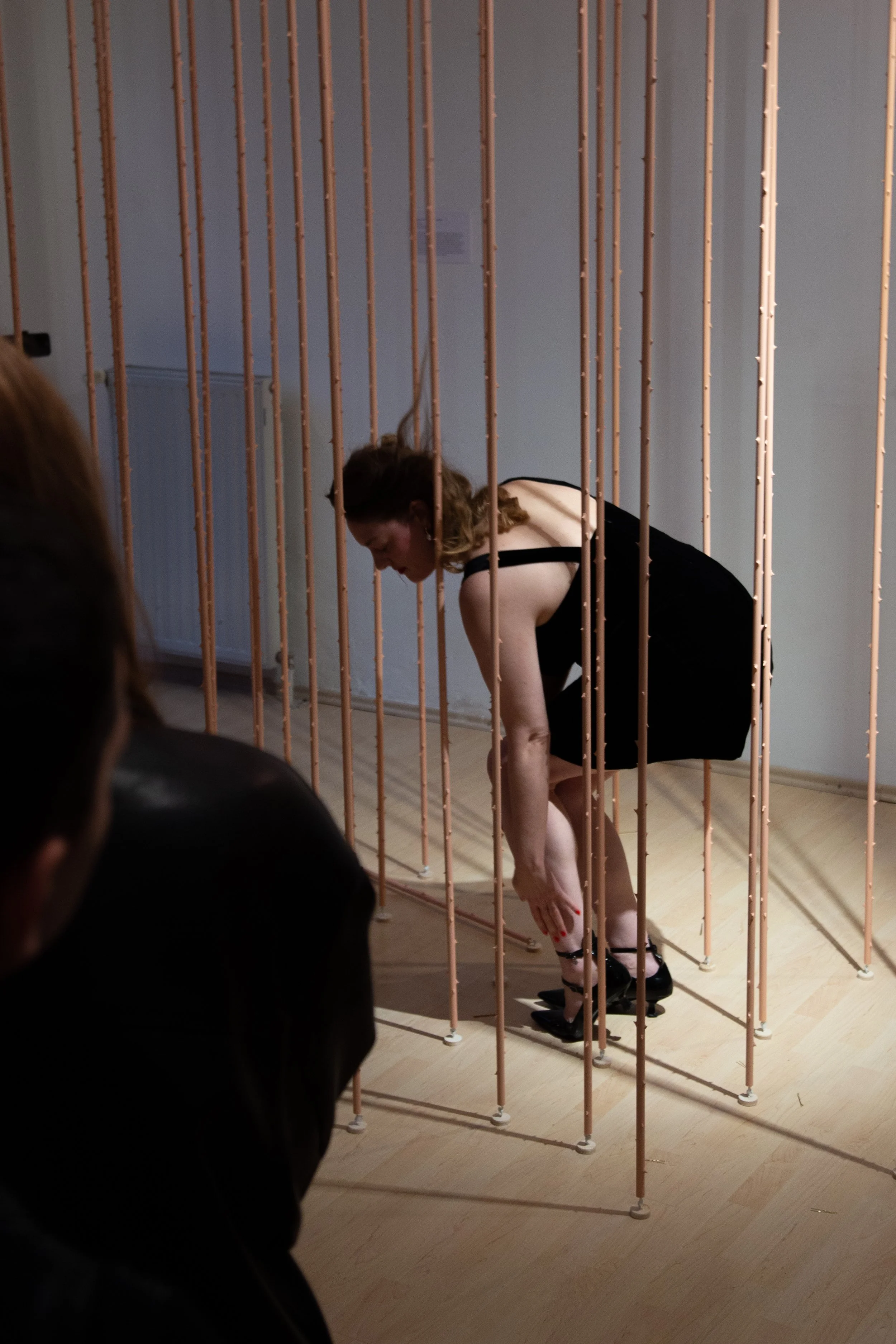
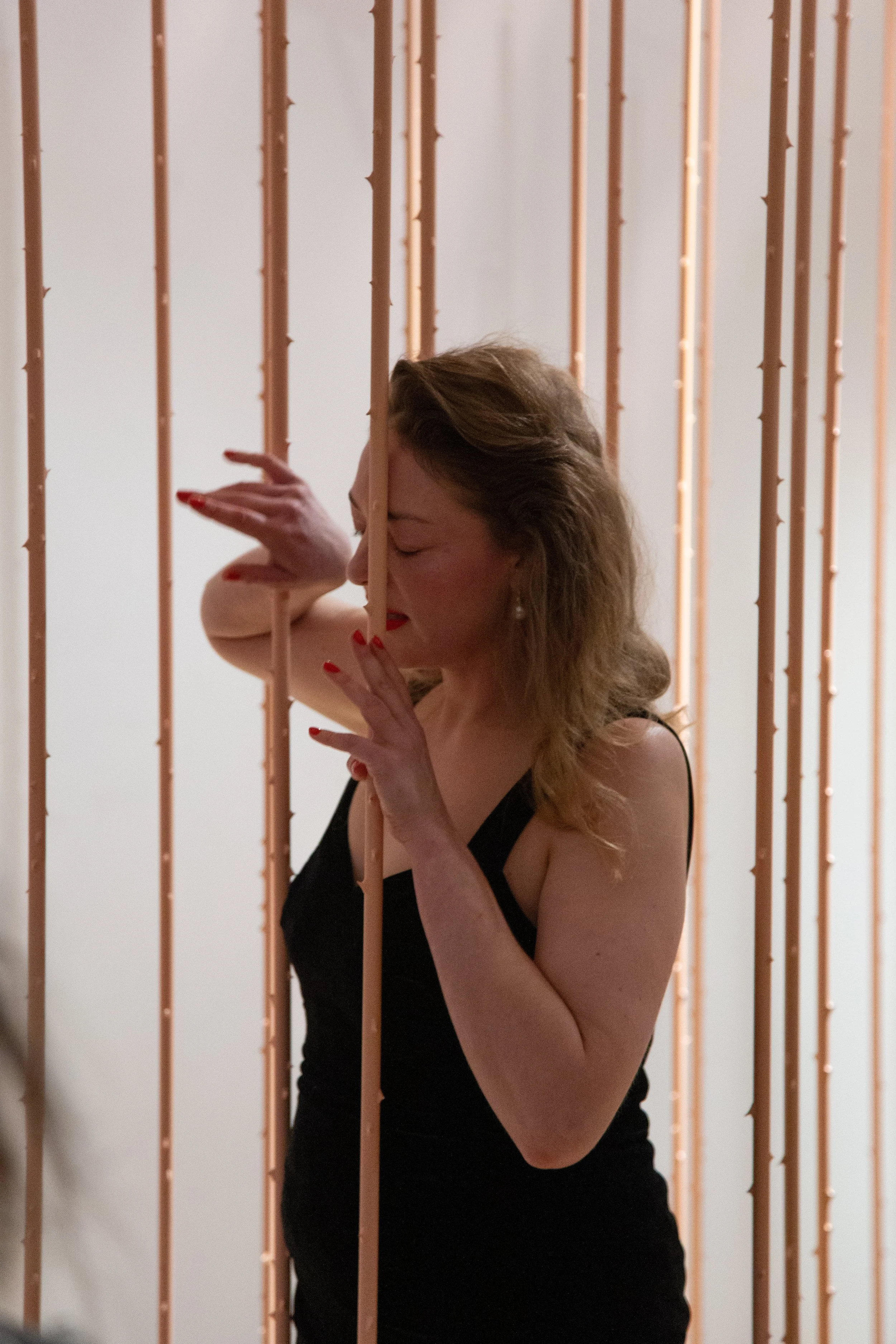
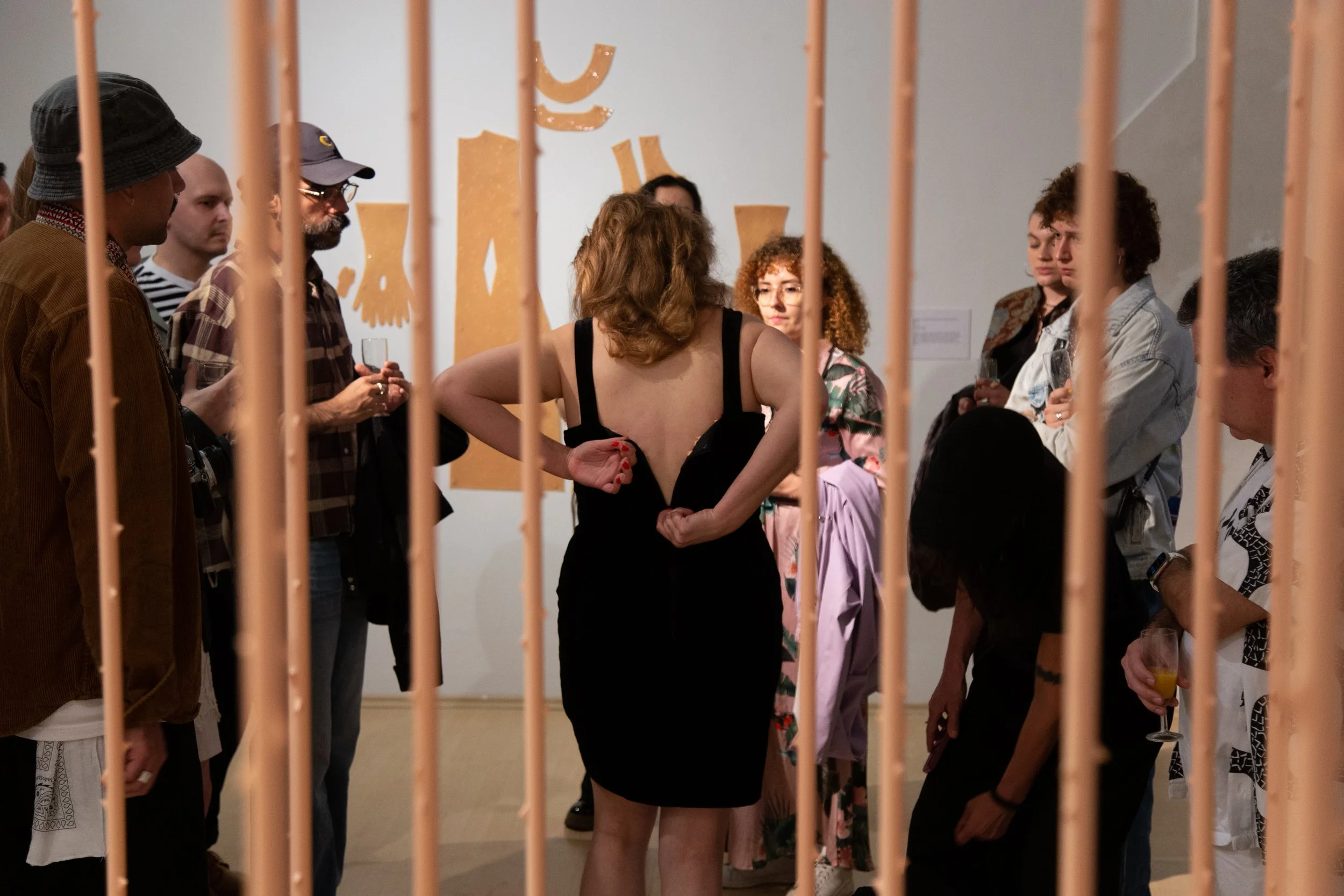
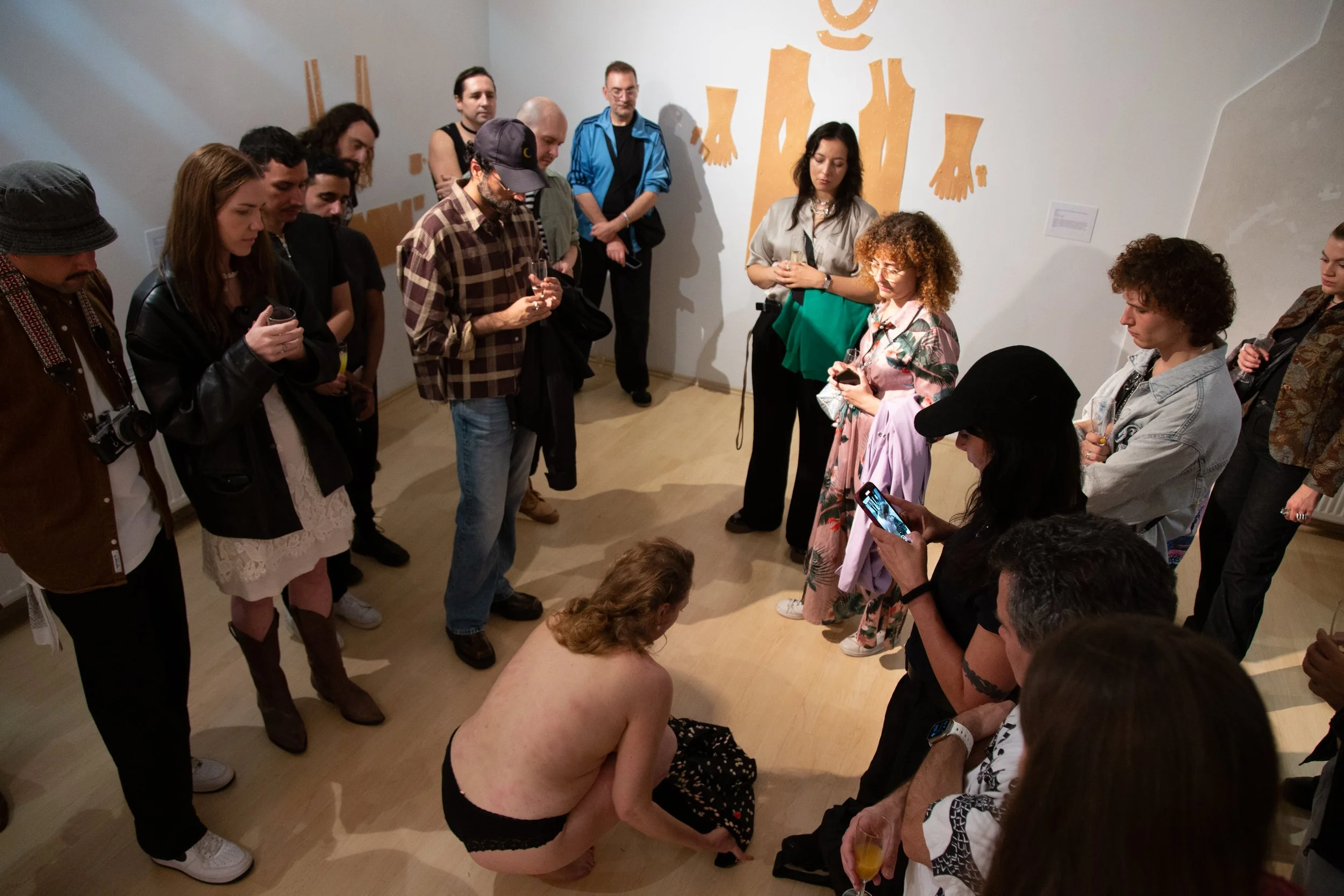
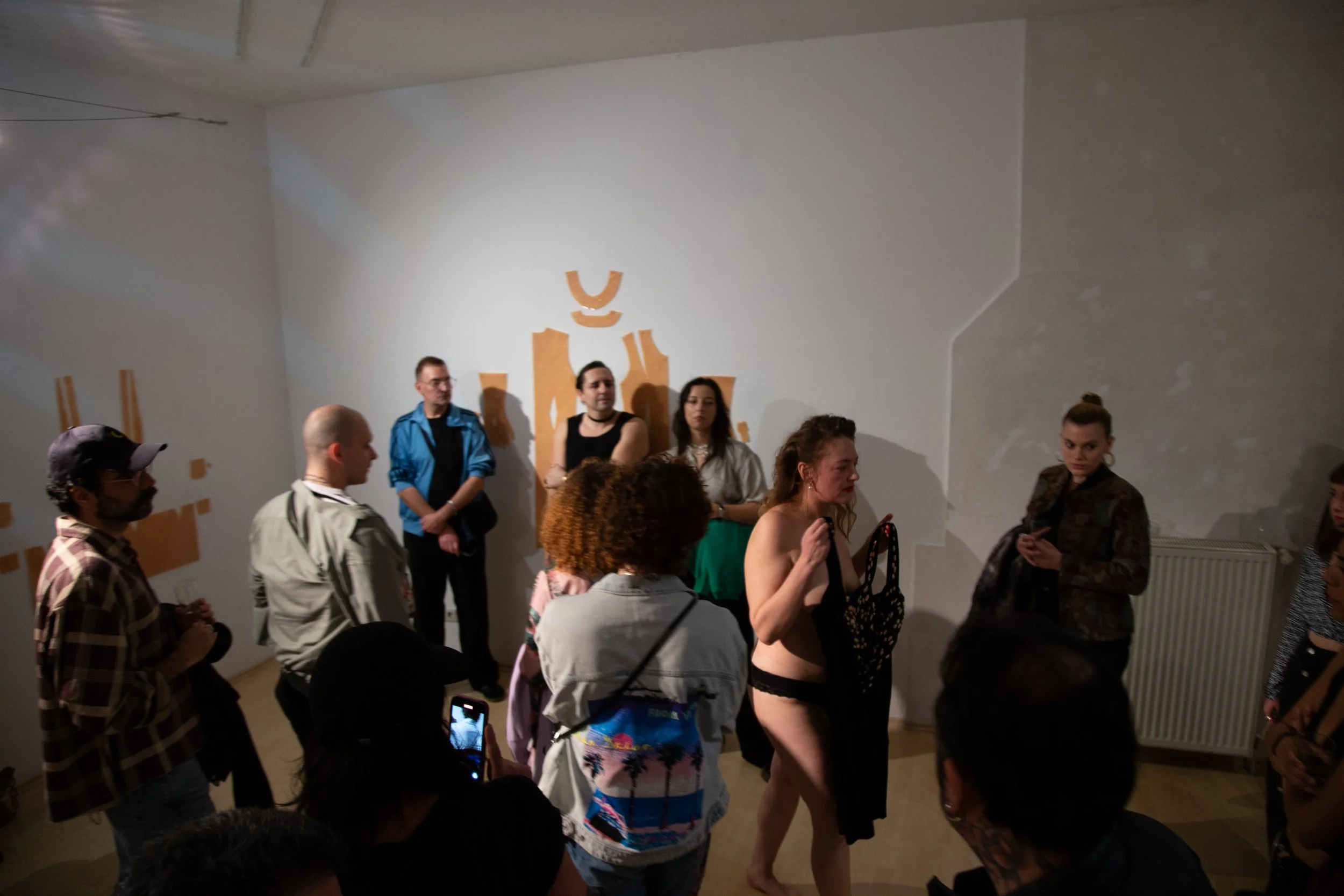
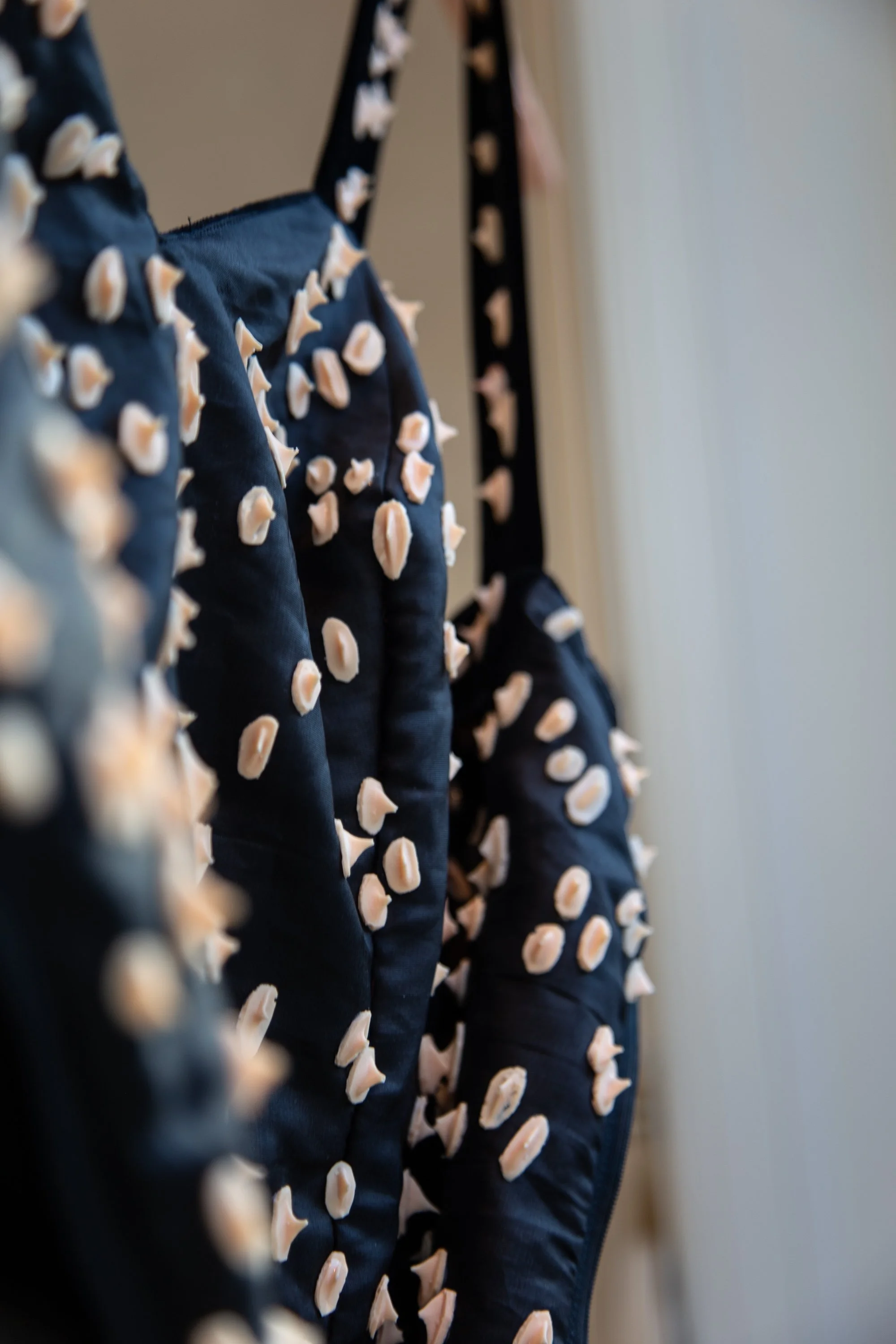
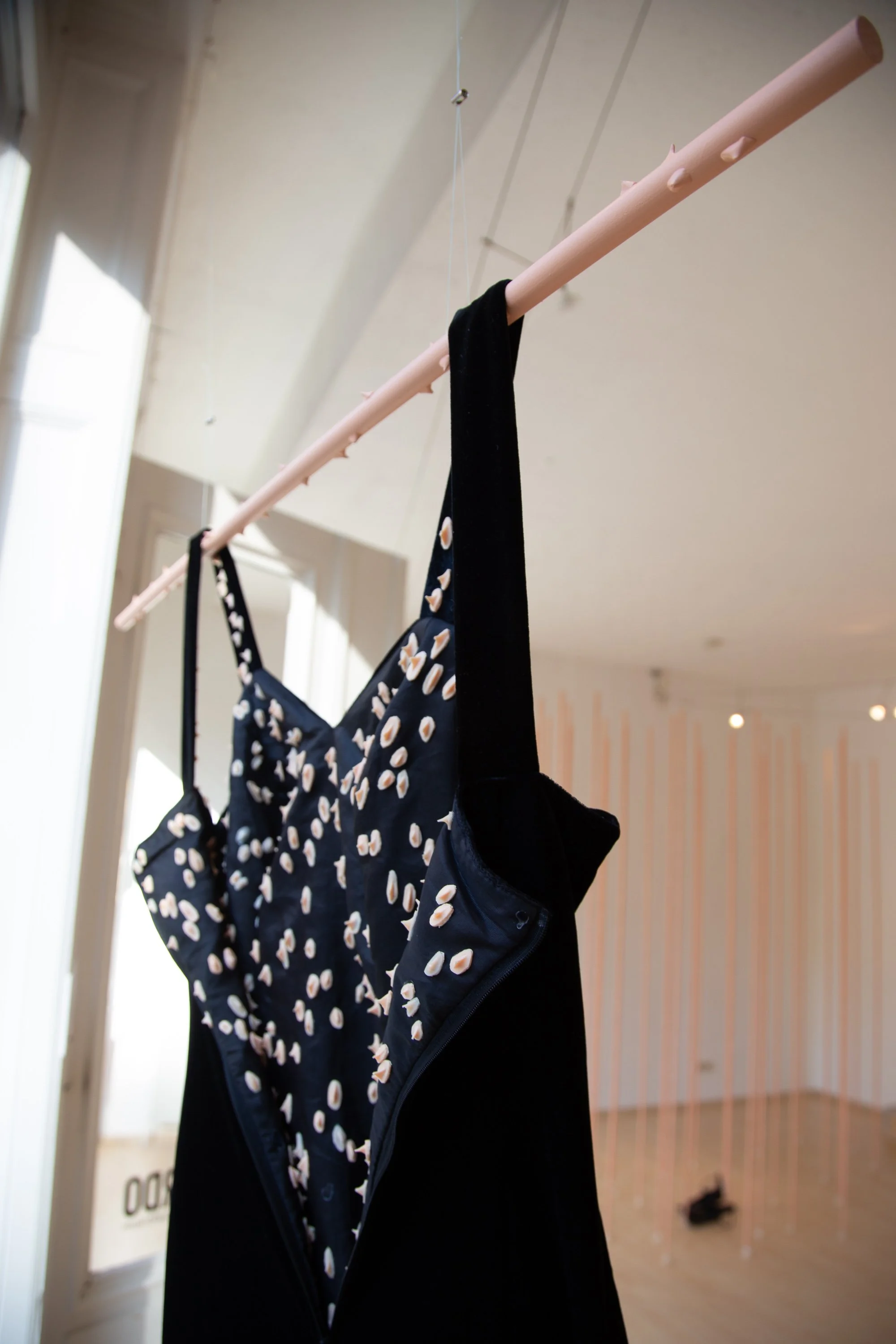
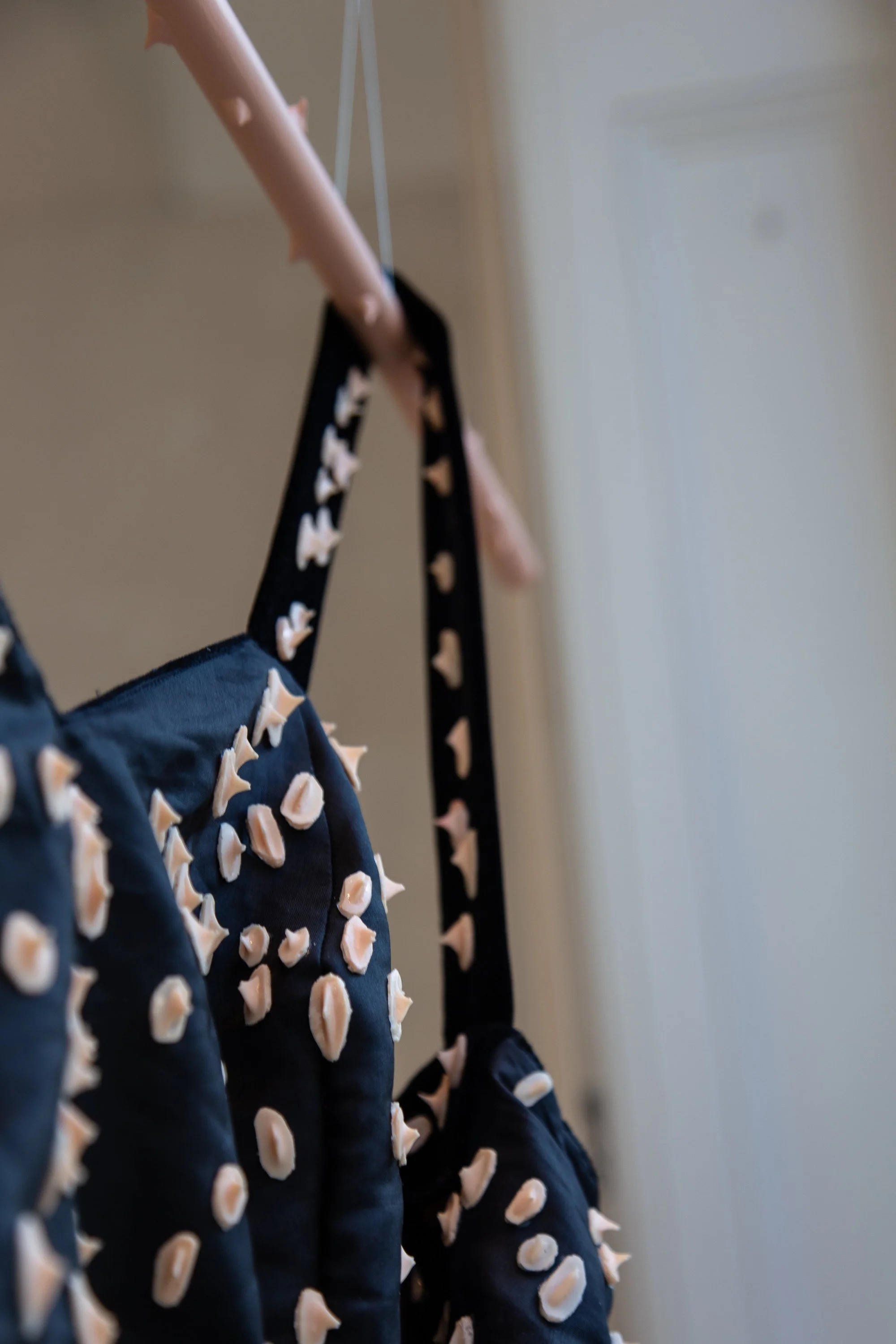
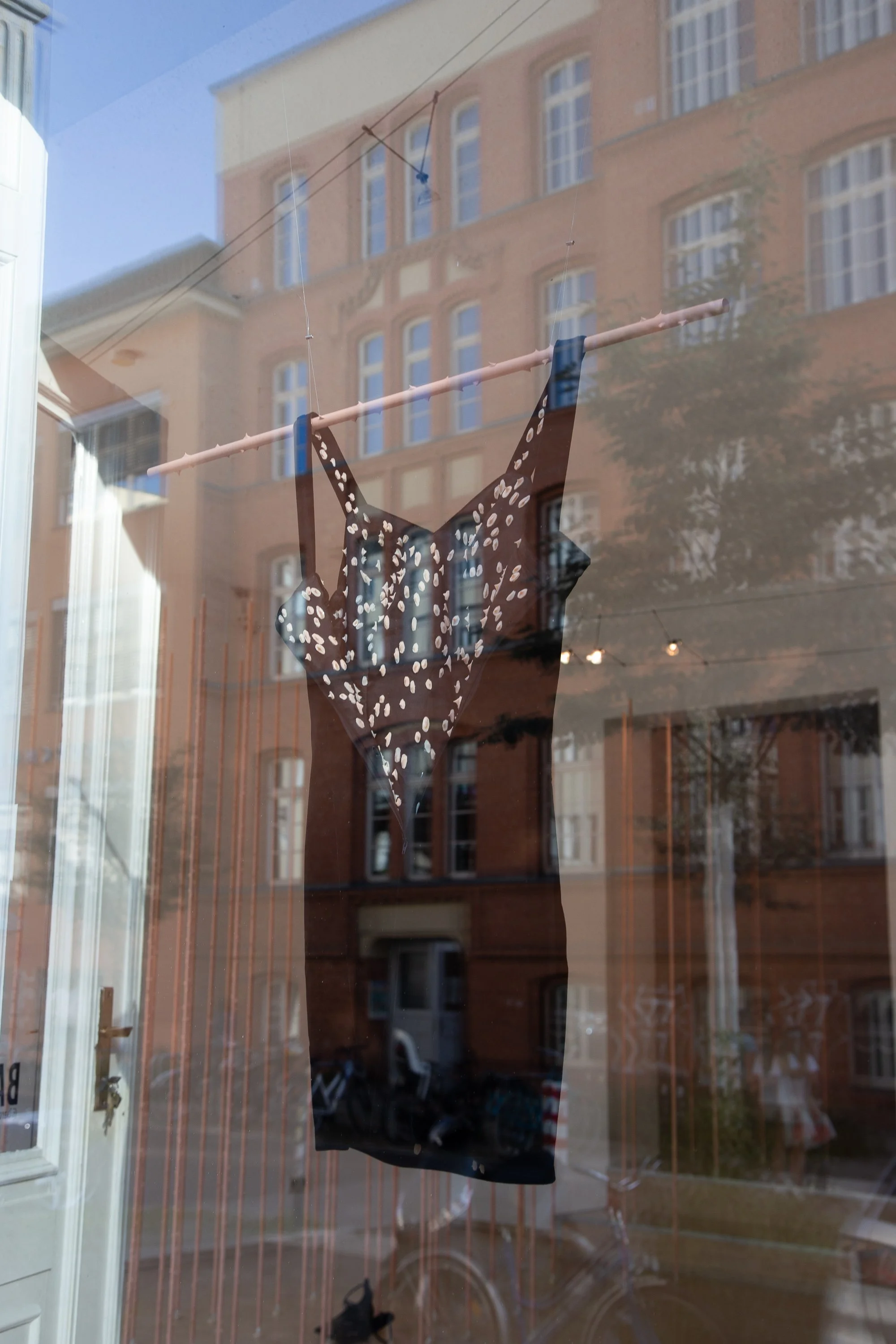
Considering party based socialisation as a mechanism for both false display and potential reprieve from self-repression and learnt conditioning, To Work At Wreckage, looks at the Woman in the role of party host. The rose bloom distracts from the thorn, so too the party gown from the suffering. Using the dress as obfuscatory distraction and thin border; barely separating the public view from the private wound, dressing up for a party becomes a site to oscillate between social order and disintegration. The work borrows its title from the book Party Studies (Vol 1 Ed. V Aguado, R Del Buey and B. Labelle) referencing the particularity of the party, a space where “identities shimmer, bodies fall apart or stand out, social forms rupture”. While witnessing my Mother get dressed up in gowns, elegant earrings and coiffed hair during childhood, I saw the party as a temporary salve to her feminine, private pain. In that dress, she could zip up the discomfort of constant agreeableness, being small, silent, dependent, perfect, self-sacrificial, unambitious, quiet and polite. She could enter a new space. To Work At Wreckage looks at how we bear our pain and flirt with its potential rupture in heightened social situations.
Excerpt from Essay by Marcela Villanueva, Director bardo Projektraum / Karne Kunst:
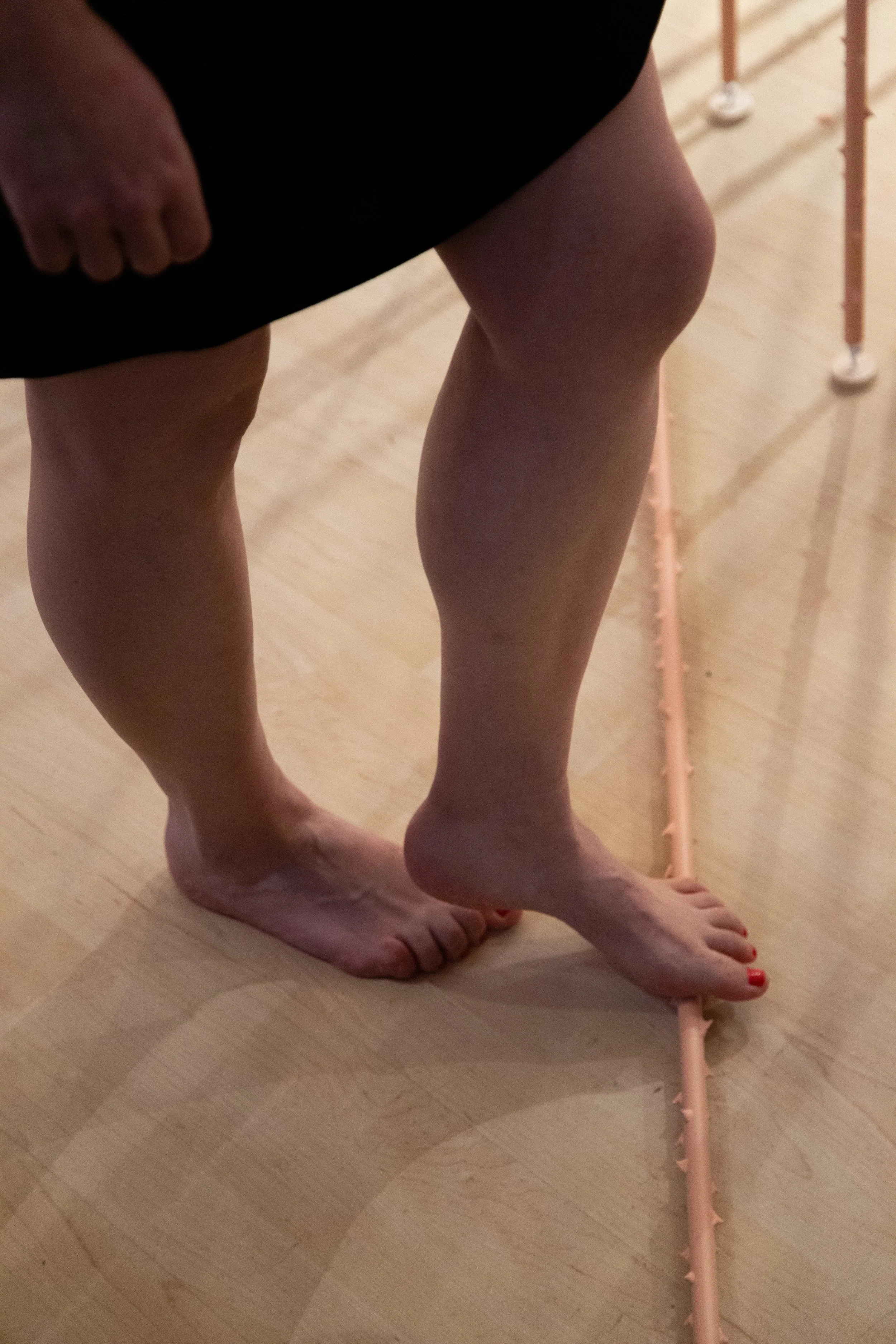
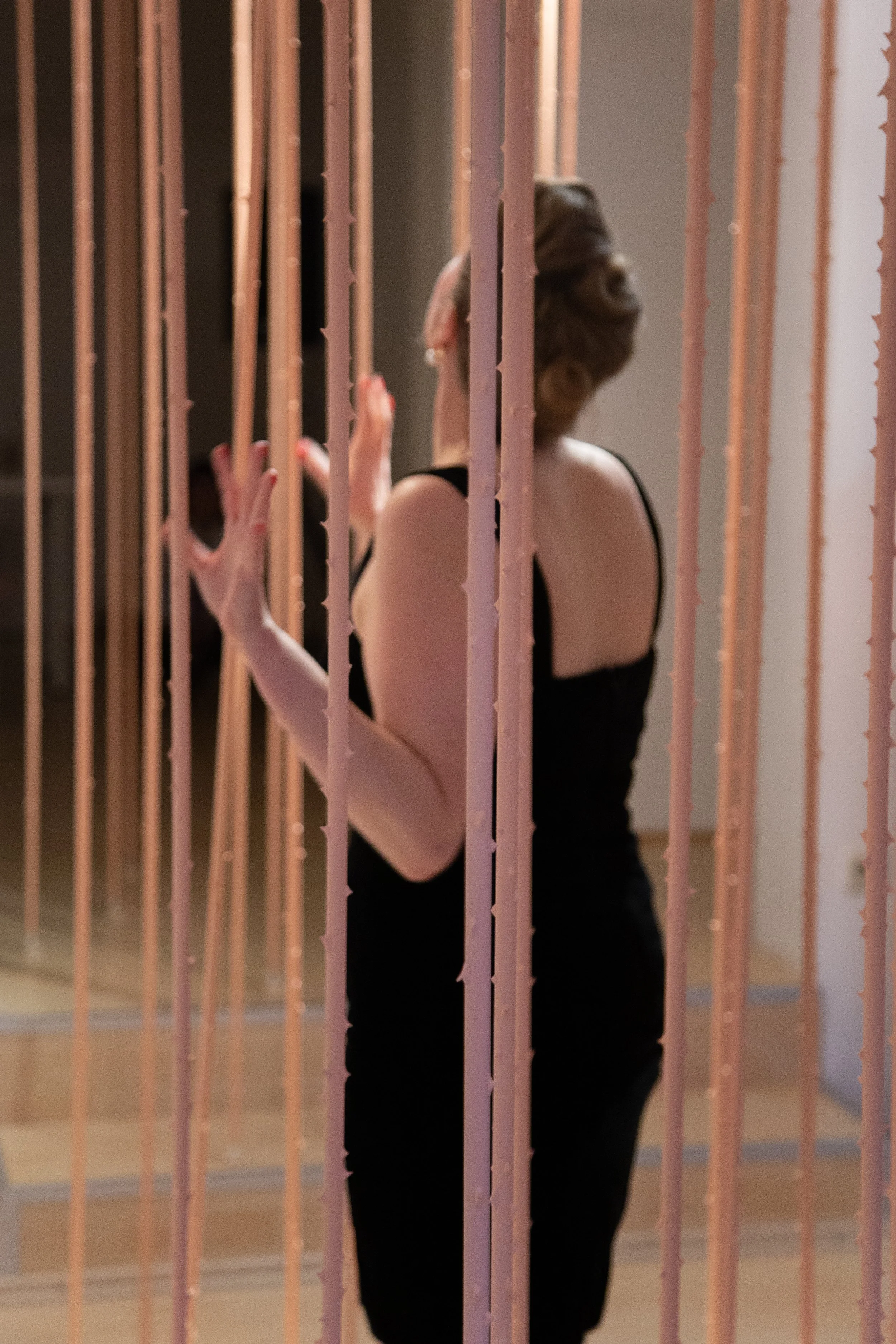
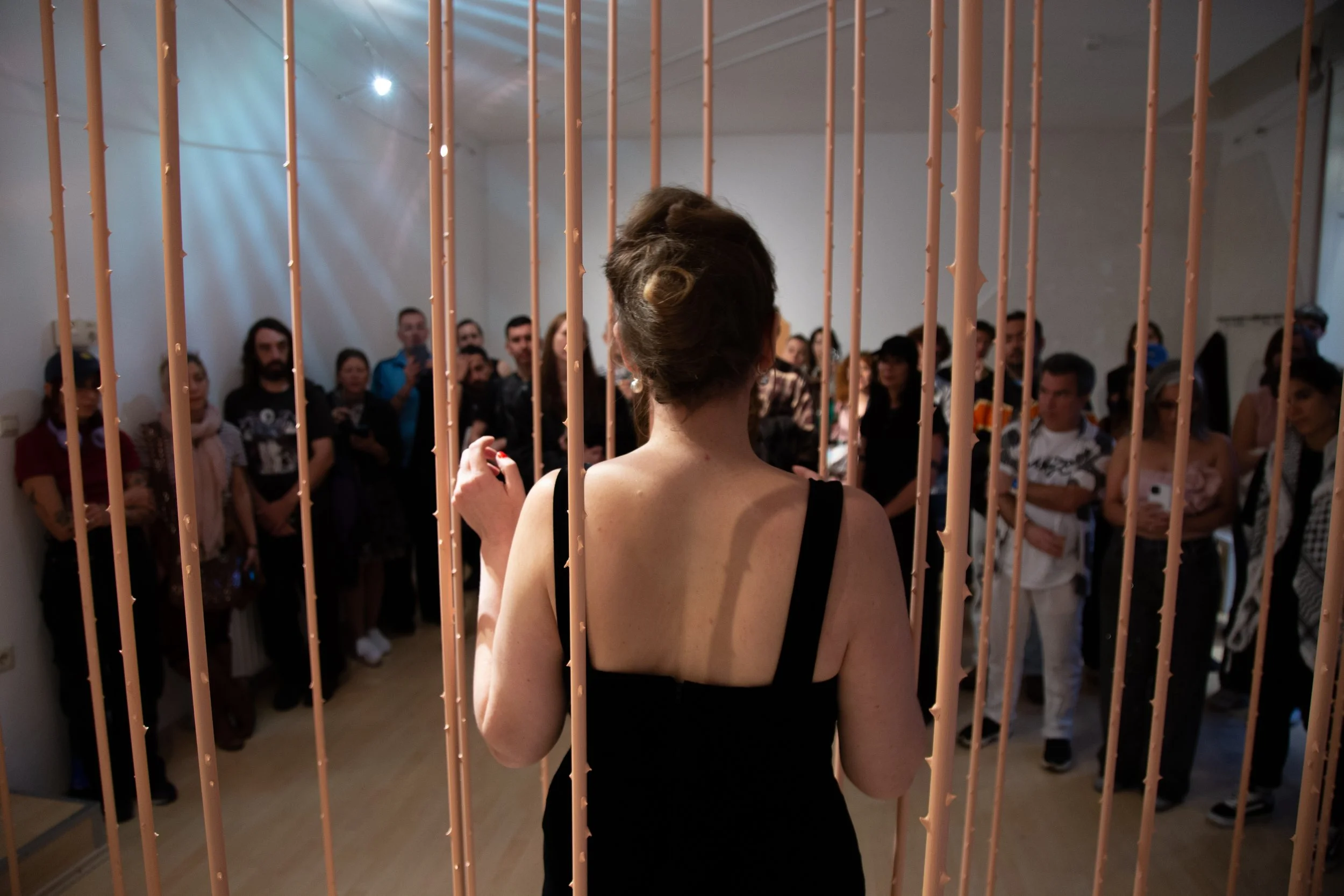
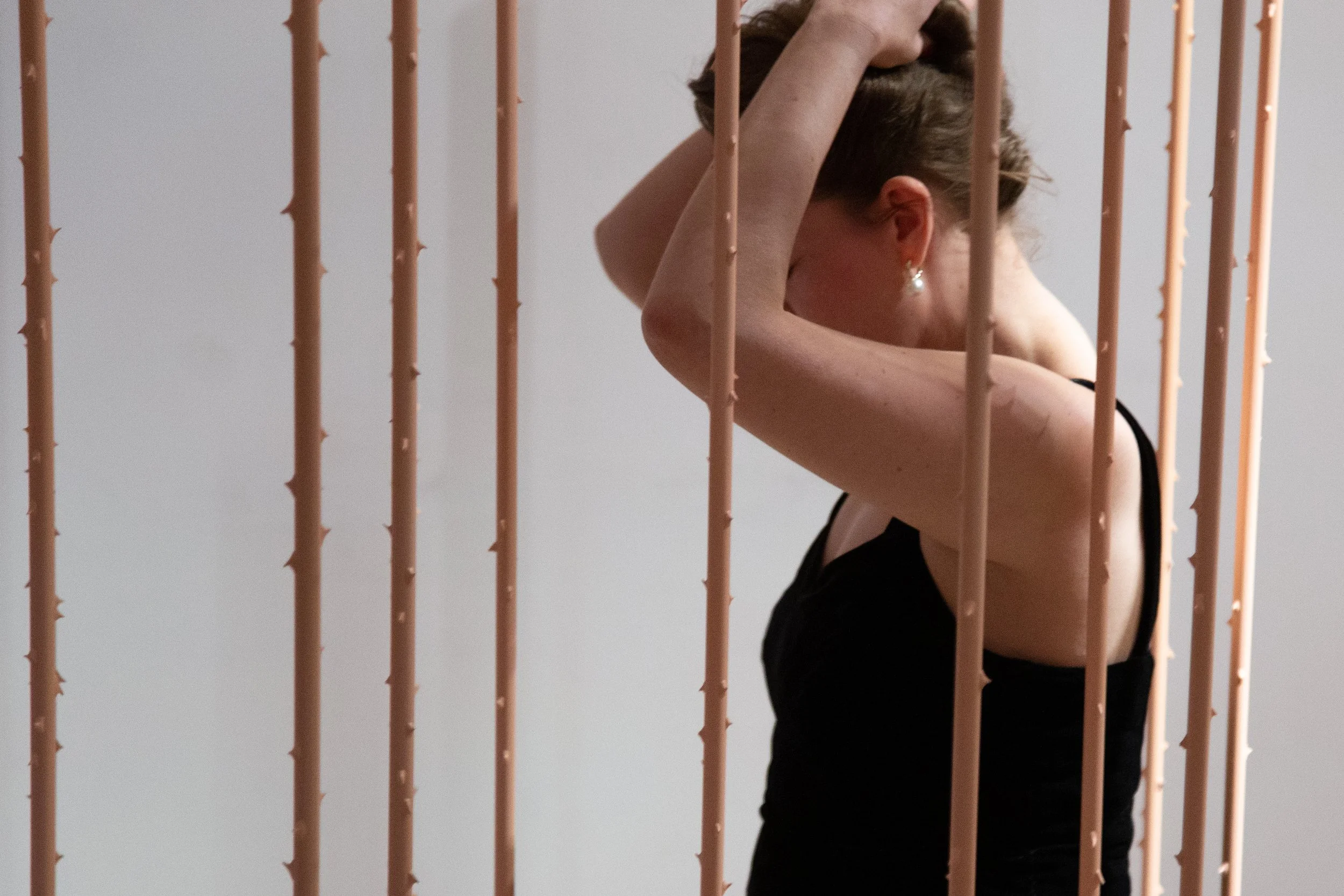
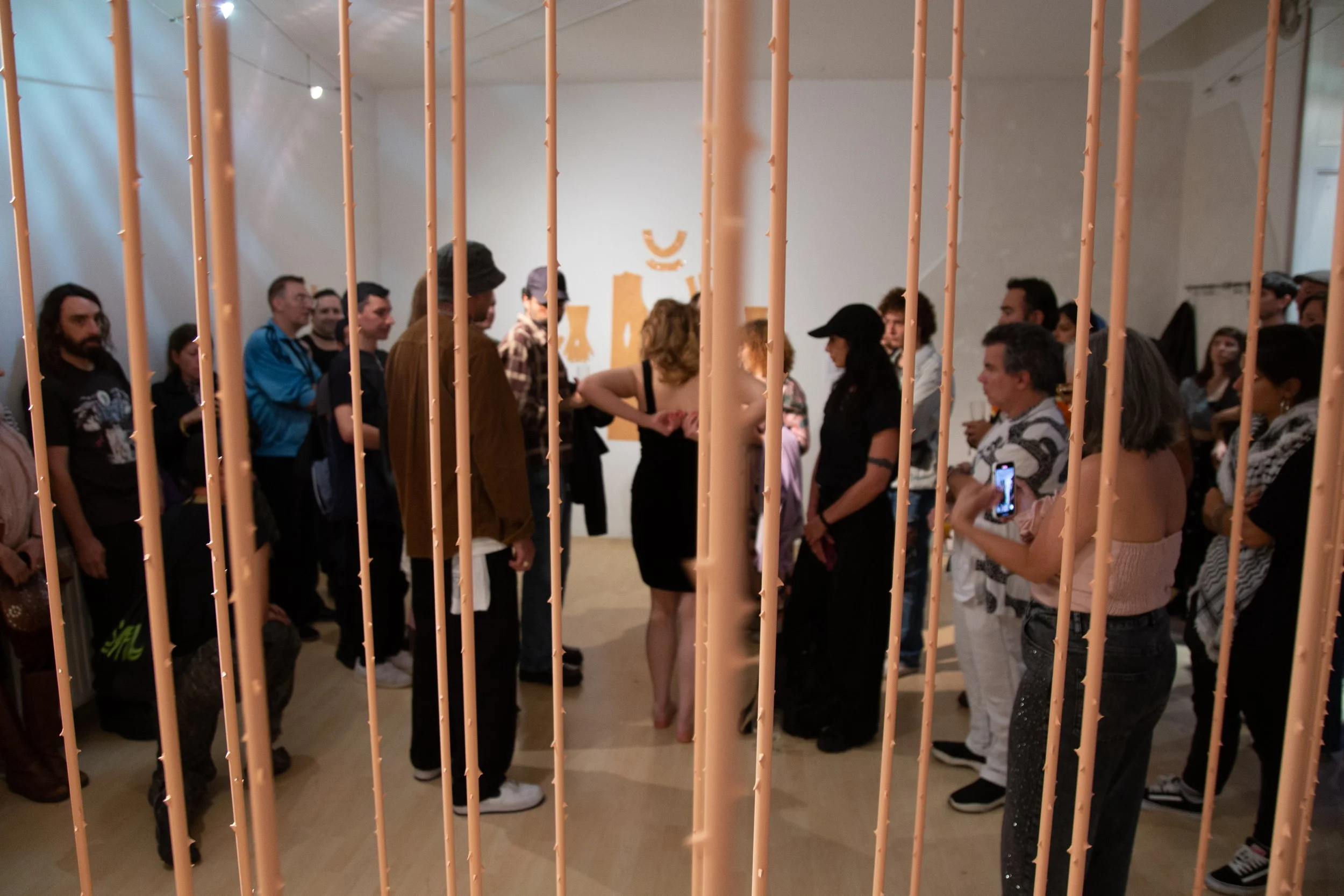
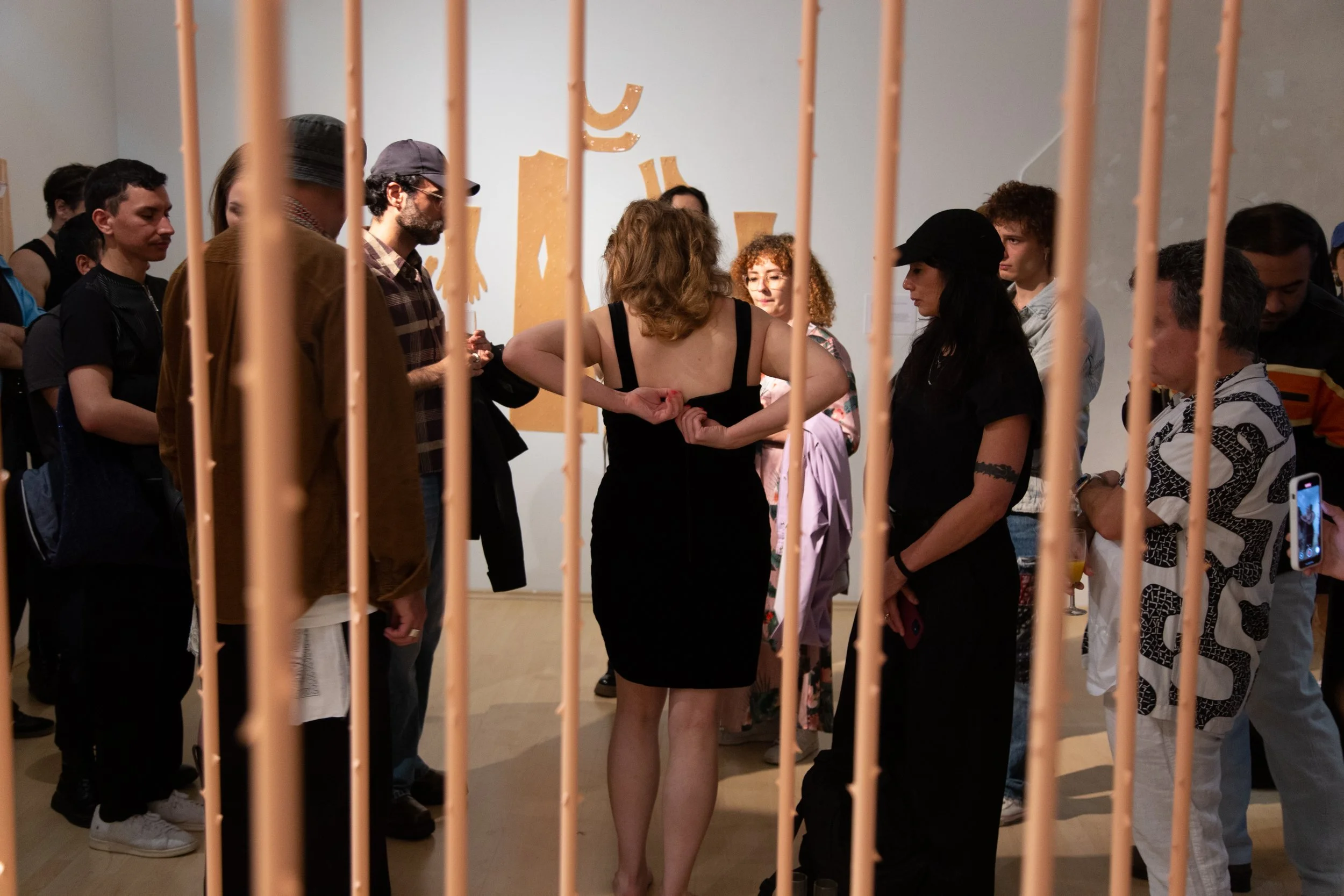
In the performance To Work At Wreckage (2025) Ida Sophia moves through the dense field of thorns (Installation: A Tyranny of Small Decisions (2025)), each choice, whether to push forward or to resist, creates new entanglements. The work shows how tolerance, once learned, can become an automatic response, how patterns of compliance accumulate until they form an almost inescapable structure.
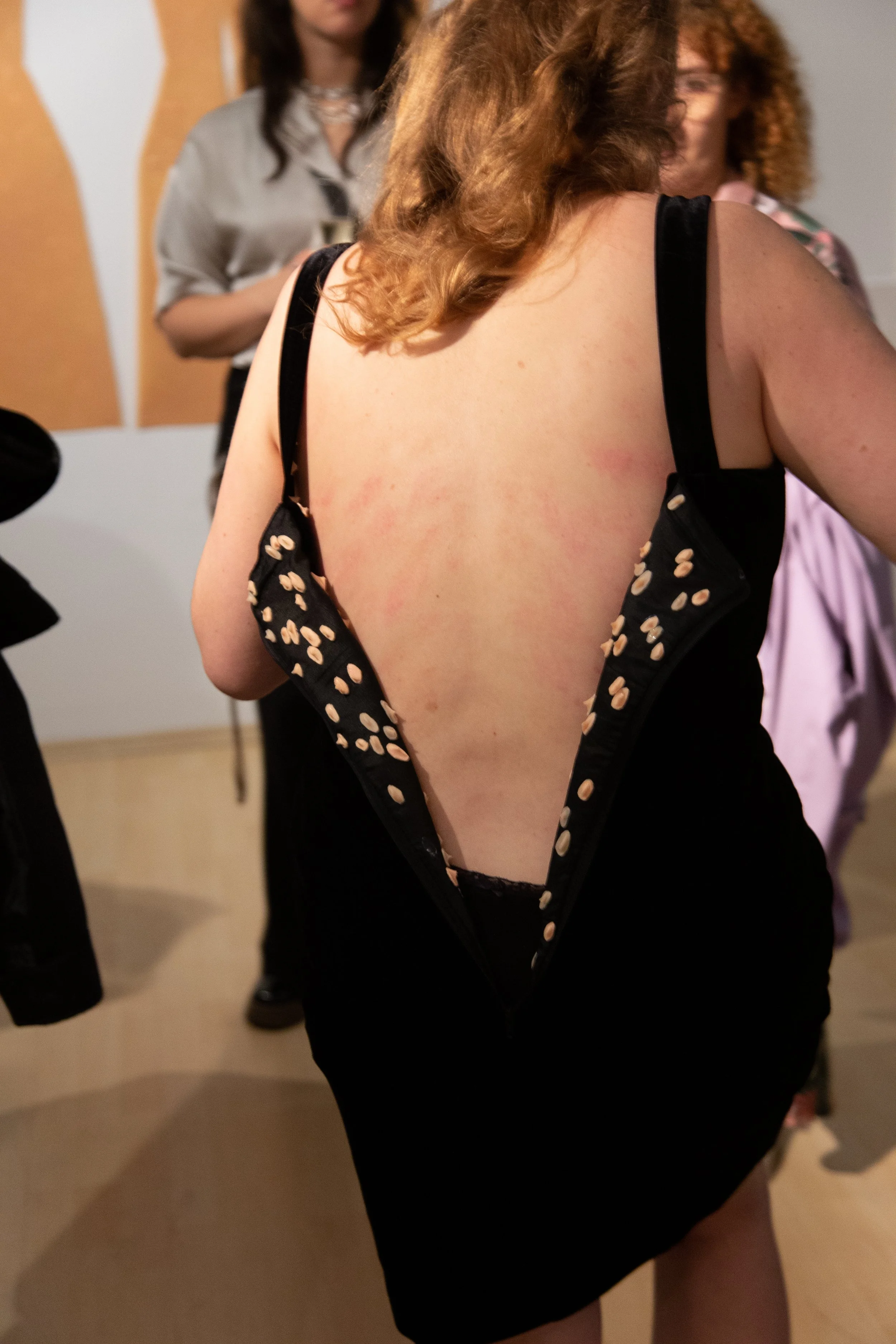
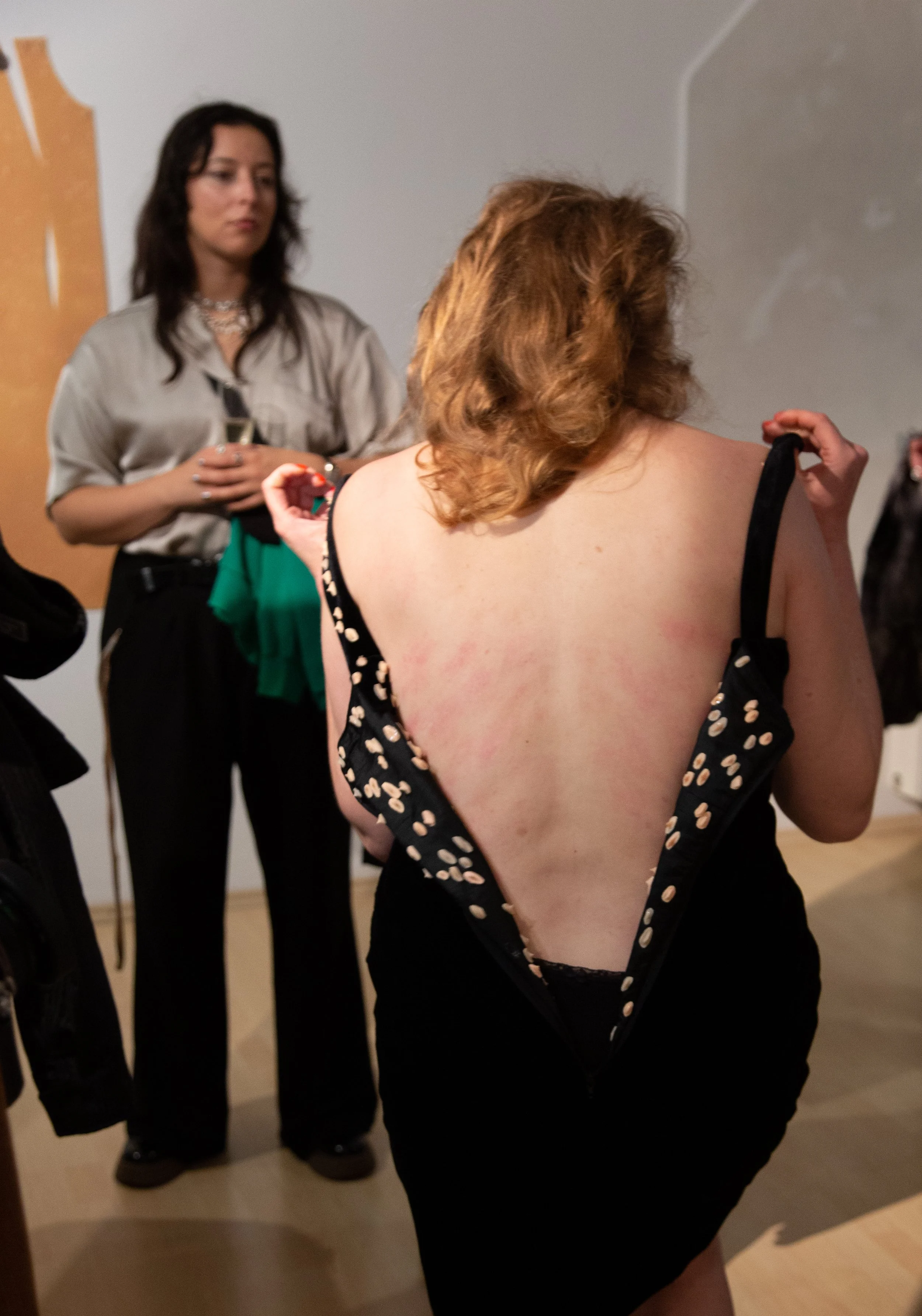
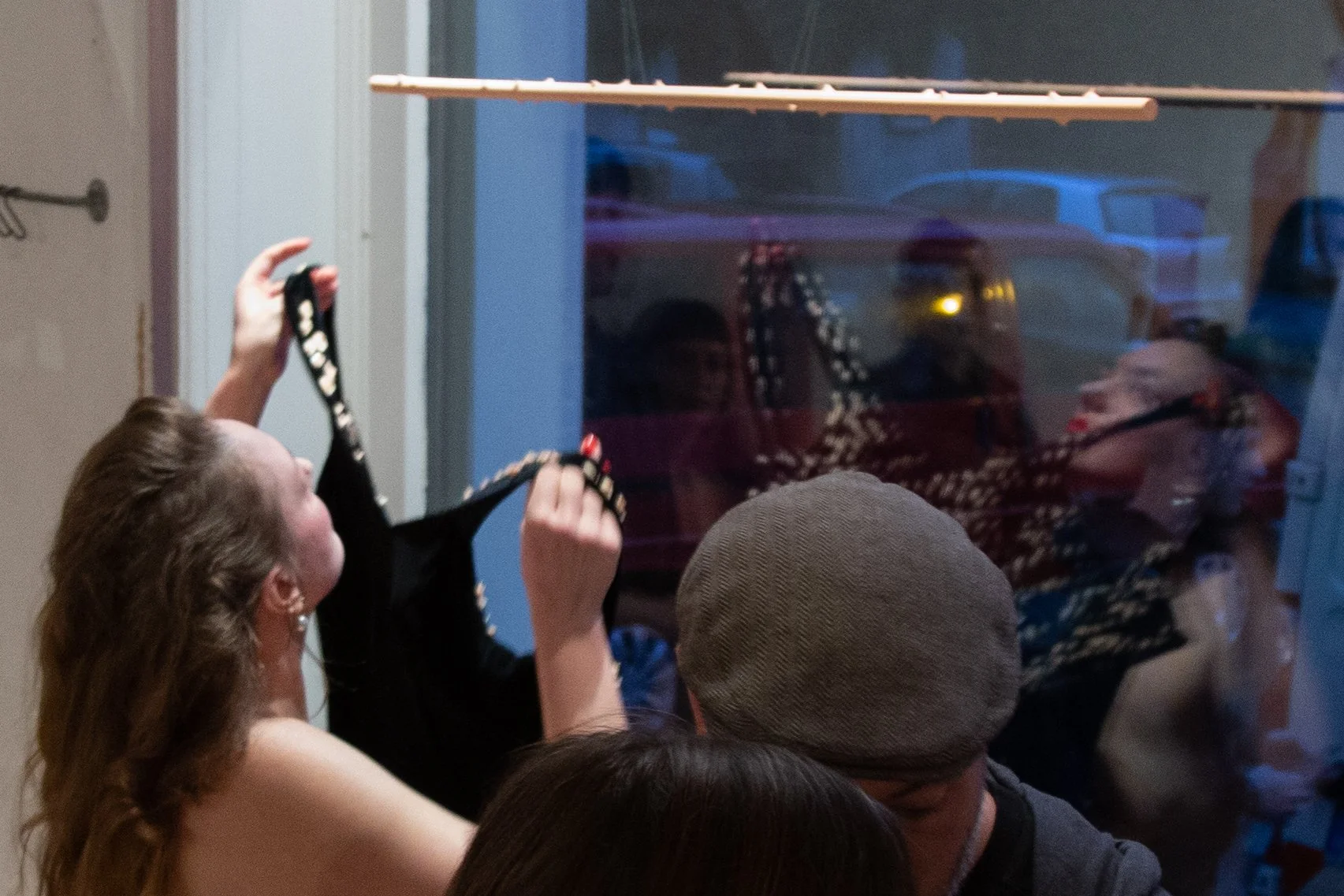
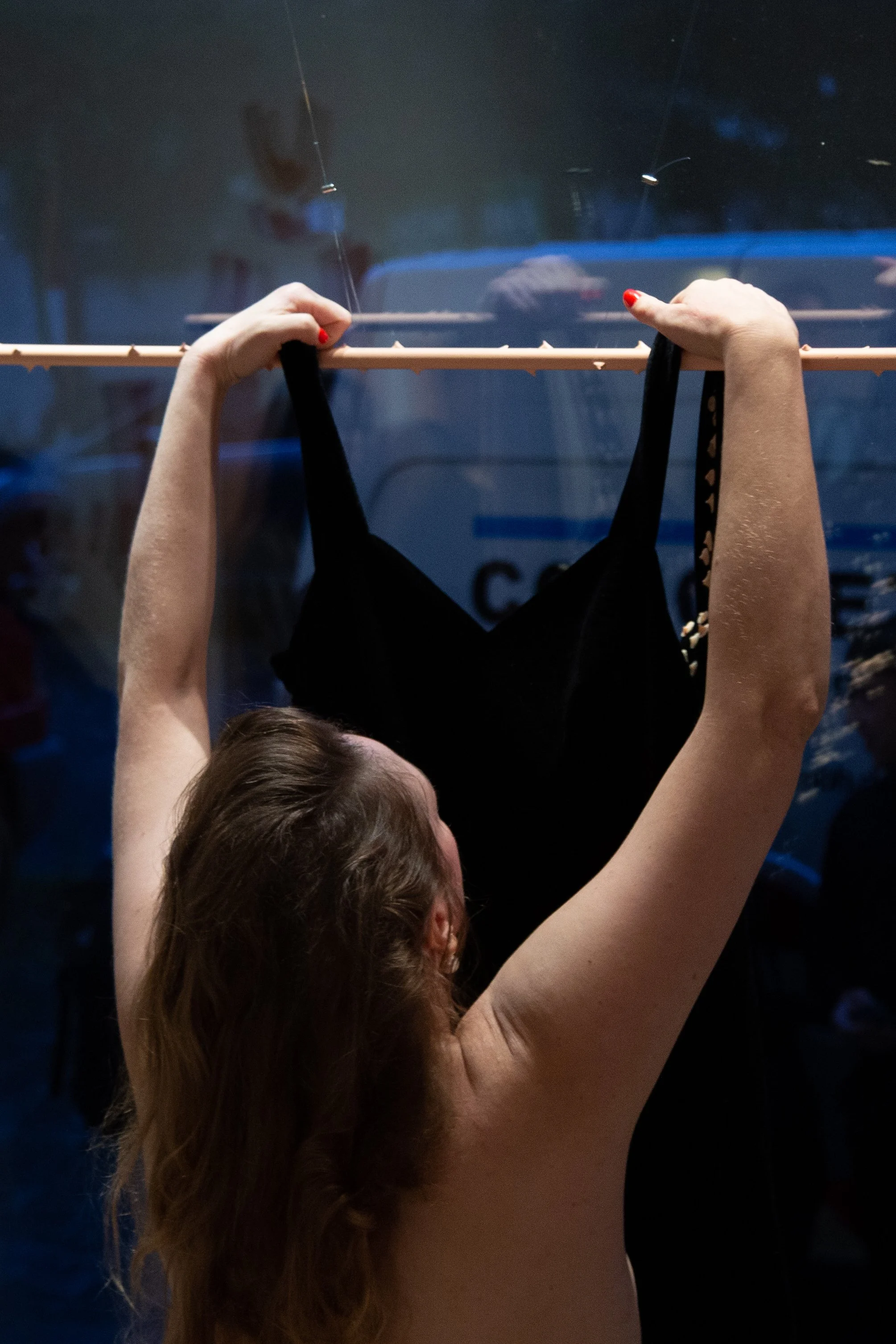
The original thorns in were harvested from bushes in her Mothers garden and subsequently cast in skin and flesh toned resin. Lining the interior of the gowns, each thorn represents a repetitive lesson in discomfort learned. Compounding a build up of toleration that we learn to live with, that we are aware of, that we enter into precarious spaces with, that impress upon us, that ultimately, we wish to break from.
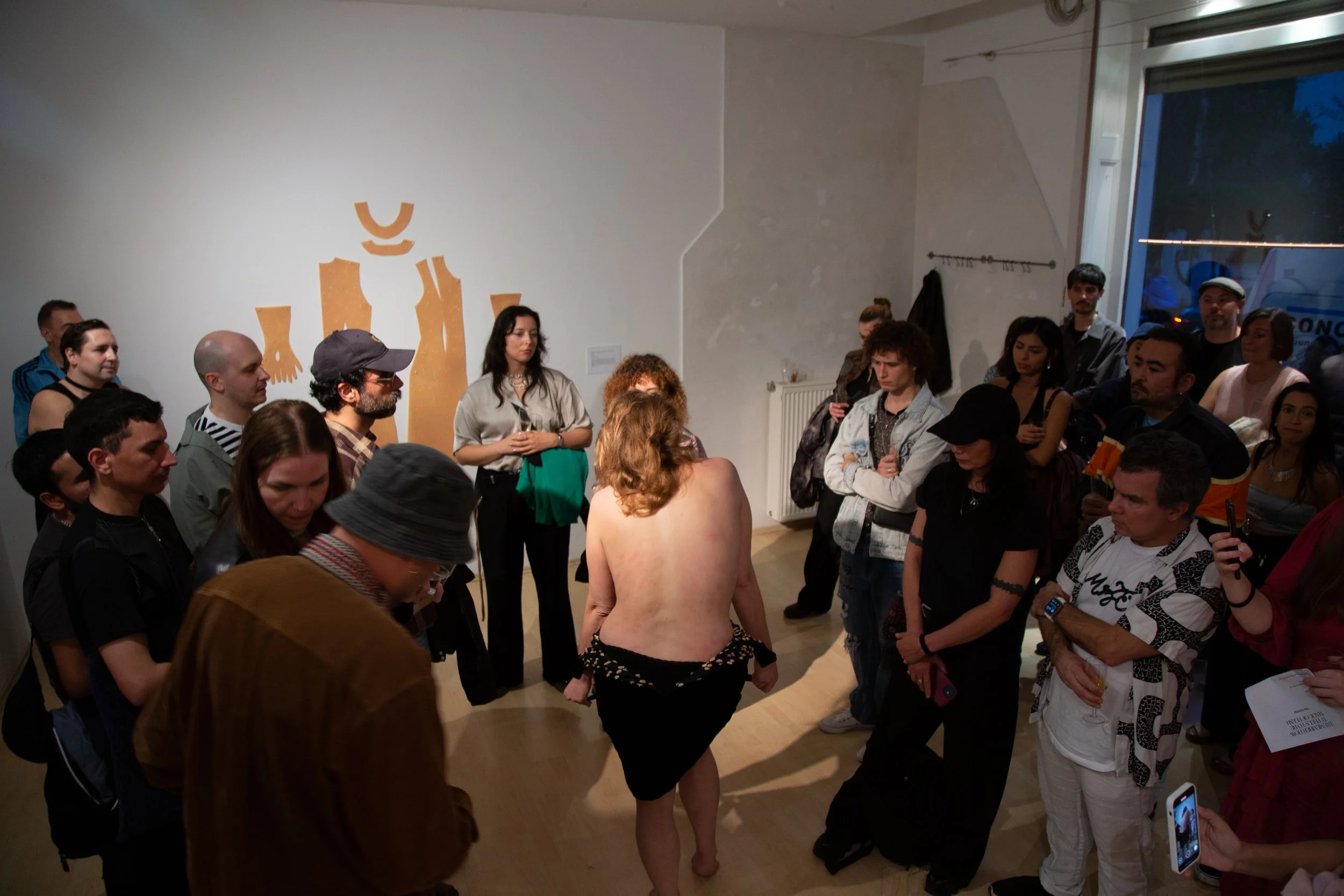
During the performance, the social ritual of the party is examined. Clad in a glamorous gown, a marker of elegance, Sophia steps into the role of hostess, pouring drinks, smiling, and moving through the room. Hospitality masks the quiet violence of endurance. The performance makes visible how cultural scripts of femininity, politeness, devotion and self-sacrifice appear to uphold social order and effectively conceal the discomfort on which that order rests. When the façade finally breaks, what was hidden becomes impossible to ignore: pain is revealed as the fabric of the performance itself.
Together, these works point to a cycle: resistance taught as necessity, discomfort absorbed as habit, pain handed down as legacy. But the exhibition does not stop at representation. It turns the question back to us: is recognising these patterns, seeing them, naming them, even staging them enough to break the cycle? Or, are we bound to repeat what we already know, caught in the structures of gender, intimacy, and social expectation?
Bardo Projekt Raum | September 11-30, 2025
Opening night + Performance: September 11th, 18-21h
Visiting Hours: Wednesday to Saturday 12-6pm Jessnerstraße 33, 10247 Berlin